
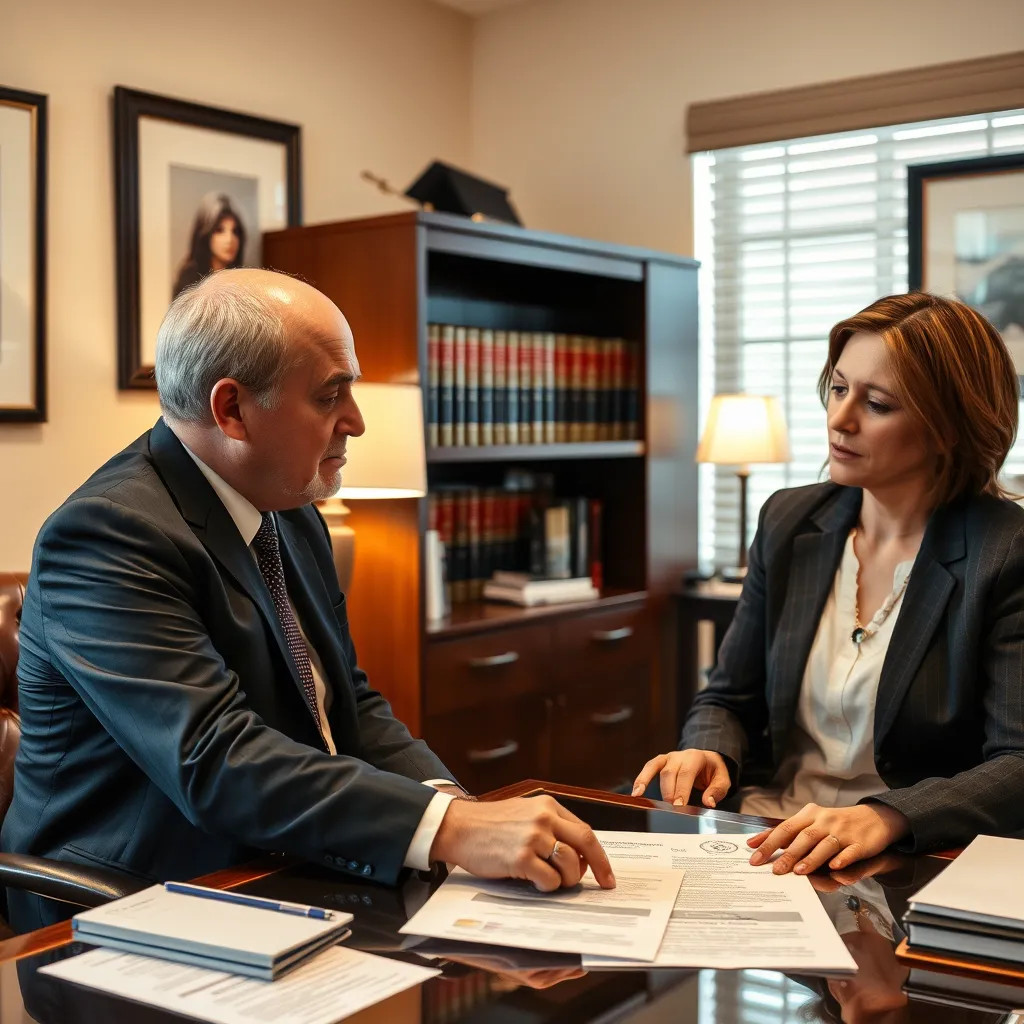
Complex Property Division Lawyer Falls Church, VA
When a divorce involves significant assets—business interests, real estate holdings, investment portfolios, retirement accounts, or professional practices—property division is often the most contested issue. For clients in Falls Church, Virginia, Law Offices Of SRIS, P.C. provides representation focused on identifying, classifying, and valuing marital assets, then pursuing an equitable distribution under Virginia law. Virginia is an equitable distribution state; unlike community property states, division is not automatic 50–50. The court weighs statutory factors to decide what is fair. The firm’s family law practice guides clients through the financial disclosure, valuation, and negotiation stages that are critical to protecting their financial future. From initial strategy to resolution, Mr. Sris and the firm’s Of Counsel attorneys work to position clients for outcomes that reflect their contributions and post-divorce needs. To request a consultation, call (888) 437-7747. Law Offices Of SRIS, P.C. – Advocacy Without Borders.
What Complex Property Division Means in Falls Church, Virginia
Complex property division in Falls Church refers to the identification, classification, valuation, and distribution of marital assets that go beyond a simple division of household goods and bank accounts. Under Va. Code § 20-107.3, the Circuit Court must classify property as marital, separate, or part-marital, and then distribute the marital estate based on 11 statutory factors. Separate property—generally assets owned before the marriage or received by gift or inheritance—is not subject to division. Everything acquired during the marriage is presumptively marital, and the party seeking to prove otherwise bears the burden. Falls Church family law matters are heard in the Falls Church Circuit Court at 300 Park Avenue, Suite 151W, Falls Church, VA 22046, within the Seventeenth Judicial District. The court has exclusive original jurisdiction over divorce and equitable distribution. Issues of custody, visitation, and child support may also be decided in the Falls Church Juvenile and Domestic Relations District Court.
What often makes a property division “complex” is the nature and layering of the assets. A couple may own a family business, multiple investment accounts, restricted stock units, real property in more than one jurisdiction, professional licenses, and defined-benefit pensions. The division may require forensic accountants, business valuation attorneys, and appraisers. In every case, proper classification of each asset is critical: a business started during the marriage may be partially marital and partially separate; active appreciation of separate property may be marital to the extent it resulted from the efforts of either spouse. The firm’s understanding of Virginia’s classification rules guides clients through discovery aimed at building a complete picture of the marital estate before negotiations or trial.
How Mr. Sris and the Firm’s Of Counsel Attorneys Handle Complex Property Division Cases
Property division involving substantial or unusual assets is case-specific. The approach begins with a thorough review of the financial circumstances: both parties’ tax returns, loan applications, business records, retirement account statements, real estate deeds, and any documents that reflect ownership and value. The firm works with forensic accountants and business valuators to determine a fair market value for closely held businesses, professional practices, and other non-liquid assets. Discovery may require formal requests, depositions, and subpoenas to third-party institutions. Throughout this process, the firm evaluates whether settlement is possible or whether a contested hearing is necessary.
If settlement negotiations produce an agreement, the firm drafts or reviews the property settlement agreement; the separation agreement—or a stipulated order incorporated into the final decree—can resolve all property issues without trial. If trial is unavoidable, the firm presents evidence through expert testimony, financial documents, and witness examination. Throughout the case, pendente lite motions may be filed to address temporary spousal support, exclusive use of the marital residence, or preservation of assets. The firm’s experience in Virginia equitable distribution practice helps clients understand the realistic range of outcomes so they can make informed decisions at each stage.
About Mr. Sris and the Firm’s Of Counsel Attorneys
Law Offices Of SRIS, P.C. was founded in 1997 by Mr. Sris, a former prosecutor. Mr. Sris, Owner and Founder, is admitted to practice in Virginia, Maryland, the District of Columbia, New Jersey, and New York. He testified before the Virginia House Courts of Justice Committee in support of 2019 HB 635 (chief patron Del. David Bulova). The firm’s Of Counsel attorneys bring extensive combined legal experience in family law and complex civil litigation, including matters that involve business valuation, real estate division, and the tracing of separate property. Several of the firm’s Of Counsel attorneys have backgrounds in prosecution and law enforcement, which provides them with a practiced understanding of evidentiary hearings and courtroom procedure. Together, Mr. Sris and the firm’s Of Counsel attorneys approach each complex property division matter with a focus on detailed case preparation and client advocacy.
Frequently Asked Questions
What is the difference between marital and separate property in a Virginia divorce?
Marital property is generally everything acquired by either spouse during the marriage, while separate property is property owned before the marriage or received by gift or inheritance during the marriage. Under Va. Code § 20-107.3, the court classifies each asset and divides only the marital estate. A business, rental property, or investment account opened during the marriage is presumptively marital; a party claiming it as separate must trace the claimed separate portion. Appreciation of separate property that is the result of the parties’ joint efforts may also be treated as marital. Thorough documentation and proper classification are essential in any division involving substantial assets.
How does a court divide a business or professional practice in a Falls Church divorce?
If a business or professional practice is marital property, the court may either give one spouse the entire business and award the other spouse a larger share of other assets, or it may order a sale and division of the proceeds. Often, a buy-out structured through a property settlement agreement resolves the matter without forced liquidation. The court considers factors such as the length of the marriage, the contributions of each spouse to the business, and the availability of other marital property to offset the business value. A business valuation performed by a qualified appraiser is usually necessary to establish fair market value.
How long does a divorce involving complex property division take in Falls Church?
The timeline depends on the complexity of the assets, the degree of cooperation between the parties, and the court’s schedule. Cases that involve multiple businesses, real estate in different locations, or cross-border elements can extend the discovery and valuation process. An uncontested divorce with a signed separation agreement may conclude sooner; contested equitable distribution cases often require additional hearings. The firm helps clients manage expectations regarding timelines at each stage.
Do I need a lawyer for a divorce where significant property is involved?
While Virginia law does not require you to hire a lawyer to file for divorce, representing yourself in a case that involves substantial marital assets, business interests, or complex financial instruments carries considerable risk. Errors in classification, valuation, or disclosure can lead to an inequitable property division that is difficult to change after the final decree is entered. An experienced attorney can help identify and gather necessary financial records, work with appraisers, and negotiate a settlement that protects your long-term interests. For guidance on your specific situation, reach Law Offices Of SRIS, P.C. at (888) 437-7747.
What are the grounds for divorce in Virginia?
Virginia recognizes both no-fault and fault-based grounds for divorce. No-fault ground: one year of continuous separation without cohabitation, or six months if the parties have no minor children and have entered into a written separation agreement (Va. Code § 20-91(9)). Fault grounds include adultery, cruelty, willful desertion for one year, and conviction of a felony resulting in imprisonment for more than one year. Adultery, if proven, eliminates the separation waiting period. The ground chosen may affect the strategy and timing of the property division.
How much does a divorce cost in Falls Church?
Costs vary depending on case complexity, attorney fees, and experienced attorney expenses. The Circuit Court filing fee for a divorce complaint is noted below. Additional costs may include private process-server fees, mediation, and guardian ad litem fees if custody is in dispute. Attorney fees are usually discussed at the initial consultation and depend on the scope of representation. For a consultation, reach Mr. Sris and the firm’s Of Counsel attorneys at (888) 437-7747.
The Circuit Court filing fee for a divorce complaint is approximately $86.
Source: Virginia Judicial System Fee Schedule. vacourts.gov/courts/circuit/fees
Reviewed by Mr. Sris, admitted in VA/MD/DC/NJ/NY.
Related Family Law Resources:
Fairfax County Family Law Attorney |
Fairfax City Family Law Attorney |
Prince William County Family Law Attorney
Virginia Legal Resources:
Virginia Code Title 20 (Domestic Relations) |
Falls Church Circuit Court |
Virginia Circuit Court Filing Fees
Attorney advertising. Prior results do not guarantee a similar outcome. Results may vary.
Case results depend on a variety of factors unique to each case.