
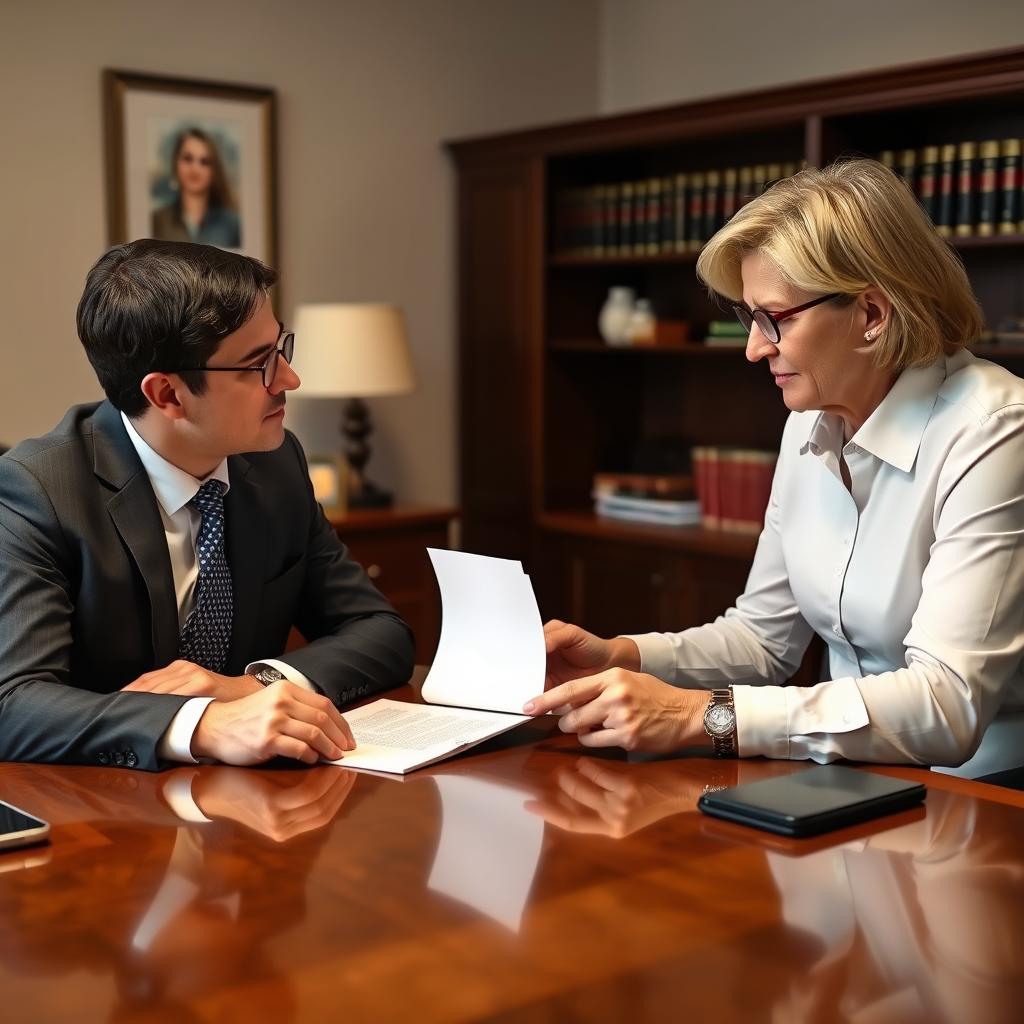
Marital Settlement Agreement Lawyer Stafford County
A Marital Settlement Agreement Lawyer Stafford County drafts and enforces the binding contract that finalizes your divorce terms. This document controls property division, spousal support, and debt allocation under Virginia law. You need a lawyer who knows Stafford County court procedures to protect your rights. Law Offices Of SRIS, P.C.—Advocacy Without Borders. provides this critical representation. (Confirmed by SRIS, P.C.)
The Legal Foundation of Your Stafford County Divorce Settlement
Virginia Code § 20-109.1 governs marital settlement agreements, classifying them as enforceable contracts with court-ordered penalties for non-compliance. The statute provides the legal framework for converting your negotiated terms into a final divorce decree in Stafford County. A properly drafted agreement prevents future litigation over asset division and support obligations. The court can enforce its terms through contempt powers, including fines or jail time. Understanding this code is the first step for any divorce settlement terms lawyer Stafford County.
Your marital settlement agreement is the cornerstone of your divorce. It is not a simple form. This contract details who gets what and who pays for it. Virginia law treats these agreements with significant respect. Once signed and incorporated into a final decree, the terms are very difficult to change. The court expects both parties to understand the long-term consequences. A mistake in drafting can cost you thousands of dollars. You need precise language that covers all contingencies. Stafford County judges review these documents for fairness and compliance with state law.
What specific terms does a marital settlement agreement cover?
A marital settlement agreement covers the division of all marital property and debts. This includes real estate, bank accounts, retirement accounts, and personal property. It establishes spousal support amounts, duration, and modification terms. The agreement also addresses responsibility for marital debts and tax liabilities. It can include provisions for life insurance policies as security for support. Parenting plans and child support are typically addressed in a separate agreement. A marital settlement lawyer Stafford County ensures no asset is overlooked.
How does Virginia law treat separate versus marital property?
Virginia is an equitable distribution state, not a community property state. Marital property includes all assets acquired from the date of marriage until the date of separation. Separate property includes assets owned before marriage or received by gift or inheritance. The increase in value of separate property during the marriage may be marital. The court divides marital property based on fairness, not necessarily a 50/50 split. Your agreement must clearly classify each major asset. Misclassification is a common source of post-divorce conflict.
Can a marital settlement agreement be changed after the divorce?
Modifying a marital settlement agreement after a final decree is extremely difficult. Virginia Code § 20-109 allows modification only for provisions concerning spousal support. Property division and debt allocation terms are generally final and non-modifiable. To change other terms, you must prove fraud, duress, or a mutual mistake of fact. Stafford County courts will not revise an agreement simply because one party has changed their mind. This finality highlights the need for experienced drafting from the start.
The Stafford County Court Process for Finalizing Your Agreement
The Stafford County Juvenile and Domestic Relations District Court and Circuit Court handle divorce filings at 1300 Courthouse Road, Stafford, VA 22554. You file your complaint for divorce and the signed marital settlement agreement with the Circuit Court clerk. The court reviews the agreement to ensure it is not unconscionable and complies with Virginia law. If approved, the agreement is incorporated into the final decree of divorce. Procedural specifics for Stafford County are reviewed during a Consultation by appointment at our Stafford County Location.
Filing fees in Stafford County Circuit Court are required to initiate the divorce action. The process timeline depends on whether you have a no-fault or fault-based ground for divorce. Virginia mandates a separation period before a no-fault divorce can be granted. The court’s primary role is to review the agreement’s fairness, not to negotiate its terms. Having all documents correctly prepared avoids unnecessary delays. Local rules may dictate specific formatting for pleadings. An attorney familiar with this courthouse simplifies the entire process.
What is the typical timeline to finalize a divorce with an agreement in Stafford County?
A contested divorce without an agreement can take a year or more in Stafford County. An uncontested divorce with a signed marital settlement agreement is significantly faster. The mandatory separation period is the primary controlling factor. For a no-fault divorce, you must be separated for at least one year. If you have no minor children and a signed agreement, the separation period is six months. Once filed, an uncontested case can be finalized in a few months if paperwork is perfect.
What are the court filing fees for a divorce in Stafford County?
Filing fees are set by Virginia statute and are required to open a case. The exact cost can vary based on ancillary filings and services required. You must pay these fees to the Stafford County Circuit Court clerk. Additional costs may include fees for serving the complaint on your spouse. There are also costs for drafting and notarizing the settlement agreement itself. Your attorney can provide a precise estimate based on your case’s specifics.
Penalties for Violation and Strategic Defense of Your Agreement
The most common penalty for violating a marital settlement agreement is a contempt of court order from the Stafford County Circuit Court. The court can impose fines, award attorney’s fees to the prevailing party, or order specific performance of the agreement’s terms. In severe cases of willful non-compliance, the court can impose jail time. Enforcement actions are filed as a separate lawsuit, known as a Rule to Show Cause. You need a Marital Settlement Agreement Lawyer Stafford County to either enforce or defend against such actions.
| Offense | Penalty | Notes |
|---|---|---|
| Failure to Pay Spousal Support | Contempt; Wage Garnishment; Liens | Court can order immediate payment of arrears plus interest. |
| Failure to Transfer Property | Contempt; Court-Ordered Transfer | Judge can sign deed on behalf of non-compliant party. |
| Failure to Pay Marital Debts | Money Judgment; Credit Damage | Creditor can sue either party; agreeing party can seek indemnification. |
| Violation of Non-Financial Terms | Contempt; Fines | Includes terms like insurance maintenance or confidentiality clauses. |
[Insider Insight] Stafford County judges expect strict adherence to finalized agreements. They view these contracts as the resolution of litigation. Prosecutors in contempt proceedings take a dim view of parties who ignore court orders. The trend is toward swift enforcement to maintain the court’s authority. Presenting clear evidence of the violation is critical. Defenses often focus on an inability to pay due to a material change in circumstances.
What are the consequences of hiding assets during the settlement process?
Hiding assets during divorce negotiations constitutes fraud on the court. The penalty can be severe, including the offending party losing their entire share of the hidden asset. The court can award attorney’s fees to the other party for the cost of uncovering the fraud. The settlement agreement can be set aside, reopening the entire divorce case. Stafford County judges impose sanctions for this kind of bad faith conduct. Full financial disclosure is not optional; it is a legal requirement.
How can a spouse enforce an agreement if the other moves out of state?
Interstate enforcement is governed by the Uniform Enforcement of Foreign Judgments Act. Your Stafford County divorce decree and incorporated agreement are valid in all other states. You must domesticate the Virginia order in the new state’s court system. Once domesticated, you use that state’s enforcement mechanisms, like wage garnishment. The process requires specific paperwork and local counsel in the other state may be needed. SRIS, P.C. can coordinate with attorneys nationwide to enforce your rights.
Why Hire SRIS, P.C. for Your Stafford County Marital Settlement
Bryan Block, a former Virginia State Trooper, leads our family law practice in Stafford County with direct insight into local court procedures. His background provides a unique perspective on building factual cases and presenting evidence clearly. He focuses on achieving practical, enforceable settlements that protect client assets. SRIS, P.C. has extensive experience drafting and litigating marital settlement agreements in Virginia.
Our firm’s approach is direct and strategic. We draft agreements that anticipate future problems and include clear enforcement mechanisms. We know the Stafford County judges and what standards they apply when reviewing these contracts. Our goal is to secure a final resolution that avoids future court battles. We have represented clients in complex divorces involving businesses, military pensions, and significant real estate. Your case demands attention to detail and aggressive protection of your interests. We provide Virginia family law attorneys who deliver those results.
Choosing the right legal team affects your financial future for decades. A poorly drafted agreement creates endless conflict. We invest the time to understand your complete financial picture. We then negotiate terms that align with your long-term goals. Our Stafford County Location is staffed to handle your case locally. We prepare every case as if it will go to trial, which strengthens our negotiation position. This preparation is the key to favorable settlements.
Localized Stafford County Marital Settlement Agreement FAQs
Is a marital settlement agreement legally binding in Virginia?
Yes. Once signed by both parties and incorporated into a final divorce decree by a Virginia court, it is a legally binding contract. The court can enforce it through contempt powers.
Can I create my own marital settlement agreement without a lawyer?
You can, but it is extremely risky. Missing key legal clauses or misstating terms can lead to significant financial loss. The court may reject an improperly drafted agreement.
What happens if my spouse violates our signed agreement?
You must file a petition for a Rule to Show Cause in Stafford County Circuit Court. The court will hold a hearing and can impose penalties, including fines or jail, for contempt.
Does a marital settlement agreement cover child custody and support?
Typically, child-related issues are addressed in a separate Parenting Plan and Child Support Order. These are often negotiated simultaneously but filed as distinct legal documents.
How long does it take to get a divorce with an agreement in Stafford County?
The timeline is controlled by Virginia’s mandatory separation periods: one year, or six months with no minor children and a signed settlement agreement. Processing after filing takes several months.
Contact Our Stafford County Location for a Case Review
Our Stafford County Location serves clients throughout the region. We are positioned to provide effective criminal defense representation and family law services. Consultation by appointment. Call (703) 636-5417. 24/7. For matters involving related charges, our DUI defense in Virginia team is also available. Learn more about our experienced legal team online. The specific address for our Stafford operations is confirmed when you schedule your appointment.
Past results do not predict future outcomes.