
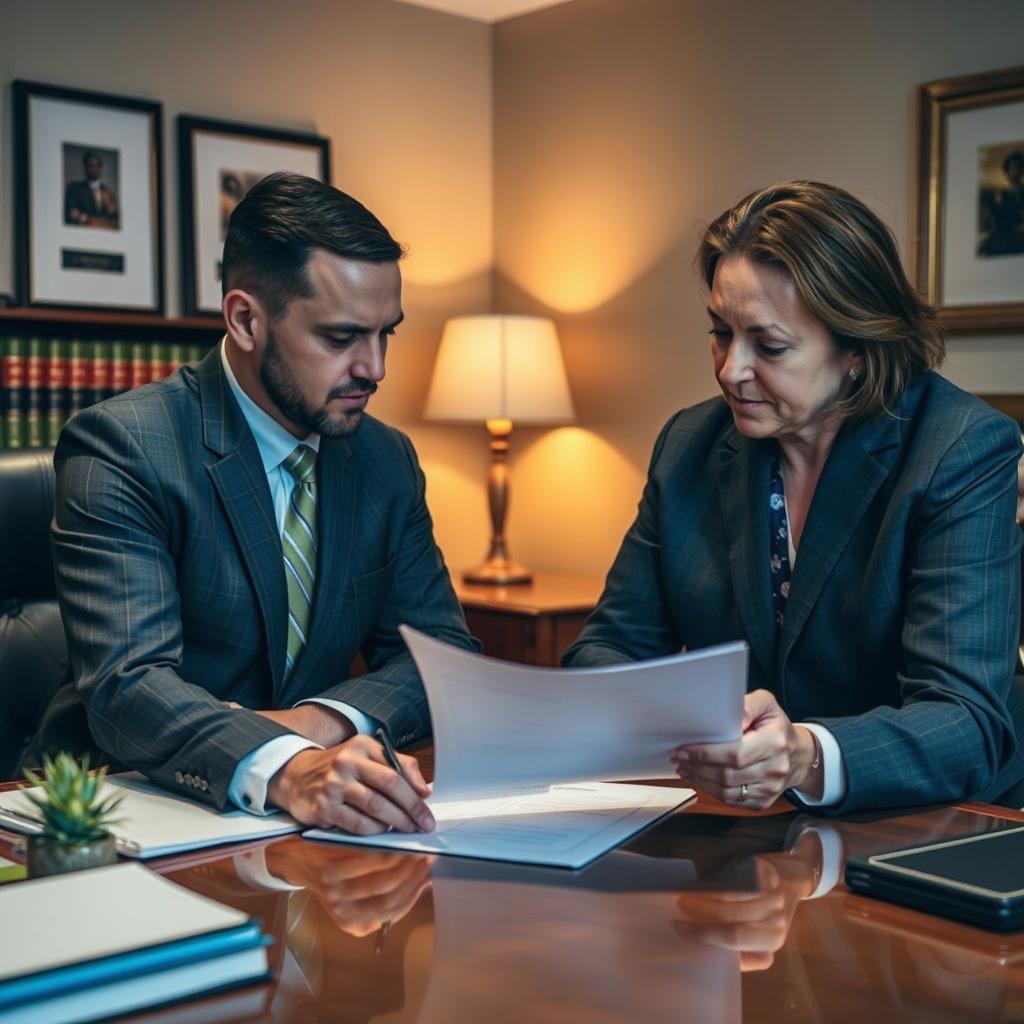
Marital Settlement Agreement Lawyer Prince George County
A Marital Settlement Agreement Lawyer Prince George County drafts and enforces the binding contract that finalizes your divorce. Law Offices Of SRIS, P.C. —Advocacy Without Borders. handles these critical documents to protect your rights to property, support, and custody. The terms you agree to now govern your future. Get the terms right the first time with experienced legal counsel. (Confirmed by SRIS, P.C.)
Statutory Definition of a Marital Settlement Agreement in Virginia
A Marital Settlement Agreement (MSA) in Virginia is a contract governed by Virginia Code § 20-109.1, which is classified as the enforcement statute for property and support agreements, with the maximum penalty being court enforcement through contempt powers. This code section gives the court the authority to incorporate your signed agreement into your final divorce decree. Once incorporated, the agreement’s terms are no longer just a private contract. They become enforceable court orders. Violating these orders can lead to contempt findings, wage garnishment, liens, and other penalties. The agreement itself must meet Virginia contract law standards. It must be in writing, signed by both parties, and entered into without fraud, coercion, or duress. For a Marital Settlement Agreement Lawyer Prince George County, the primary task is ensuring the document is legally sound and fully protective before submission to the court.
What specific terms must a Virginia MSA address?
A Virginia MSA must explicitly address the division of marital property and debts, spousal support, and if applicable, child custody and support. The agreement should list all assets, from real estate like the family home to retirement accounts and personal property. It must specify who gets what and who is responsible for each debt. Vague language about “fair division” is insufficient and invites future litigation. For child-related matters, the agreement should detail the parenting plan, visitation schedule, and child support amount, which must comply with Virginia guidelines. A precise document prevents constant returns to the Prince George County Circuit Court.
How does an MSA differ from a court-decided divorce?
An MSA represents a negotiated settlement between spouses, while a court-decided divorce results from a judge’s ruling after a contested trial. With an MSA, you and your spouse control the outcome on terms like asset division and support. You avoid the uncertainty, public exposure, and higher cost of a trial. The Prince George County Circuit Court still must review and incorporate the agreement to grant the divorce. However, the process is typically faster and less adversarial when a solid MSA is presented by your marital settlement lawyer Prince George County.
Can an MSA be modified after the divorce is final?
Modifying an MSA after incorporation is difficult and generally requires proving a material change in circumstances or mutual consent. Terms related to property division are usually final and cannot be modified. Spousal support provisions may be modifiable unless the agreement explicitly states they are non-modifiable. Child support and custody arrangements are always subject to court modification based on the child’s best interests and changes in parental circumstances. Attempting to modify any term requires filing a new petition with the Prince George County Circuit Court.
The Insider Procedural Edge in Prince George County
The Prince George County Circuit Court is located at 6601 Courts Drive, Prince George, VA 23875. This court handles all divorce filings and MSA approvals for the county. Filing an uncontested divorce with an MSA typically follows a specific timeline. You must first meet Virginia’s residency requirement—at least one spouse must live in Virginia for six months before filing. The complaint for divorce is filed, followed by a waiting period. For divorces with no minor children, the waiting period is six months from the date of separation. With minor children, it is one year. Once the waiting period is met and the MSA is signed, you can submit the agreement and a final decree for the judge’s review. The current filing fee for a divorce complaint in Prince George County is $89, but other costs for service of process or parenting classes may apply. Procedural specifics for Prince George County are reviewed during a Consultation by appointment at our Prince George County Location.
What is the typical timeline for finalizing a divorce with an MSA in Prince George County?
The timeline for finalizing a divorce with an MSA in Prince George County is primarily controlled by Virginia’s mandatory separation periods. For couples without minor children, the absolute minimum is six months from the date of separation. For couples with minor children, it is one year. After meeting this residency and separation requirement, an uncontested case with a properly drafted MSA can be finalized by the Prince George County Circuit Court within a few weeks of filing the final paperwork. Delays occur if the MSA is poorly drafted or if the court’s docket is busy.
What are the common filing mistakes that delay an MSA approval?
Common filing mistakes include incomplete financial disclosures, incorrect notarization, and failing to attach required documents like the MSA itself or the vital statistics form. The Prince George County Circuit Court clerk’s Location will reject filings with missing information or incorrect fees. Using generic, non-Virginia-specific MSA templates often leads to rejections or court orders to amend the agreement. A marital settlement lawyer Prince George County ensures all forms are completed accurately and comply with local rules.
Penalties for Violating an MSA & Defense Strategies
The most common penalty for violating an incorporated MSA is a finding of contempt by the Prince George County Circuit Court. When an MSA is incorporated into your final divorce decree, its terms become court orders. Failure to comply—such as not paying spousal support, refusing to transfer property, or interfering with custody—is a violation of a court order. The aggrieved party can file a Motion for Rule to Show Cause. The court can then impose penalties to compel compliance or punish the violation.
| Offense | Penalty | Notes |
|---|---|---|
| Failure to Pay Spousal Support | Wage garnishment, lien on property, contempt fines, or jail up to 12 months. | Va. Code § 20-112 allows income deduction orders. |
| Failure to Transfer Property | Contempt finding; court may sign deed on behalf of refusing party. | The court can act to effectuate the property division. |
| Violation of Custody/Parenting Plan | Contempt; modification of custody terms; make-up visitation; attorney’s fees. | Best interest of the child is paramount. |
| Non-Payment of Debts as Ordered | Contempt; judgment for the amount paid by the other party; credit damage. | Creditors can still sue both parties originally liable. |
[Insider Insight] Prince George County prosecutors and judges treat incorporated MSAs as strict court orders. They expect compliance. In contempt proceedings, demonstrating a willful and intentional violation is key for the moving party. Defenses often focus on an inability to pay due to job loss or illness, or a good-faith dispute over the agreement’s interpretation. However, simply disagreeing with the order is not a defense. If you face an enforcement action, immediate legal counsel from a Virginia family law attorney is critical.
What are the immediate consequences of an MSA violation?
Immediate consequences include the filing of an enforcement motion, incurring of opposing attorney’s fees, and a potential temporary court order for immediate compliance. The Prince George County Circuit Court can issue an immediate income withholding order for support arrears. For custody violations, the court may temporarily alter the parenting schedule. These actions happen quickly, often before a full hearing, to prevent ongoing harm.
How can a party defend against an allegation of violating an MSA?
A party can defend by proving the violation was not willful, such as due to a documented financial hardship, or by showing the other party is misinterpreting the agreement’s terms. Another defense is that the moving party “cleaned their hands” by also violating the agreement. The court may also consider whether the agreement’s terms are specific enough to be enforceable. Ambiguity in the MSA can be a valid defense against contempt.
Why Hire SRIS, P.C. for Your Prince George County MSA
SRIS, P.C. provides strong advocacy in Prince George County with attorneys who understand both family law and local court procedures. Our team approaches your Marital Settlement Agreement with the precision it demands. We draft clear, thorough agreements that anticipate future disputes and minimize enforcement problems. We know the judges and the local rules in the Prince George County Circuit Court. Our goal is to secure a stable, enforceable agreement that allows you to move forward.
Attorney Background: Our family law attorneys bring direct experience in drafting and litigating MSAs. They are familiar with Virginia Code Title 20 and the specific expectations of the Prince George County bench. This local knowledge is applied to every case, from simple asset divisions to complex support structures.
SRIS, P.C. has achieved favorable outcomes for clients in Prince George County by focusing on careful preparation and strategic negotiation. We prepare the agreement not just for today’s signatures, but for its life as a court order. We identify tax implications, retirement account division rules, and long-term support consequences that DIY forms miss. Our experienced legal team ensures your rights are protected in the document that will govern your post-divorce life.
Localized FAQs for Prince George County MSAs
What is the role of a Marital Settlement Agreement Lawyer Prince George County?
A Marital Settlement Agreement Lawyer Prince George County drafts, reviews, and negotiates the binding contract that divides assets, sets support, and establishes custody. They ensure the agreement complies with Virginia law and is enforceable in Prince George County Circuit Court. Their work prevents future legal disputes over the divorce terms.
How is property divided in a Prince George County MSA?
Property is divided according to the terms negotiated in the MSA. Virginia is an equitable distribution state, meaning a fair, not necessarily equal, split. The agreement should list all marital assets and debts and specify who receives each item. A lawyer ensures the division is legally sound and tax-efficient.
Can I create my own MSA without a lawyer in Virginia?
You can create your own MSA, but it is risky. DIY agreements often contain ambiguous language, omit required terms, or fail to address tax and legal consequences. The Prince George County Circuit Court may reject a poorly drafted agreement, causing delays and requiring you to hire a lawyer to fix it.
What happens if my spouse violates our signed MSA?
If your spouse violates an MSA incorporated into the divorce decree, you file an enforcement motion in Prince George County Circuit Court. The court can hold them in contempt, order payment, transfer property, award attorney’s fees, or impose jail time for willful non-compliance. Legal action is necessary to enforce the order.
Does an MSA eliminate the need to go to court for divorce?
An MSA significantly reduces court involvement but does not eliminate it. You must still file for divorce with the Prince George County Circuit Court and submit the MSA for the judge’s review and incorporation. The final hearing is usually brief if the agreement is proper, but a court appearance is still required.
Proximity, CTA & Disclaimer
Our Prince George County Location serves clients throughout the area. The Prince George County Circuit Court at 6601 Courts Drive is the central venue for finalizing your divorce and MSA. Consultation by appointment. Call 888-437-7747. 24/7. For related legal challenges, our firm also provides criminal defense representation and DUI defense in Virginia.
Law Offices Of SRIS, P.C.
Prince George County, Virginia
Phone: 888-437-7747
Past results do not predict future outcomes.