
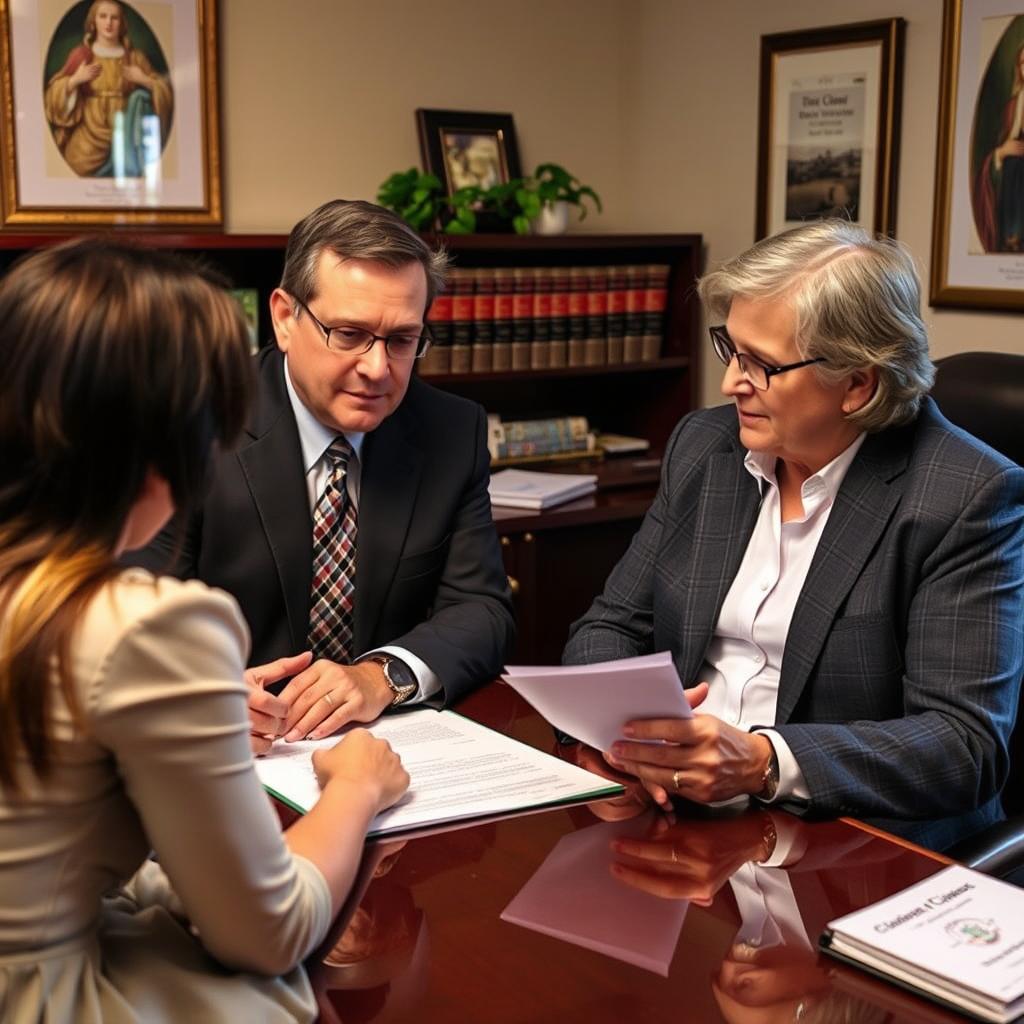
Catholic Annulment Lawyer Loudoun County — Understanding Your Options
A Catholic annulment in Loudoun County is a declaration by a Church tribunal that a marriage lacked a fundamental element for a sacramental bond. This religious annulment process is distinct from a civil divorce. Law Offices Of SRIS, P.C. provides experienced legal guidance to handle the complex interplay between Virginia family law and Canon Law.
Last verified: April 2026 | Loudoun County General District Court | Virginia General Assembly
What is a Catholic Annulment in Virginia?
A Catholic annulment, or declaration of nullity, is a finding by a diocesan tribunal that a marriage was invalid from its inception according to the laws of the Catholic Church. It is not a “Catholic divorce.” The process examines whether essential elements for a sacramental marriage were present at the time of the wedding, such as free consent, understanding of the commitment, and the capacity to fulfill marital obligations. This process is entirely separate from the civil divorce obtained in Loudoun County Circuit Court under statutes like Va. Code § 20-91. A civil divorce ends the legal marriage; a Church annulment addresses its sacramental status.
External Legal Resources
For the official Virginia statutes governing marriage and divorce, refer to the Virginia Code Title 20, Chapter 6. For information on the local court handling family law matters, visit the Loudoun County Circuit Court website.
The Religious Annulment Process in Loudoun County
The religious annulment process involves submitting a formal petition to a diocesan tribunal, often the Arlington Diocese Tribunal for Loudoun County residents. The process includes gathering testimony, submitting documentation, and possibly a formal hearing. It is crucial to coordinate this process with your ongoing civil divorce proceedings in Loudoun County Circuit Court. A settlement agreement addressing property, support, and custody under Va. Code § 20-107.3 can proceed independently of the Church’s timeline.
- Consult with a canon lawyer or your parish priest to discuss grounds for an annulment.
- Initiate the civil divorce process in Loudoun County Circuit Court with a family law attorney.
- File the formal petition for a declaration of nullity with the diocesan tribunal.
- Participate in the tribunal’s fact-finding process, which may include interviews and submitting evidence.
- Await the tribunal’s decision, which can be appealed by either party.
Why Legal Guidance is Important
While a priest or canon lawyer handles the Church process, a Virginia family law attorney ensures your civil rights and financial interests are protected. Issues like equitable distribution of assets, spousal support under Va. Code § 20-107.1, and child custody under § 20-124.2 are determined solely in civil court. An attorney can draft marital settlement agreements that are mindful of the annulment process, helping avoid conflicts between civil and religious outcomes.
Samantha Rae Powers, Associate Attorney at Law Offices Of SRIS, P.C. — Licensed in VA, FL. Experienced family law and civil litigator. View Samantha Rae Powers’s Profile
Case Results & Firm Authority
Law Offices Of SRIS, P.C., founded in 1997 by former prosecutor Mr. Sris, brings over 120 years of combined attorney experience to family law cases. The firm has a documented record of 4,739+ case results with a 93%+ favorable outcome rate firm-wide. In Loudoun County, our attorneys have achieved positive resolutions in numerous family law matters. Mr. Sris personally amended Virginia’s equitable distribution statute, Va. Code § 20-107.3, demonstrating deep involvement in the state’s family law framework.
Results may vary. Prior results do not guarantee a similar outcome.
Contact Our Loudoun County Family Law Office
Our Ashburn location serves clients throughout Loudoun County. We are accessible to the Loudoun County courts. If you need a church annulment lawyer Loudoun County residents trust for integrated legal and canonical advice, contact us.
Law Offices Of SRIS, P.C. — Ashburn/Loudoun
20130 Lakeview Center Plaza, Room No. 403
Ashburn, VA 20147
Toll-Free: (888) 437-7747 | Local: 571-279-0110
By appointment only. 24/7 phone consultations.
We serve Ashburn, Leesburg, Sterling, Purcellville, South Riding, Brambleton, Aldie, Hamilton, Lovettsville, Middleburg, and Round Hill.
FAQs: Catholic Annulment Lawyer Loudoun County
Does a Catholic annulment affect the legitimacy of children?
No. A Church declaration of nullity has no effect on the legitimacy of children under civil law. Children born from a marriage later annulled by the Church remain legitimate in the eyes of both the state and the Church, with all rights to inheritance and parental support intact.
How long does the Catholic annulment process take in Loudoun County?
It depends. The process through the Arlington Diocese Tribunal can take 12 to 24 months on average. The timeline depends on case complexity, tribunal caseload, and how promptly required information is submitted. It often runs parallel to the civil divorce process in Loudoun County Circuit Court.
Can I remarry in the Catholic Church after an annulment?
Yes. If the diocesan tribunal grants a decree of nullity, both parties are free to marry in the Catholic Church, provided all other canonical requirements are met. If the tribunal denies the petition, the parties cannot remarry within the Church unless a successful appeal is made.
Do I need a civil divorce and a Catholic annulment?
Yes. A civil divorce from Loudoun County Circuit Court is necessary to legally terminate the marriage under Virginia law. A Catholic annulment is a separate religious process to determine the marriage’s sacramental validity. You must obtain a civil divorce before the Church will finalize an annulment.
What are common grounds for a Catholic annulment?
Common grounds include lack of due discretion (immaturity, pressure), lack of capacity to assume essential marital obligations, or intention against children, fidelity, or permanence at the time of the wedding. The tribunal investigates the spouses’ mindsets and circumstances at the precise moment of consent.