
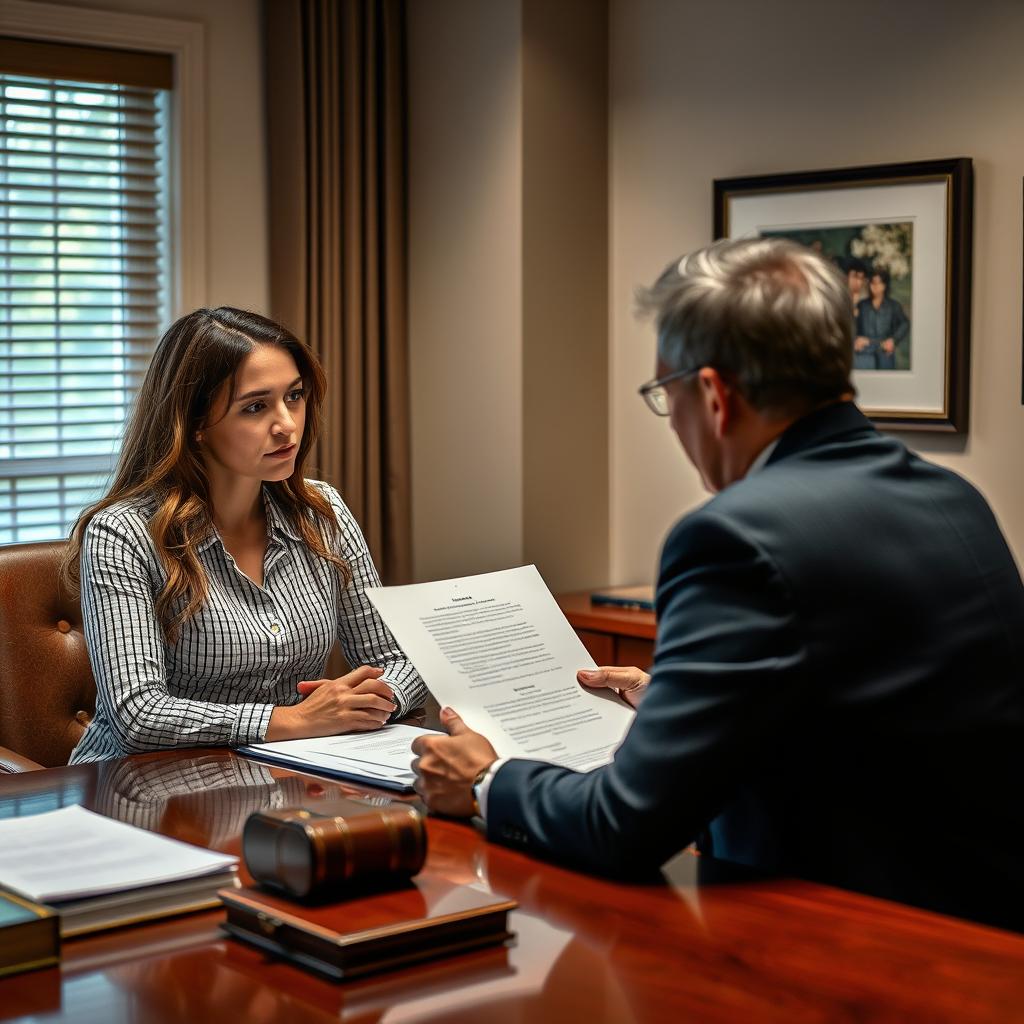
Cheap Uncontested Divorce Lawyer Virginia, VA
You and your spouse have agreed the marriage is over and want to move forward without the expense and conflict of a courtroom battle. You live in Virginia and you have heard that an uncontested divorce can be completed for a manageable cost — but you want to know how the process works, what the requirements are, and how to find a lawyer who handles cheap uncontested divorce throughout the Commonwealth. At Law Offices Of SRIS, P.C., Mr. Sris and his Of Counsel represent individuals across Virginia in uncontested divorce matters, guiding clients through the legal steps while keeping costs reasonable. Whether you are in Fairfax County, Richmond, Hampton Roads, or the Shenandoah Valley, the firm works to help you obtain a final decree of divorce efficiently. Reach our location at (888) 437-7747. Law Offices Of SRIS, P.C. — Advocacy Without Borders.
Strategy Options for a Budget‑Friendly Uncontested Divorce
In Virginia, an uncontested divorce typically means both parties agree on all material issues — property division, spousal support, and, if there are minor children, custody and child support — and the marriage is dissolved without a trial. The most cost‑effective path is a no‑fault divorce under Va. Code § 20‑91(9). For couples with no minor children, a six‑month separation combined with a signed property settlement agreement can serve as the ground. For couples with minor children, a one‑year separation applies, though the agreement can still streamline everything. The settlement agreement is the centerpiece of a cheap uncontested divorce; it resolves all outstanding financial and parenting terms, eliminating the need for contested hearings.
Mr. Sris and his Of Counsel approach each cheap uncontested divorce with a strategy designed to keep fees affordable without sacrificing thoroughness. They draft and review settlement agreements, confirm that statutory requirements are met, and prepare all necessary filings for the Circuit Court in the county where one spouse resides. Because Virginia is an equitable distribution state, the court must approve the division of marital property — even in an uncontested case — and an experienced attorney ensures the agreement accurately reflects marital assets and debts so the judge can enter the final decree without delay.
What to Expect in a Virginia Uncontested Divorce
The process begins with confirming that Virginia has jurisdiction: at least one spouse must have been a resident and domiciliary of the Commonwealth for six months before filing (Va. Code § 20‑97). Once the complaint is filed in the appropriate Circuit Court, the separation agreement and any corroborating witness affidavit are submitted. The statutory separation period must have already run, or the parties must have lived separate and apart for the required duration. In uncontested cases, a short hearing — often just a few minutes — is scheduled so the judge can review the agreement and, if satisfied, grant the divorce. Because the parties agree on every issue, there is no discovery, no depositions, and no trial. This is why an uncontested divorce is substantially cheaper than a contested one.
Even a simple uncontested divorce involves important legal considerations. A poorly drafted separation agreement can lead to future disputes over property or support, and missing a filing deadline or statutory requirement can cause a case to be dismissed. Mr. Sris and his Of Counsel handle each uncontested divorce with attention to detail, confirming that all documents comply with Virginia law and that the client’s rights are protected. They represent clients in Circuit Courts across Virginia, including those in Fairfax County, Prince William County, Richmond City, Norfolk, and many other localities. For a consultation, call (888) 437‑7747.
Understanding the Legal Landscape for Virginia Uncontested Divorce
Virginia law provides for both fault‑based and no‑fault divorce. The no‑fault ground is the one used in nearly every cheap uncontested divorce. As noted, Va. Code § 20‑91(9)(a) allows divorce after one year of separation; subsection (9)(b) reduces the period to six months when the parties have no minor children and have entered a written separation agreement. The statute also lists fault grounds — adultery, cruelty, desertion, and conviction of a felony — but pursuing a fault‑based divorce usually leads to litigation, making it inconsistent with the goal of a cheap, uncontested outcome. Mr. Sris and his Of Counsel advise clients on the most practical ground for their situation, always prioritizing a non‑adversarial resolution that keeps costs low.
Virginia is an equitable distribution state. Under Va. Code § 20‑107.3, the court classifies property as marital, separate, or hybrid and then divides the marital estate in a fair — not necessarily equal — manner. In an uncontested divorce, the separation agreement serves as the parties’ own equitable distribution plan, and the court generally follows it. Mr. Sris testified before the Virginia House Courts of Justice Committee in support of 2019 HB 635 (chief patron Del. David Bulova), a bill that revised subsection (g) of § 20‑107.3, addressing procedural issues related to retirement‑plan division. His familiarity with the state’s equitable distribution framework helps clients structure agreements that account for complex assets — such as pensions, business interests, and real estate — while remaining cost‑effective.
Attorney Credentials: Mr. Sris and His Of Counsel
Mr. Sris, Owner and Founder of Law Offices Of SRIS, P.C., founded the firm in 1997 and practices across five jurisdictions: Virginia, Maryland, the District of Columbia, New Jersey, and New York. A former prosecutor, he brings over two decades of experience to family law matters. His involvement in the 2019 revision of Virginia’s equitable distribution statute reflects his thorough understanding of property division in divorce. Mr. Sris and his Of Counsel bring over 120 years of combined legal experience and have achieved over 4,739 documented firm-wide results. Results may vary.
The Of Counsel attorneys — engaged through Excella — are experienced litigation and transactional lawyers who assist Mr. Sris in handling uncontested divorce cases. On every matter, the team works collectively to draft agreements, review financial disclosures, and prepare filings. Because the firm has no employees, the relationship between Mr. Sris and his Of Counsel is one of close collaboration, allowing the team to serve clients across Virginia efficiently while keeping legal fees reasonable.
Frequently Asked Questions
What is a cheap uncontested divorce in Virginia?
A cheap uncontested divorce is a streamlined dissolution where both spouses agree on all issues, eliminating the need for expensive litigation. In Virginia, this is achieved through a no‑fault ground — typically a six‑month or one‑year separation — coupled with a written property settlement agreement that resolves alimony, property division, and child‑related matters. Because the case does not go to trial, attorney fees and court costs are significantly lower than in a contested divorce. For more details, call (888) 437‑7747.
How much does a cheap uncontested divorce cost in Virginia?
The cost of a cheap uncontested divorce in Virginia varies depending on the complexity of the marital estate and the degree of agreement between the spouses. Attorney fees, filing fees, and any costs for appraisals or document preparation contribute to the total. At Law Offices Of SRIS, P.C., Mr. Sris and his Of Counsel offer fee arrangements designed to make uncontested divorce affordable. To discuss the costs in your situation, contact the firm at (888) 437‑7747.
How long does an uncontested divorce take in Virginia?
The timeline for an uncontested divorce in Virginia depends on the applicable separation period and the court’s calendar. Once the separation requirement has been met and all documents are filed, a Circuit Court hearing can usually be scheduled within a few months. Cases without complex property or children often move more quickly. The specific duration varies by jurisdiction; for a consultation, reach Mr. Sris and his Of Counsel at (888) 437‑7747.
Do I need a lawyer for an uncontested divorce in Virginia?
While you are not required to hire a lawyer for an uncontested divorce in Virginia, having legal counsel helps ensure that your settlement agreement is properly drafted and that your rights are protected. A separation agreement that is incomplete or unclear can lead to future disputes, and mistakes in the pleading or service of process can delay the divorce. Mr. Sris and his Of Counsel handle uncontested divorces throughout Virginia and can guide you through the process. Call (888) 437‑7747.
Can a cheap uncontested divorce include child custody and support?
Yes, an uncontested divorce in Virginia can — and should — address child custody, visitation, and support if the parties have minor children. The separation agreement must include a parenting plan that meets the trusted‑interests factors under Va. Code § 20‑124.3, and the child support calculation must follow the Virginia guidelines. When the parties agree, the court will typically incorporate those terms into the final decree, keeping the divorce uncontested and cost‑effective. India is not a signatory to the 1980 Hague Convention on Civil Aspects of International Child Abduction.
What is the difference between a cheap uncontested divorce and a contested divorce in Virginia?
A cheap uncontested divorce is resolved by agreement on all issues, while a contested divorce involves disputes that must be litigated in court. In a contested case, the parties may need discovery, depositions, expert witnesses, and a trial — all of which increase the cost substantially. An uncontested divorce avoids those expenses entirely. Mr. Sris and his Of Counsel first assess whether an uncontested approach is feasible and, if so, work to structure an agreement that meets the client’s goals.
For additional guidance, visit these related pages:
Fairfax County Family Law · Fairfax City Family Law · Falls Church Family Law · Prince William County Family Law · Manassas City Family Law
Primary Virginia legal sources: Virginia Code Title 20 (Domestic Relations) · Virginia Circuit Courts · Virginia’s Judicial System
Attorney advertising. Prior results do not guarantee a similar outcome. Case results depend on a variety of factors unique to each case. Results may vary. Attorney responsible for this advertising: Mr. Sris.