
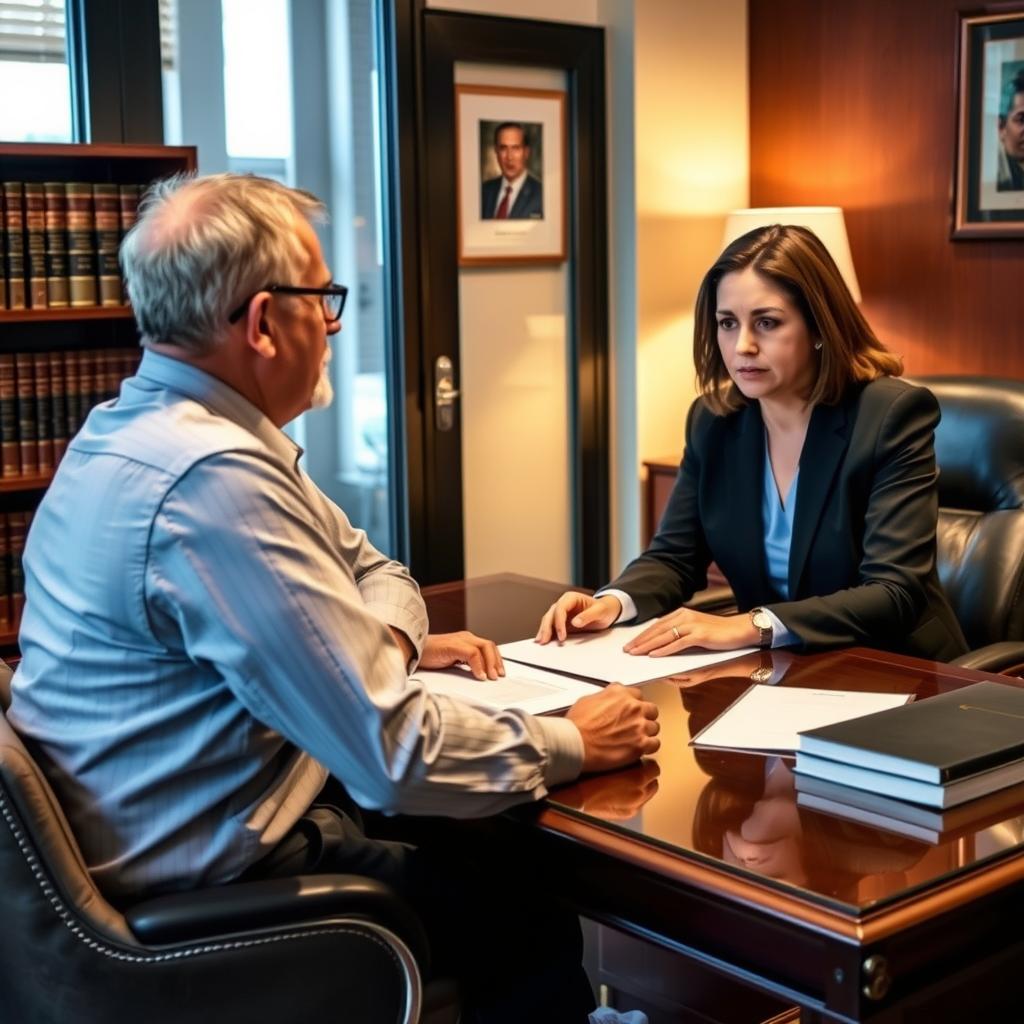
Felony Conviction Divorce Lawyer Powhatan County, VA
Virginia law provides several grounds for divorce, and one of the fault‑based grounds is a spouse’s conviction of a felony resulting in confinement for more than one year. Under Va. Code § 20‑91, this ground allows a party to file for divorce without the waiting period required for no‑fault separation. For a spouse in Powhatan County who is facing the practical and legal complexities of divorce tied to a felony conviction, the matter can involve property division, spousal support, and child‑related issues that are most effectively navigated with experienced guidance. Law Offices Of SRIS, P.C. represents clients in Powhatan County family law matters from its Richmond location. Reach the firm at (888) 437‑7747 to request a consultation. Law Offices Of SRIS, P.C. — Advocacy Without Borders.
What Felony Conviction Divorce Means in Powhatan County
Powhatan County is part of Virginia’s Twelfth Judicial District, and its Circuit Court at 3834 Old Buckingham Rd, Suite C, Powhatan, VA 23139 handles all divorce proceedings, including those filed on the felony‑conviction ground. The Powhatan County Juvenile & Domestic Relations District Court addresses standalone custody, visitation, and support matters, but the divorce itself is adjudicated in Circuit Court. A felony‑conviction divorce under Va. Code § 20‑91 requires that the defendant spouse has been convicted of a felony and sentenced to confinement for a period exceeding one year. There is no separation waiting period, which distinguishes this ground from the no‑fault options. However, the incarcerated spouse’s rights and participation can complicate service of process, discovery, and property division.
Powhatan County’s rural character and local court practices mean that family law cases proceed on a schedule set by the court’s calendar. The Circuit Court judges apply Virginia’s equitable distribution framework under Va. Code § 20‑107.3, dividing marital property fairly but not necessarily equally. When a felony conviction is involved, the circumstances of the offense and incarceration may influence issues such as spousal support, custody, and the ability to reach a negotiated separation agreement. Mr. Sris and his Of Counsel understand the statutory factors the court considers and the procedures necessary to move a case forward even when one party is in custody.
How Mr. Sris and His Of Counsel Handle Felony Conviction Divorce Cases
When a prospective client contacts the firm about a divorce involving a spouse’s felony conviction, the process begins with a thorough evaluation of the marriage’s circumstances, the conviction, and the desired outcome. Mr. Sris and his Of Counsel review the practical considerations: where the incarcerated spouse is located, whether service of process can be accomplished, and whether any property or support issues are likely to be contested. If the parties can reach a written separation agreement resolving all matters, an uncontested divorce may be possible. When disputes arise, the firm prepares the case for litigation in the Powhatan County Circuit Court, addressing equitable distribution, pendente lite support, and, if needed, custody and visitation matters through the appropriate court.
Throughout the case, the team works to explain each step without relying on artificial timelines. The court sets hearing dates and deadlines according to its docket; settlement negotiations, discovery, and potential trial develop at a pace determined by the facts. Virginia law requires at least one corroborating witness for an uncontested divorce hearing, and the firm helps ensure all procedural requirements are met. The goal is always to protect the client’s interests while moving the case toward resolution as efficiently as the law and the facts allow. The firm draws on extensive collective experience in family law and the local practices of Powhatan County courts.
About Mr. Sris and His Of Counsel Team
Mr. Sris, Owner and Founder of Law Offices Of SRIS, P.C., has practiced since 1997 and is admitted in Virginia, Maryland, the District of Columbia, New Jersey, and New York. A former prosecutor, he testified before the Virginia House Courts of Justice Committee in support of 2019 HB 635 (chief patron Del. David Bulova), a bill that revised the equitable distribution statute. Mr. Sris and his Of Counsel bring over 120 years of combined legal experience, with 4,739+ documented firm-wide results. Results may vary. The Of Counsel team includes attorneys with backgrounds that complement the firm’s family law practice, and together they represent clients in Powhatan County and across Virginia.
Frequently Asked Questions
Can a felony conviction be used as grounds for divorce in Virginia?
A spouse convicted of a felony and confined for more than one year provides a fault‑based ground for divorce under Va. Code § 20‑91. Unlike no‑fault grounds, this does not require a separation period before filing. The ground applies regardless of when the offense occurred, as long as the confinement exceeds one year. The divorce itself is filed in the circuit court, and the ground can affect property division, support, and custody determinations. Mr. Sris and his Of Counsel can evaluate how this ground applies in your specific situation.
What are the grounds for divorce in Virginia?
Virginia recognizes no‑fault divorce after six months’ separation with a written agreement and no minor children, or after one year otherwise, and fault grounds including adultery, cruelty, desertion, and felony conviction with imprisonment exceeding one year. Adultery requires no waiting period. Cruelty and desertion have defined statutory requirements. The felony‑conviction ground is available when one spouse is sentenced to a term of incarceration of more than one year for a felony. Each ground has different procedural and evidentiary burdens, and the choice of ground can shape the divorce’s trajectory.
How is child custody decided in Powhatan County when one parent is incarcerated?
Custody is determined under the trusted‑interests‑of‑the‑child standard in Va. Code § 20‑124.3, and a parent’s incarceration is one factor the court may weigh. The Powhatan County Juvenile & Domestic Relations District Court handles custody matters not within an open divorce; the Circuit Court decides custody as part of the divorce case. The ten statutory factors include the child’s relationship with each parent, the parent’s ability to care for the child, and any history of abuse. Incarceration does not automatically terminate parental rights, but it can limit the incarcerated parent’s practical ability to exercise custody or visitation. A guardian ad litem may be appointed to represent the child’s interests. India is not a signatory to the 1980 Hague Convention on Civil Aspects of International Child Abduction.
Is Virginia a community property state?
No, Virginia is an equitable distribution state, meaning marital property is divided fairly but not necessarily equally. Under Va. Code § 20‑107.3, the court classifies property as separate, marital, or hybrid and then distributes the marital share after considering eleven statutory factors, including each spouse’s contributions, the duration of the marriage, and the circumstances surrounding the dissolution. Separate property, such as pre‑marriage assets or inheritances, is generally excluded. Powhatan County Circuit Court oversees all property division in divorce cases. Mr. Sris played a role in the legislative process that resulted in the 2019 revision of subsection (g) of this statute.
How long does a divorce take in Powhatan County?
The timeline varies based on whether the divorce is contested or uncontested, the court’s docket, and the complexity of the issues. Uncontested divorces with a signed separation agreement typically progress more quickly; contested divorces with custody, support, or property disputes extend longer. For felony‑conviction divorces, the timeline may also be affected by the incarcerated spouse’s ability to participate and whether service of process is straightforward. The court schedules hearings on its own calendar, and Mr. Sris and his Of Counsel work to advance the case efficiently.
For guidance on your specific situation, reach Law Offices Of SRIS, P.C. at (888) 437‑7747.
Virginia Code Title 20 — Domestic Relations · Virginia Judicial System · State Corporation Commission Business Filings
Attorney advertising. Prior results do not guarantee a similar outcome.
Case results depend on a variety of factors unique to each case.