
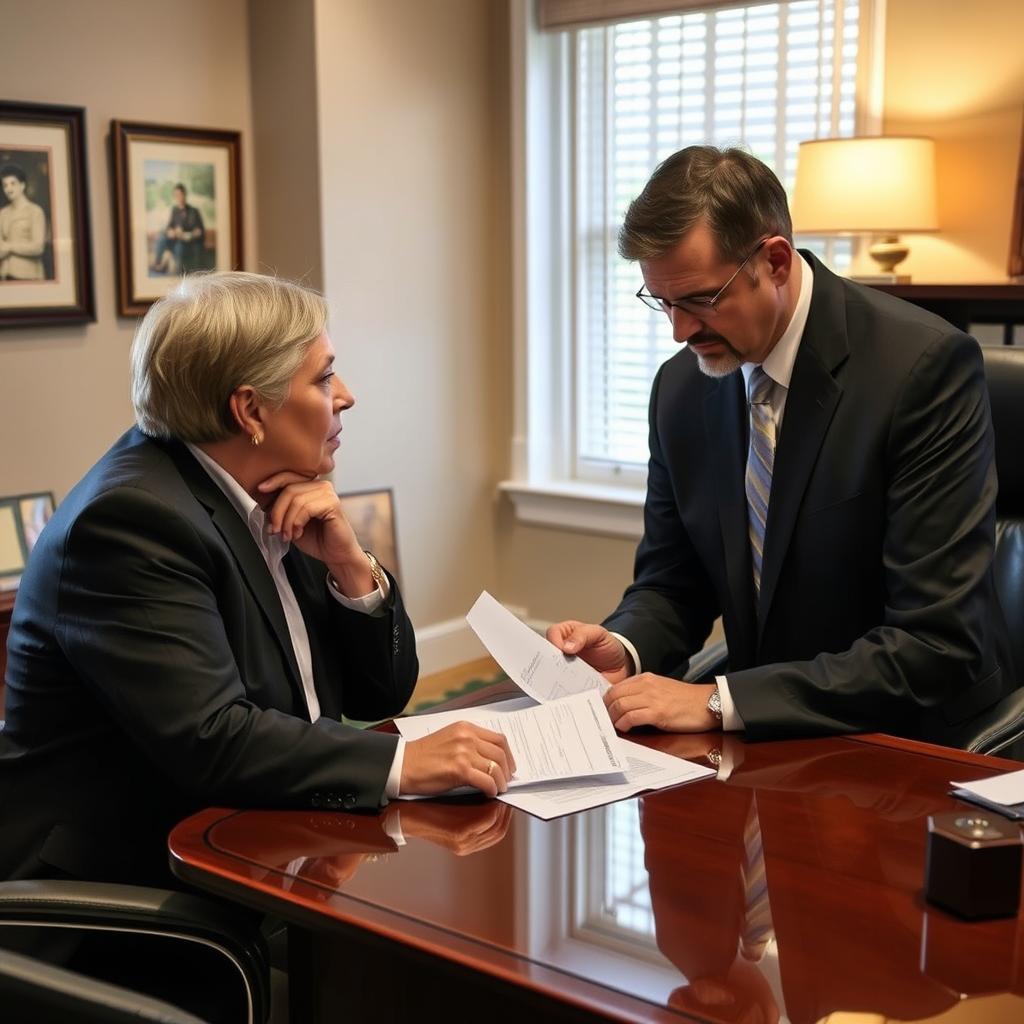
Supervised Visitation Lawyer Rappahannock County, VA
Supervised visitation is a court-ordered arrangement in which a non‑custodial parent spends time with a child under the watch of a neutral third party. In Rappahannock County, Virginia, these orders arise in divorce, custody, and child‑protective cases when a judge determines that unsupervised contact may place the child at risk. Law Offices Of SRIS, P.C. represents parents and other family members in Rappahannock County whose visitation matters are before the Rappahannock County Juvenile and Domestic Relations District Court or the Rappahannock County Circuit Court. The firm’s family law practice has concentrated on cases across Virginia since 1997, and Mr. Sris and his Of Counsel have extensive experience advocating for visitation arrangements that protect the child’s welfare while preserving the parent‑child relationship. Whether you are responding to a motion for supervised visitation or seeking to modify an existing order, having an experienced attorney who understands the local courts at 250 Gay Street, Washington, Virginia, can make a meaningful difference. For a consultation, reach Law Offices Of SRIS, P.C. at (888) 437‑7747. Law Offices Of SRIS, P.C. – Advocacy Without Borders.
What Supervised Visitation Means in Rappahannock County
Rappahannock County is a rural community at the edge of Shenandoah National Park, with its principal towns of Washington, Sperryville, and Flint Hill. The county’s family law matters are heard in two courts: the Rappahannock County Juvenile and Domestic Relations District Court handles standalone custody, visitation, child support, and protective‑order cases, while the Rappahannock County Circuit Court exercises jurisdiction over divorce, equitable distribution, and all ancillary visitation issues that arise within a divorce proceeding. A supervised visitation order can originate in either court. In the J&DR court, a petition may be filed by a parent, a guardian, or a local department of social services when allegations of domestic violence, substance abuse, or neglect raise concerns about the child’s safety during unsupervised parenting time. In the Circuit Court, supervised visitation is often addressed as part of a contested divorce or custody trial, where the judge weighs the trusted‑interests factors set out in the Virginia Code.
Virginia law gives courts broad authority to shape visitation in a manner that serves the child’s welfare. Under Va. Code § 20‑124.2, a court may order visitation on terms and conditions it deems appropriate, including requiring that parenting time be supervised by a family member, a professional supervisor, or a designated agency. The court considers the ten statutory best‑interests factors listed in Va. Code § 20‑124.3, which include each parent’s relationship with the child, any history of family abuse, and the demonstrated ability of each parent to support the child’s relationship with the other parent. Because Rappahannock County shares the judges of the Twentieth Judicial District with Fauquier and Loudoun Counties, its family law docket blends the procedural norms of a small rural court with the legal standards applied across Northern Virginia. This dual character makes it important to work with counsel who are familiar with how these courts approach supervised visitation motions, evidentiary hearings, and the involvement of guardians ad litem.
How Mr. Sris and His Of Counsel Handle Supervised Visitation Cases
Mr. Sris and his Of Counsel take a methodical approach to supervised visitation cases in Rappahannock County. The firm begins by reviewing the circumstances that led to the request for supervision—whether those circumstances involve unproven allegations, a prior adjudication of abuse, or a parent’s struggle with a treatable condition—and identifies the legal and factual arguments that are most likely to persuade the court. In many cases, the initial goal is to negotiate a temporary agreement that preserves the parent‑child bond while the litigation proceeds. When agreement is not possible, Mr. Sris and his Of Counsel prepare the case for a full evidentiary hearing, gathering testimony from witnesses, coordinating with mental‑health or substance‑abuse professionals where appropriate, and challenging the admissibility and weight of evidence that does not meet the court’s standards.
Throughout the process, the firm keeps the focus on the child’s best interests and the parent’s right to a meaningful relationship. Mr. Sris and his Of Counsel have experience working with guardians ad litem, who are often appointed by the Rappahannock County courts in contested visitation cases, and understand how to present a parent’s position in a way that addresses the guardian’s concerns. The team also helps clients comply with any conditions the court may impose—such as completing a parenting class or undergoing an evaluation—so that the parent is in the strong $1 to seek a modification or termination of supervision when the time is right. The timeline for resolving a supervised visitation dispute depends on the court’s calendar, the complexity of the allegations, and the willingness of the parties to reach a middle ground, but Mr. Sris and his Of Counsel work throughout to move the matter toward a resolution that protects both the child and the parent‑child relationship.
About Mr. Sris and His Of Counsel Team
Mr. Sris is the Owner and Founder of Law Offices Of SRIS, P.C. He has practiced in Virginia, Maryland, the District of Columbia, New Jersey, and New York since 1997 and brings the perspective of a former prosecutor to the family law matters the firm handles. Mr. Sris testified before the Virginia House Courts of Justice Committee in support of 2019 HB 635 (chief patron Del. David Bulova). Mr. Sris and his Of Counsel bring over 120 years of combined legal experience. Results may vary. Mr. Sris and his Of Counsel have documented 4,739+ case results across all practice areas since 1997.
All of the firm’s other attorneys serve as Of Counsel. This structure allows Law Offices Of SRIS, P.C. to draw on a deep bench of experienced practitioners without the constraints of a traditional associate‑partner model. Every attorney involved in a Rappahannock County supervised visitation matter has extensive litigation experience in Virginia family law, and each works collaboratively with Mr. Sris to develop a case strategy that is grounded in the facts and the law. The team’s approach is direct and practical: explain the legal landscape clearly, present the strongest available evidence, and advocate for an outcome that the court can adopt with confidence. The firm’s Fairfax Location at 4008 Williamsburg Court, Fairfax, VA 22032 is available by appointment, and clients throughout Rappahannock County can schedule a consultation by calling (888) 437‑7747.
Frequently Asked Questions
What is supervised visitation and when is it ordered in Rappahannock County?
Supervised visitation is a court‑ordered arrangement in which a parent’s time with a child is monitored by a neutral third party to ensure the child’s safety. In Rappahannock County, a judge may order supervised visitation when credible evidence suggests that unsupervised contact could expose the child to a risk of harm, such as in cases involving allegations of domestic violence, substance abuse, or severe parental conflict. The order can be entered by the Rappahannock County Juvenile and Domestic Relations District Court in standalone custody and visitation petitions, or by the Rappahannock County Circuit Court in a divorce or custody trial. The court tailors the supervision to the facts—choosing a family member, a professional supervisor, or a supervised visitation center—and typically sets conditions the parent must meet before the supervision can be lifted. For guidance on your specific situation, reach Law Offices Of SRIS, P.C. at (888) 437‑7747.
What does the court consider before imposing supervised visitation?
The court evaluates the best interests of the child using the ten factors in Va. Code § 20‑124.3, which include each parent’s relationship with the child, any history of family abuse, and the parent’s willingness to support the child’s relationship with the other parent. When a request for supervised visitation is before the Rappahannock County courts, the judge also looks at the specific allegations that prompted the request and whether those allegations are supported by evidence such as police reports, protective orders, or testimony from a guardian ad litem. The court’s focus is on what arrangement will protect the child while still allowing the parent‑child relationship to continue, if possible. The judge may order a home study, a psychological evaluation, or supervised visits on an interim basis while the full hearing is pending. To discuss the details of your matter, contact Law Offices Of SRIS, P.C. at (888) 437‑7747.
How can a parent seek to modify or end a supervised visitation order in Rappahannock County?
A parent can petition the court that issued the order for a modification or termination of supervised visitation by showing a material change in circumstances that supports the change. In Rappahannock County, this may mean demonstrating that the parent has completed a required treatment program, maintained sobriety, attended parenting classes, or otherwise addressed the concerns that led to the supervision order. The parent files a motion with the same court—either the J&DR or the Circuit Court—and presents evidence at a hearing. The court weighs the child’s best interests anew and may gradually reduce supervision rather than eliminate it entirely, depending on the facts. Having an attorney who can present the evidence clearly and work with the guardian ad litem can improve the likelihood of a favorable outcome. For a consultation, reach Mr. Sris and his Of Counsel at (888) 437‑7747.
Do I need a lawyer for a supervised visitation case in Rappahannock County?
You are not required to have a lawyer, but supervised visitation cases involve significant constitutional interests—your right to parent your child—and the procedural and evidentiary rules of the Virginia courts are complex. In Rappahannock County, a parent facing a motion for supervised visitation must respond to allegations that could affect future custody and visitation orders for years. An attorney can help you gather admissible evidence, cross‑examine witnesses, work with a guardian ad litem, and present a coherent narrative to the court. Because the outcome can determine whether you see your child in a monitored setting or in your own home, working with an experienced family law attorney is a prudent step. For guidance on your specific situation, reach Law Offices Of SRIS, P.C. at (888) 437‑7747.
What is the role of a guardian ad litem in Rappahannock County supervised visitation cases?
A guardian ad litem (GAL) is a court‑appointed attorney who represents the child’s best interests and makes an independent recommendation to the judge. In Rappahannock County, the J&DR and Circuit courts frequently appoint a GAL in contested visitation cases to investigate the family situation, interview the child and the parents, and report to the court on what living and visitation arrangement would best serve the child. The GAL’s recommendation carries weight, but it is not binding—the parent’s attorney can challenge the GAL’s reasoning, present contrary evidence, and advocate for a different outcome. Mr. Sris and his Of Counsel are familiar with working alongside GALs in Virginia family courts and know how to present a parent’s case in a manner that addresses the GAL’s stated concerns. To discuss the role a GAL may play in your case, contact Law Offices Of SRIS, P.C. at (888) 437‑7747.
How does being in a rural county like Rappahannock affect a supervised visitation case?
Rappahannock County’s small size means the courts handle fewer family law cases overall, which can allow for more focused judicial attention, but it also means that limited local resources—such as professional visitation supervisors or mental‑health evaluators—may require the parties to look to nearby communities. The courthouse at 250 Gay Street in Washington serves as the single venue for all county court proceedings, and its rural setting means that travel distances for witnesses, supervisors, and attorneys must be factored into any visitation plan. The court often relies on guardians ad litem and social‑services professionals who are familiar with the local community, and this can shape how allegations are investigated and resolved. Understanding those practical dynamics is an important part of building a case strategy. For a consultation, reach Mr. Sris and his Of Counsel at (888) 437‑7747.
Fairfax County family law representation · Fairfax City family law practice · Prince William County family law attorney · Manassas family law services
Attorney advertising. Prior results do not guarantee a similar outcome. Case results depend on a variety of factors unique to each case. Results may vary.