
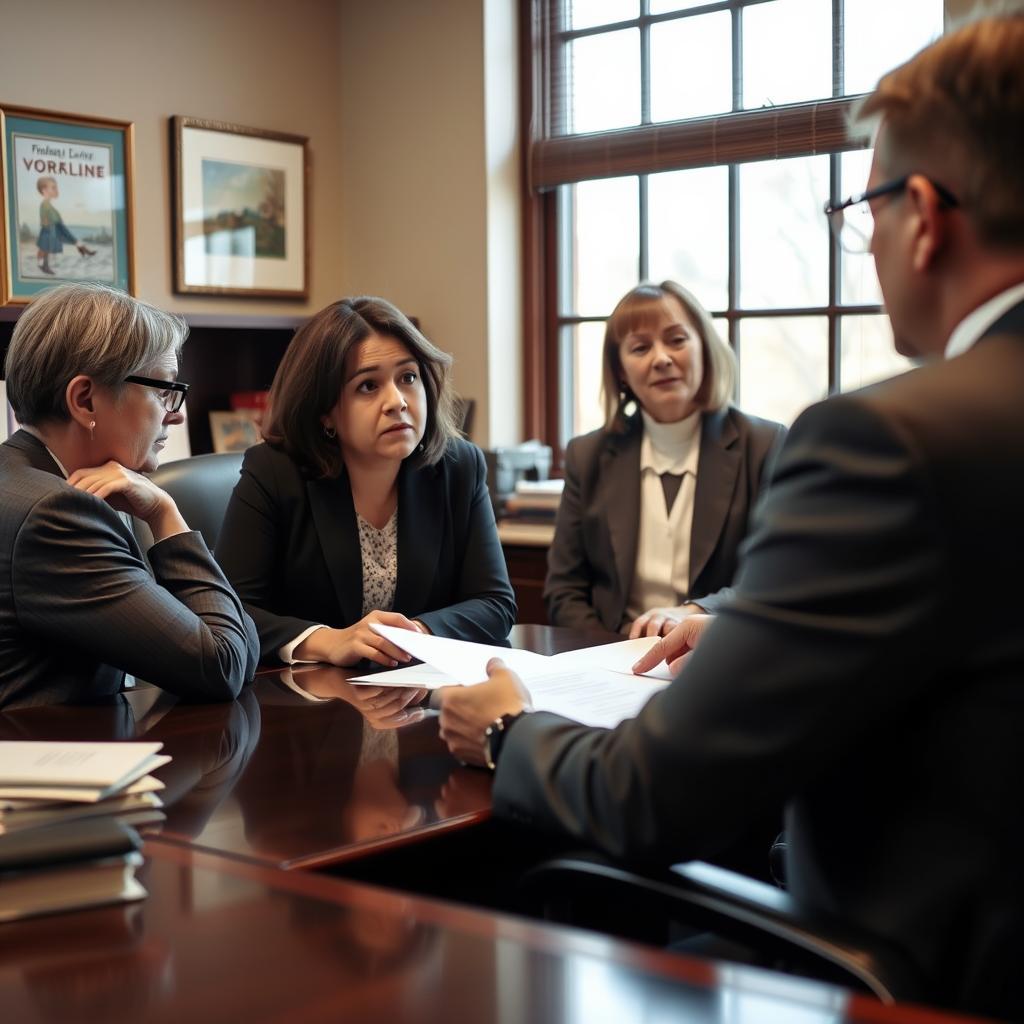
Kinship Guardianship Lawyer Fauquier County, VA
Family law matters involving a child often require swift and compassionate legal action. When a parent is unable—because of illness, incarceration, deployment, or other serious circumstances—to care for a child, relatives frequently step in to provide stability. In Virginia, the legal tool for that situation is a kinship guardianship, governed primarily by Va. Code § 64.2‑2000 et seq. A kinship guardian is a relative (grandparent, aunt, uncle, adult sibling, or other close family member) who is formally appointed by the circuit court to make decisions for the child and to provide day‑to‑day care. Unlike adoption, a guardianship does not sever the legal relationship between the child and the parent. The Fauquier County Circuit Court at 6 Court Street, Warrenton, VA 20186 hears these petitions. Law Offices Of SRIS, P.C. assists families in Warrenton, New Baltimore, Bealeton, Marshall, The Plains, and across Fauquier County who want to establish a legally recognized relationship with a child. Reach us at (888) 437‑7747 to discuss your family’s circumstances. Law Offices Of SRIS, P.C. – Advocacy Without Borders.
What Kinship Guardianship Means in Fauquier County
Kinship guardianship in Virginia is a civil proceeding that places a relative in a court‑ordered role as the child’s primary caregiver. The petition is filed in the Fauquier County Circuit Court, which has jurisdiction under the Virginia Uniform Guardianship and Protective Proceedings Article. The relative steps into the shoes of a parent for most day‑to‑day decisions—education, medical care, and general welfare—but does not become a legal parent. The biological parents’ rights are not terminated; they may retain visitation rights or the obligation to provide financial support. Because Fauquier County includes both rural and exurban communities connected by I‑66 and Route 29, many families choose kinship guardianship to keep a child in a familiar environment near extended family rather than placing the child in foster care.
The court’s primary focus is the best interests of the child. It will consider the child’s relationship with the proposed guardian, the parent’s current ability to provide care, and the stability the guardianship would bring. The process typically begins with a petition that names the child, the parent(s), and the proposed guardian, along with supporting affidavits and, in many cases, the consent of the parent. The Fauquier County Circuit Court may require a home study or background check before entering an order. Our Fairfax Location regularly serves clients at the Fauquier County courthouse and understands the local procedural expectations. By guiding families through the statutory requirements, we work to help relatives obtain the legal authority they need to care for a child without unnecessary delay.
How Mr. Sris and His Of Counsel Handle Kinship Guardianship Cases
Mr. Sris and his Of Counsel approach each kinship guardianship matter with a focus on both the legal framework and the family’s immediate needs. We begin by assessing whether a guardianship is the most appropriate remedy or whether another arrangement—such as a power of attorney for the child, an emergency custody order through the Fauquier County Juvenile and Domestic Relations Court, or an adoption—would better serve the child. If a kinship guardianship is appropriate, we prepare the petition and the required supporting documentation, ensuring that every filing complies with the Virginia Code and the local rules of the Fauquier County Circuit Court.
Once the petition is on file, we represent the proposed guardian at scheduled hearings. Because the court’s decision turns on the child’s best interests, we gather relevant evidence: testimony from family members, school records, medical records, and any documentation that illustrates the parent’s current inability to care for the child. When the parent consents, the proceeding may move quickly. When the parent objects, the case can become contested, and the court will hold an evidentiary hearing. Throughout the process, we maintain communication with the family, explaining each step, and we seek to minimize the stress that often accompanies court involvement.
About Mr. Sris and His Of Counsel Team
Mr. Sris, Owner and Founder of Law Offices Of SRIS, P.C., has been practicing since 1997 and is admitted in Virginia, Maryland, the District of Columbia, New Jersey, and New York. He is a former prosecutor whose trial experience informs the way he prepares every family law matter for presentation in court. His background includes testimony before the Virginia House Courts of Justice Committee in support of 2019 HB 635 (chief patron Del. David Bulova), a bill that improved equitable distribution procedures in Virginia divorce and family law cases. That legislative insight is matched by day‑to‑day familiarity with the judges, clerks, and procedures of the Fauquier County Circuit Court.
Mr. Sris is supported by a team of Of Counsel attorneys, each with specific knowledge of Virginia family law and courts. Together, they bring practical courtroom experience to every kinship guardianship case. Our Fairfax Location is staffed by appointment; we routinely appear in Fauquier County and throughout Northern Virginia. We understand the commitment a relative makes when stepping forward to care for a child, and we provide attentive, experience‑based representation through every stage of the proceeding.
Frequently Asked Questions
What is a kinship guardianship in Virginia?
A kinship guardianship is a court‑appointed relationship that gives a relative legal authority to care for a child when the child’s parents are unable to do so. The guardian assumes the daily responsibilities of raising the child—making decisions about education, health care, and general welfare—but does not become a legal parent. The biological parents remain the child’s legal parents. Under Va. Code § 64.2‑2000 et seq., the circuit court may appoint a guardian for a minor if the court finds that the appointment is in the child’s best interests. This arrangement is often used when a grandparent, aunt, or uncle steps in because of a parent’s illness, incarceration, deployment, or other serious hardship.
How does the kinship guardianship process work in Fauquier County?
The process begins with filing a petition in the Fauquier County Circuit Court that names the child, the parents, and the proposed guardian, supported by the consent of the parent or evidence that the parent is unable to provide care. The court may order a background check or a home evaluation. If the parent consents, the court can often enter an order after a brief hearing. If the parent objects, the matter becomes contested and the court will hold an evidentiary hearing at which both sides present evidence. The judge decides whether the guardianship is in the child’s best interests. Once appointed, the guardian receives an order that authorizes them to make decisions and enroll the child in school or obtain medical care.
Who can file for kinship guardianship under Virginia law?
Under Virginia law, a relative of the child who has a significant relationship with the child may file a petition for guardianship. This commonly includes grandparents, aunts, uncles, adult siblings, or other close family members. The petitioner must demonstrate that the guardianship is needed because the parents are unable or unwilling to care for the child. In some situations, the parent may join in the petition and consent to the guardianship. The Fauquier County Circuit Court will scrutinize the relationship and the child’s circumstances before appointing a guardian.
What factors does the court consider in a kinship guardianship case?
The court’s single guiding principle is the best interests of the child. The judge examines the child’s connection to the proposed guardian, the stability the guardianship would provide, the parent’s present ability to care for the child, and any evidence of abuse or neglect. The court also considers the child’s own preference if the child is of sufficient age and maturity. The guardian must demonstrate a willingness and ability to serve. Under the Virginia Uniform Guardianship and Protective Proceedings Article, the court has broad discretion to tailor the guardianship order to the family’s situation, including specifying visitation rights or support obligations.
Can a kinship guardianship be modified or terminated?
Yes, a kinship guardianship may be modified or terminated by the circuit court when circumstances change. If the parent regains the ability to care for the child, they may petition to end the guardianship. Conversely, if the guardian can no longer serve, the court may appoint a successor guardian. The Fauquier County Circuit Court retains jurisdiction and can modify the order on a showing of changed circumstances. An attorney can help prepare the motion and present evidence that the modification serves the child’s best interests.
Do I need a lawyer for a kinship guardianship case in Fauquier County?
While you are not legally required to hire a lawyer, having an experienced family law attorney can help you navigate the statutory requirements and court procedures. A guardianship petition involves legal documents, service of process, and a hearing. Missing a step can delay the process or result in dismissal. Mr. Sris and his Of Counsel have appeared in Fauquier County Circuit Court and understand how local judges evaluate guardianship cases. For a consultation, reach Law Offices Of SRIS, P.C. at (888) 437‑7747.
Also serving kinship guardianship clients in nearby counties: Family Law Lawyer Fairfax County, VA | Family Law Lawyer Prince William County, VA | Family Law Lawyer Stafford County, VA | Family Law Lawyer Loudoun County, VA | Family Law Lawyer Arlington County, VA
Primary sources: Virginia Code Title 64.2 — Guardianship and Protective Proceedings | Fauquier County Circuit Court | Virginia Judicial System
Attorney advertising. Prior results do not guarantee a similar outcome.
Case results depend on a variety of factors unique to each case.