
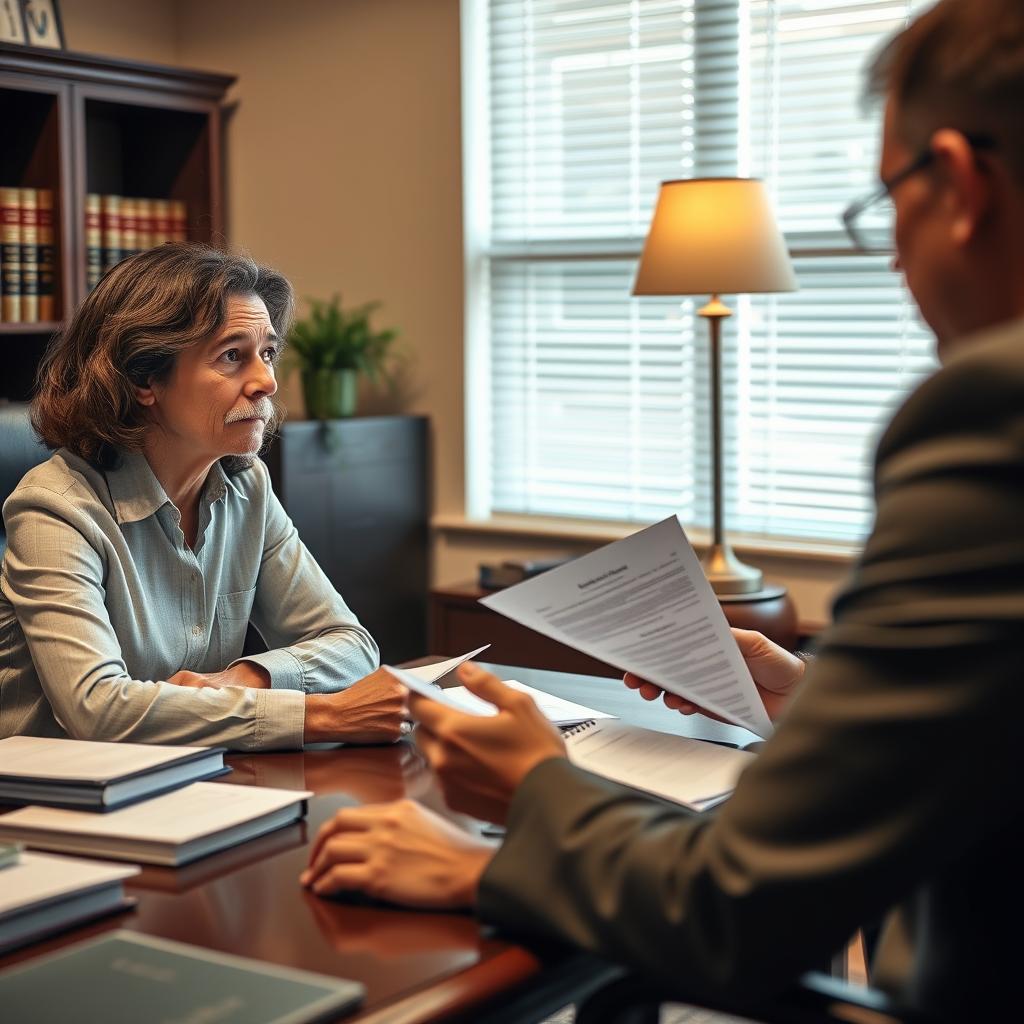
Partner Support Lawyer Dinwiddie County, VA
Family law matters involving spousal support and child support obligations can directly affect your financial future and your family’s stability. In Dinwiddie County, Virginia, the courts address these issues under a statutory framework that gives judges broad discretion to determine both the amount and duration of support orders. Whether you need to establish a new support obligation, modify an existing order, or enforce a court decree, having counsel who understands the local courts and the applicable Virginia statutes strengthens your position in the proceeding. Mr. Sris and his Of Counsel bring experienced multi-state family law representation to Dinwiddie County residents. Law Offices Of SRIS, P.C. Concentrates its practice on complex family law matters, including partner support disputes that arise during separation, divorce, or post-divorce modifications. To discuss your situation and how the firm can assist, reach Law Offices Of SRIS, P.C. at (888) 437-7747. Law Offices Of SRIS, P.C. – Advocacy Without Borders.
What Partner Support Means in Dinwiddie County
Partner support in Virginia encompasses two distinct but related categories: spousal support (commonly referred to as alimony) and child support. Both are governed by statutory provisions that the Dinwiddie County courts apply on a case-by-case basis. Spousal support derives from Va. Code § 20-107.1, which directs the court to consider a list of factors before ordering one spouse to pay support to the other. These factors include each party’s earning capacity, the duration of the marriage, the standard of living established during the marriage, and the contributions of each spouse to the family’s well-being. The Dinwiddie County Juvenile and Domestic Relations District Court typically hears standalone custody and support matters, while the Dinwiddie County Circuit Court handles support issues that are part of a divorce proceeding. Child support, on the other hand, falls under Va. Code § 20-108.1 and follows the Virginia child support guidelines, which calculate the presumptive amount based on the combined gross income of both parents and the number of children. The courts consider the same best-interest factors used in custody determinations, although child support is primarily formula-driven. In either type of support, a party who believes that an existing order is no longer fair or that the other side has failed to pay may petition for modification or enforcement. Because judges in the Eleventh Judicial District have real discretion in weighing the statutory factors, presenting the facts clearly and thoroughly can influence the outcome of a support dispute.
Dinwiddie County lies at the intersection of I-85, Route 1, Route 460, and Route 226, and includes the communities of Dinwiddie and McKenney. The county’s General District Court, presided over by Hon. Thomas Stark IV, handles certain preliminary matters, but family law support issues are primarily adjudicated in the Juvenile and Domestic Relations District Court and the Circuit Court, both located at the Dinwiddie Courthouse in Dinwiddie, Virginia. Our Richmond location represents clients throughout the county, and we are familiar with the procedural expectations of the local bench. While spousal support and child support law is statewide, the way a particular judge applies the statutory factors can differ from one jurisdiction to the next. Having an attorney who appears regularly in the Dinwiddie County courts allows for a practical assessment of how your matter may be received and what evidence will carry the most weight.
How Mr. Sris and His Of Counsel Handle Partner Support Cases
Navigating a partner support case in Dinwiddie County starts with a thorough review of the parties’ financial circumstances, the history of the marriage or relationship, and any existing court orders. Mr. Sris and his Of Counsel begin by gathering complete financial documentation – tax returns, pay stubs, business records, retirement account statements, and expense schedules – so that the court can be presented with an accurate picture of each side’s resources. For spousal support claims, the analysis then turns to the thirteen statutory factors under Va. Code § 20-107.1, weighing which factors favor the payor or the payee and framing the facts in a way that promotes a fair resolution. For child support, the focus shifts to the Virginia guidelines calculation, with careful attention to imputed income, significant medical or educational expenses, and deviations permitted by the statute. Throughout the process, the firm emphasizes negotiating a settlement when it is reasonable to do so, while also being fully prepared to take the matter to a hearing before the court if a voluntary agreement cannot be reached. Because support orders can last for years, the firm also helps clients evaluate whether a fixed-duration award or a reservation of the right to seek future support is appropriate under the facts of the particular case.
Enforcement and modification proceedings make up a significant part of the firm’s partner support practice. When an obligor fails to pay court-ordered support, the Dinwiddie County courts have the power to issue show cause orders, hold a non-paying party in contempt, and impose sanctions that may include wage garnishment, interception of tax refunds, and, in serious cases, incarceration. Mr. Sris and his Of Counsel represent both petitioners who need to collect overdue support and respondents who face contempt allegations. In modification cases, the moving party must demonstrate a material change in circumstances since the entry of the last order – a showing that requires careful financial analysis and, in some cases, the testimony of vocational or financial attorneys. The firm’s experience handling modification matters in Virginia trial courts ensures that a petition for adjustment is well-documented and properly framed.
About Mr. Sris and His Of Counsel Team
Mr. Sris, Owner and Founder of Law Offices Of SRIS, P.C., founded the firm in 1997 and has been practicing family law in Virginia for many years. As a former prosecutor, he brings a perspective informed by courtroom experience and an understanding of how judges evaluate evidence and argument. His legislative involvement includes testifying before the Virginia House Courts of Justice Committee in support of 2019 HB 635 (chief patron Del. David Bulova), a bill that addressed certain procedural aspects of equitable distribution. Mr. Sris is admitted to practice in Virginia, Maryland, the District of Columbia, New Jersey, and New York, which gives the firm the ability to handle support matters that cross state lines or involve multi-state property interests. Working alongside Mr. Sris, the firm’s Of Counsel attorneys contribute their own extensive trial and negotiation experience to each matter. The team’s collective approach means that a partner support case in Dinwiddie County benefits from thorough preparation, regular communication, and a strategy tailored to the client’s goals. Every Of Counsel attorney engaged by the firm has a record of handling litigation and understands how courts in the Richmond area and throughout Virginia resolve support disputes.
Frequently Asked Questions
Can I get spousal support while my Dinwiddie County divorce is pending?
Yes, the Dinwiddie County Circuit Court has the authority to award temporary spousal support, known as pendente lite support, while a divorce case is ongoing. The purpose of pendente lite support is to maintain the financial status quo between the parties until a final decree is entered. Under Va. Code § 20-103, the court may order one spouse to pay support for the other spouse and for any minor children while the divorce is pending. A motion for pendente lite support is typically heard early in the proceedings, and the court makes a decision based on financial affidavits and argument. Because the judge’s temporary order can influence the final outcome, it is important to present complete and accurate financial information at this stage. Mr. Sris and his Of Counsel can prepare the necessary pleadings and represent you at the pendente lite hearing.
What factors does a Virginia judge consider when setting spousal support?
Virginia law requires the court to weigh thirteen specific factors when determining spousal support, including the earning capacity, education, and age of each party, as well as the standard of living established during the marriage. These factors are set out in Va. Code § 20-107.1. The judge is not required to give equal weight to each factor; rather, the court balances them in light of the particular facts of the case. Other considerations include the duration of the marriage, the contributions of each spouse to the family’s well-being, the extent to which a spouse’s earning capacity has been affected by the marriage, and any history of marital misconduct that had an economic impact on the family. Because the statute gives the trial court substantial discretion, presenting a persuasive narrative through testimony and documentary evidence is essential.
How is child support calculated in Dinwiddie County?
Child support in Dinwiddie County is calculated using the Virginia child support guidelines formula, which considers the combined gross income of both parents, the number of children, and certain work-related childcare and health insurance costs. The guidelines produce a presumptively correct amount, and the court will generally order that amount unless a party can demonstrate that applying the guidelines would be unjust or inappropriate in a particular case. Grounds for deviation include unusual medical expenses, a parent’s voluntary underemployment, or a shared custody arrangement that results in each parent having the child for more than 90 days per year. The Dinwiddie County Juvenile and Domestic Relations District Court has jurisdiction over child support when it is not part of a divorce case, while the Circuit Court handles support in the divorce context. Both courts require detailed financial disclosures.
What can I do if my former partner stops paying support ordered by a Dinwiddie County court?
You can file a petition for a rule to show cause in the court that issued the order, asking the judge to hold the non-paying party in contempt for violating the support order. The court has the power to order payment of the arrears, impose a repayment schedule, garnish wages, suspend professional or driver’s licenses, and, in cases of willful noncompliance, sentence the non-paying party to jail. To succeed on a show cause petition, you must be able to prove that a valid court order existed, that the other party was aware of the order, and that the violation was willful rather than the result of an inability to pay. Mr. Sris and his Of Counsel can evaluate the facts of your case, gather the necessary records, and present your enforcement petition to the Dinwiddie County court.
Can a spousal support order be modified after the divorce is final?
A spousal support order can be modified after the divorce is final only if the order is not contractually barred from modification and the party seeking the change can prove a material change in circumstances. Under Virginia law, spousal support that is set by agreement of the parties may be non-modifiable if the written separation agreement clearly states that the support obligation is fixed for the agreed term. If the agreement is silent on modification, or if the support was set by the court, either party may later petition for a change based on a significant shift in the financial needs or abilities of the parties. Examples of a material change include a substantial involuntary reduction in income, a serious illness or disability that affects earning capacity, or the recipient’s remarriage. The modification process involves filing a petition in the Dinwiddie County Circuit Court and presenting evidence at a hearing.
Do I need a lawyer for a support hearing in Dinwiddie County?
You are not legally required to have a lawyer for a support hearing, but representing yourself can be risky when the outcome may affect your finances for years. Support hearings involve statutory factors, financial disclosures, and rules of evidence that a self-represented party may not fully understand. The other side may be represented by experienced counsel, and the judge is required to base the decision on the evidence presented, not on what the judge might believe is fair outside the record. An experienced attorney can ensure that the relevant facts are properly introduced, that the opposing party’s claims are subjected to appropriate scrutiny, and that your legal arguments are framed in a way that aligns with Virginia law. For help with your Dinwiddie County partner support matter, contact Law Offices Of SRIS, P.C. at (888) 437-7747.
Related practice areas: Prince William County Family Law • Chesterfield County Family Law • Henrico County Family Law • Richmond City Family Law.
Official Virginia resources: Virginia Code Title 20 (Domestic Relations) • Dinwiddie Circuit Court • Virginia’s Judicial System.
Attorney advertising. Prior results do not guarantee a similar outcome. Results may vary.
Case results depend on a variety of factors unique to each case.