
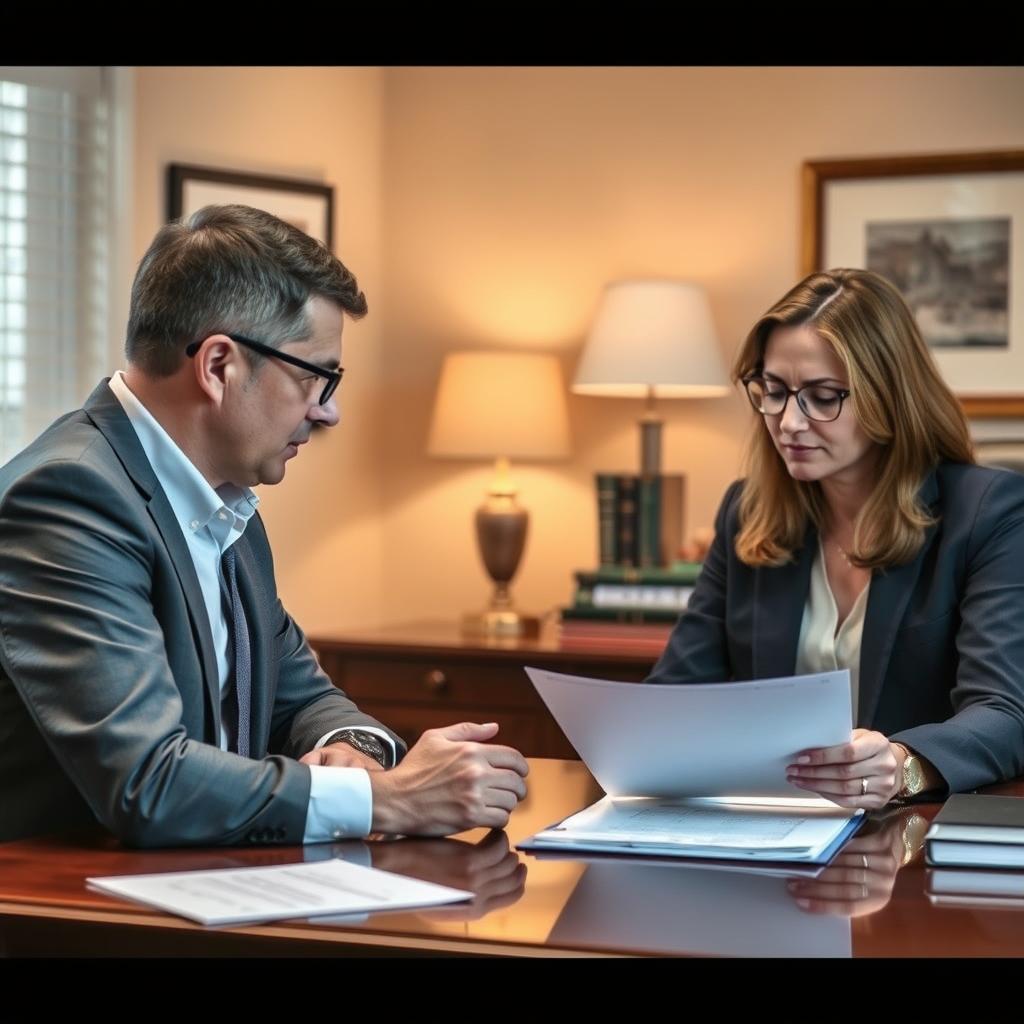
Alimony Enforcement Lawyer Fauquier County, VA
When a former spouse fails to pay court-ordered spousal support in Fauquier County, Virginia, enforcement proceedings become the next step. Alimony enforcement is grounded in Virginia Code § 20-107.1, which establishes the statutory framework for spousal support. In Fauquier County, enforcement actions are heard in the Fauquier County Juvenile and Domestic Relations District Court or the Fauquier County Circuit Court at 6 Court Street, Warrenton, depending on the underlying order. Law Offices Of SRIS, P.C., practicing since 1997, represents clients who need to compel compliance with support obligations. Whether the payor has stopped paying, pays inconsistently, or challenges the order, our attorneys work to use the remedies available under Virginia law—including contempt, income withholding, and judgments for arrears. To discuss your situation, reach Law Offices Of SRIS, P.C. at (888) 437-7747.
What Alimony Enforcement Means in Fauquier County
Alimony enforcement in Fauquier County is the legal process of compelling a former spouse to comply with an existing spousal support order. Virginia courts have authority under Va. Code § 20-107.1 and related enforcement provisions to hold a non-compliant payor accountable. The enforcing party files a motion in the court that issued the original order—often the Fauquier County Circuit Court for divorce-based support or the Juvenile and Domestic Relations District Court for support entered in a custody or separate proceeding. The court examines whether the payor has willfully failed to pay and has the ability to comply. If the court finds a violation, it can use its contempt powers, issue an income-deduction order, or enter a judgment for the arrears.
Fauquier County sits within the Twentieth Judicial District, a region where family law matters are informed by both local practice and statewide equitable-distribution principles. While substantive alimony determinations turn on factors such as the duration of the marriage and each party’s financial resources, enforcement focuses on the existing order and the payor’s compliance history. Our firm appears regularly in the Fauquier County courts and is familiar with the procedural expectations of the bench and clerks. Because enforcement remedies are discretionary, presenting a well-documented record of non-payment and a clear request for relief is critical. Mr. Sris and his Of Counsel work to build that record and advocate for the measures most likely to secure payment.
How Mr. Sris and His Of Counsel Handle Alimony Enforcement Cases
When a client engages Law Offices Of SRIS, P.C., for an alimony enforcement matter in Fauquier County, the representation begins with a thorough review of the existing support order and the payment history. We identify gaps, calculate arrears, and assess whether the payor has the financial ability to pay. If the facts support a willful violation, we prepare and file a rule to show cause or other appropriate motion. The goal is to place the enforcement request before the court efficiently while preserving the client’s right to seek attorney fees and costs where permitted.
At the enforcement hearing, the focus is on demonstrating non-compliance. Mr. Sris and his Of Counsel present documentary evidence of missed or short payments and, where necessary, testimony regarding the payor’s employment, income sources, and assets. If the court finds a violation, we ask for the remedy that fits the facts—a wage-withholding order, a lump-sum judgment, or a contempt finding that can include incarceration for continued non-compliance. Throughout the process, we help the client understand the available options and the likelihood that each remedy will result in actual payment. Every case is different; an enforcement action often leads to a payment plan or a resolution that avoids further litigation.
About Mr. Sris and His Of Counsel Team
Mr. Sris, Owner and Founder of Law Offices Of SRIS, P.C., is admitted to practice in Virginia, Maryland, the District of Columbia, New Jersey, and New York. A former prosecutor, he brings an understanding of courtroom dynamics to family law enforcement. Mr. Sris testified before the Virginia House Courts of Justice Committee in support of 2019 HB 635 (chief patron Del. David Bulova). The firm has served clients since 1997. Mr. Sris works closely with his Of Counsel team, all experienced attorneys engaged through Excella, to represent individuals in Fauquier County alimony enforcement and related family law matters.
The Of Counsel team includes attorneys with backgrounds in litigation, family law, and criminal defense. Collectively, they contribute years of experience to each matter. In an enforcement case, the team collaborates on factual investigation, motion practice, and hearing preparation. The firm’s structure allows for focused attention on each client’s situation while drawing on the resources available through a multi-state practice.
Frequently Asked Questions
What is alimony enforcement in Virginia?
Alimony enforcement is the legal process a supported spouse uses to compel a former spouse to comply with a court-ordered spousal support obligation. Under Va. Code § 20-107.1, Virginia courts have the authority to enforce support orders through contempt, income withholding, and money judgments. Enforcement begins when the payor has missed payments or paid inconsistently. The supported spouse must file a motion in the court that issued the order, demonstrating the violation. The court then holds a hearing to determine whether enforcement is warranted. Remedies depend on the payor’s ability to pay and the history of compliance.
How is spousal support enforced in Fauquier County?
Spousal support is enforced in Fauquier County by filing a rule to show cause or a motion for enforcement in the Fauquier County Juvenile and Domestic Relations District Court or the Fauquier County Circuit Court. The moving party must present evidence of the missed payments. If the court finds a willful violation, it can order wage garnishment through an income-deduction order, hold the payor in contempt, or enter a judgment for the unpaid amount. The specific court depends on whether the original support order was entered in a divorce case (Circuit Court) or a separate support proceeding (J&DR Court). Law Offices Of SRIS, P.C. handles enforcement proceedings in both courts.
What if the paying spouse claims inability to pay?
If the paying spouse claims inability to pay, the court examines employment records, financial statements, and other evidence to determine whether the claim is credible. Virginia courts distinguish between an inability to pay and a willful refusal to pay. A payor who has lost a job through no fault of their own and has diligently sought work may present a defense. However, if the court finds the payor is voluntarily underemployed or has concealed income, enforcement remedies remain available. In some cases, the court may modify the support amount rather than enforce the original order. Both enforcement and modification can be addressed in the same proceeding.
Can I modify the alimony order instead of enforcing it?
Yes, a party can seek modification of an alimony order in Virginia if there has been a material change in circumstances, which may be addressed in the same proceeding as enforcement. Va. Code § 20-107.1 provides that a spousal support award may be modified upon a showing of changed circumstances. If the payor’s financial situation has genuinely deteriorated, the court may adjust the support amount downward rather than enforce the original terms. Conversely, if the payor’s income has increased, the supported spouse may seek an upward modification. Law Offices Of SRIS, P.C. Evaluates both enforcement and modification avenues to determine the most effective strategy.
Do I need a lawyer for alimony enforcement in Fauquier County?
While you are not required to hire a lawyer, an attorney can help navigate the procedural requirements of the Fauquier County courts and build the evidentiary record needed for enforcement. Enforcement proceedings involve drafting motions, calculating arrears, presenting financial evidence, and arguing for contempt or wage withholding. Mistakes in procedure can delay relief. An attorney familiar with local court practices and Virginia’s spousal support statutes can present a stronger case. For a consultation, reach Mr. Sris and his Of Counsel at (888) 437-7747.
For family law representation in neighboring counties, see our pages on Fairfax County family law matters, Prince William County family law, and Stafford County family law.
For the primary statutory authority governing spousal support, see Virginia Code Title 20. For local court information, visit the Fauquier County Circuit Court website.
Attorney advertising. Prior results do not guarantee a similar outcome. Results may vary.
Case results depend on a variety of factors unique to each case.