
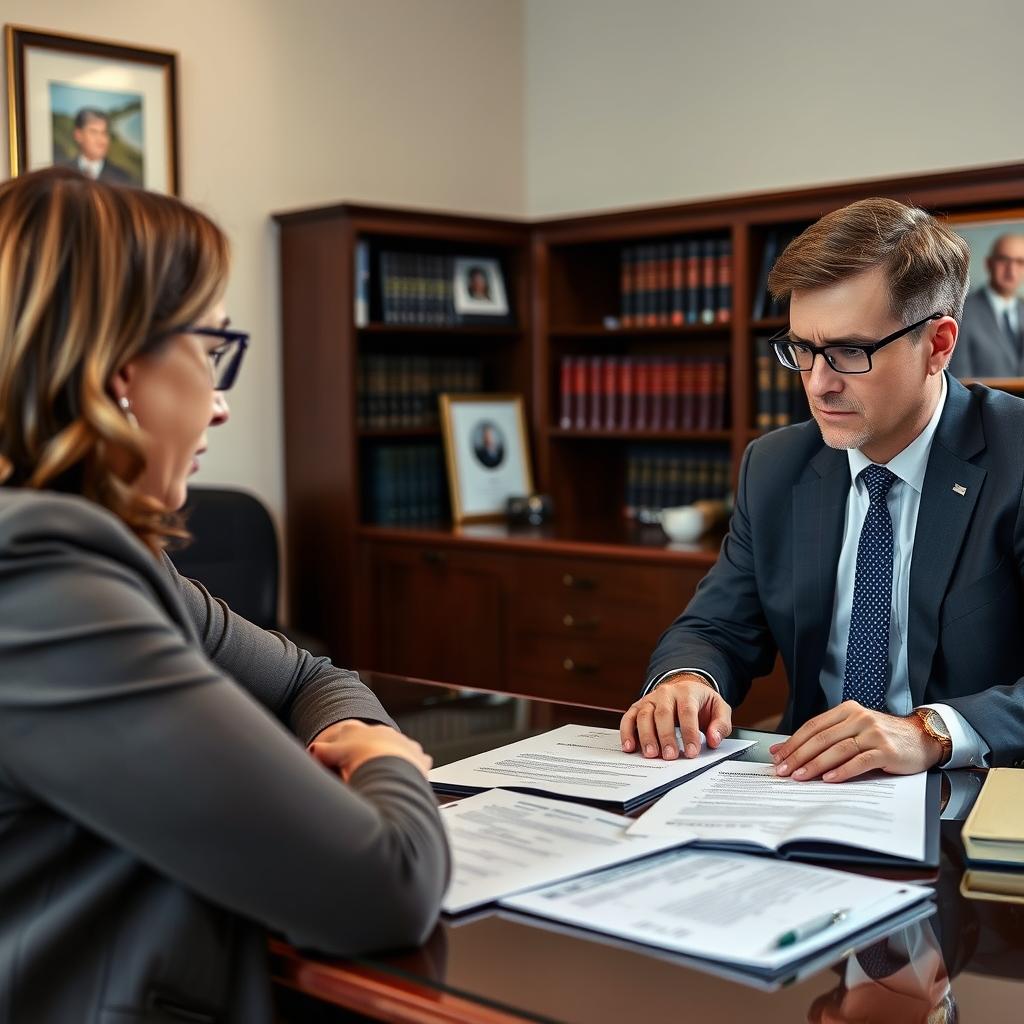
Property Division Lawyer Fauquier County, VA
Marital property division is one of the most significant aspects of a divorce in Fauquier County, Virginia. The county’s Circuit Court, located at 6 Court Street in Warrenton, handles all equitable distribution proceedings pursuant to Va. Code § 20‑107.3. Virginia follows the principle of equitable distribution—not community property—meaning marital assets are divided fairly but not necessarily equally. For residents of Warrenton, New Baltimore, Bealeton, Marshall, The Plains, and the surrounding areas, working with a knowledgeable attorney is important to protect retirement accounts, real estate, business interests, and personal property accumulated during the marriage. Mr. Sris, Owner and Founder of Law Offices Of SRIS, P.C., and the firm’s Of Counsel attorneys have experience guiding clients through these matters. Reach our firm at (888) 437‑7747 to discuss your property division questions with a Fauquier County property division lawyer. Law Offices Of SRIS, P.C. – Advocacy Without Borders.
What Property Division Means in Fauquier County
In Fauquier County, property division is governed by Virginia’s equitable distribution statute. The Fauquier County Circuit Court, in the Twentieth Judicial District, has exclusive original jurisdiction over divorce and the accompanying division of marital property. The court’s authority extends to classifying assets as either marital, separate, or hybrid, valuing each item, and distributing the marital estate in a manner the court deems equitable—not necessarily a 50/50 split.
Under Va. Code § 20‑107.3, the court weighs 11 statutory factors when deciding how to divide assets. These include the duration of the marriage, the contributions of each party (both monetary and nonmonetary), the ages and health of the parties, the circumstances surrounding the dissolution, and the tax consequences of a proposed division. Property acquired before the marriage, or received by gift or inheritance, generally remains separate and is not subject to division. However, the commingling of separate assets with marital funds can complicate the analysis, making it important to have experienced legal guidance to marshal the necessary documentation and present a clear picture of the marital estate.
Because Fauquier County is a mixed rural‑exurban community with commuter‑family demographics, many divorces involve farms, small businesses, professional practices, real estate holdings, and retirement portfolios. The court may appoint forensic accountants or business valuators when the asset picture is complex. A property settlement agreement signed by both spouses can resolve all issues without trial, but when the parties cannot agree, the Circuit Court holds an evidentiary hearing and enters an equitable distribution order. Law Offices Of SRIS, P.C. Appears regularly before the Fauquier County Circuit Court and is familiar with the procedural expectations of the Twentieth Judicial District.
How Mr. Sris and the Firm’s Of Counsel Attorneys Handle Property Division Cases
Property division matters proceed first with an identification and classification of all assets and debts. Mr. Sris and the firm’s Of Counsel attorneys work with clients to compile a comprehensive inventory—bank statements, deeds, vehicle titles, retirement‑plan statements, business‑entity records, and documentation of separate‑property claims. The team then analyzes which items fall within the marital estate under Virginia law and what defenses may exist to a spouse’s claim of separate property.
Once the marital estate is defined, the firm pursues resolution through negotiation, mediation, or, when necessary, litigation. The attorneys draw on significant combined legal experience to present valuation evidence, challenge improper classifications, and advocate for a fair distribution under the 11 statutory factors. For retirement plans, the firm coordinates the preparation of qualified domestic relations orders (QDROs) to divide accounts without triggering early‑withdrawal penalties. Throughout the process, the goal is to position the client for a secure financial future while managing the emotional and practical demands of the case.
About Mr. Sris and the Firm’s Of Counsel Attorneys
Mr. Sris, Owner and Founder of Law Offices Of SRIS, P.C., is a former prosecutor who has practiced since 1997. He testified before the Virginia House Courts of Justice Committee in support of 2019 HB 635 (chief patron Del. David Bulova), legislation that revised the equitable distribution statute. His background provides insight into the statutory framework that governs property division in Virginia.
The firm’s Of Counsel attorneys add substantial depth to the family law team. Their collective experience includes prior service as a Virginia State Trooper and as a former Maryland prosecutor, bringing additional perspective to valuation disputes and courtroom advocacy. In family law matters, Mr. Sris and the firm’s Of Counsel attorneys apply a detailed approach—assessing financial records, coordinating with forensic and valuation professionals, and preparing for trial when a negotiated settlement is not possible. The firm’s attorneys have handled a substantial number of property division cases. Results may vary.
Frequently Asked Questions
How is property divided in a Virginia divorce?
Virginia uses equitable distribution—the court divides marital property fairly but not necessarily 50/50. The Fauquier County Circuit Court considers 11 statutory factors under Va. Code § 20‑107.3, including the duration of the marriage, each spouse’s contributions, and the tax consequences of the division. Separate property—owned before marriage or acquired by gift or inheritance—is generally not divided. The court first classifies all assets, then values them, and finally distributes the marital estate. A separation agreement can allow the parties to control their own property settlement without judicial intervention.
What is the difference between separate property and marital property in Virginia?
Marital property includes assets acquired by either spouse during the marriage, while separate property is owned before marriage or received as a gift or inheritance. Under Virginia law, income earned during the marriage and assets purchased with marital funds are presumptively marital. Commingling—for example, depositing separate funds into a joint account—can blur the line and transform separate property into marital property. When a couple owns a business, real estate, or retirement accounts, tracing the source and timing of each contribution becomes essential to a fair outcome.
How does the Fauquier County Circuit Court handle property division?
The Fauquier County Circuit Court, located at 6 Court Street in Warrenton, presides over divorce and equitable distribution cases. Cases are assigned to a judge within the Twentieth Judicial District. The court may hold pretrial conferences, schedule evidentiary hearings, and, when the parties cannot agree, conduct a trial at which each side presents valuation witnesses and documentary evidence. The judge then issues a written order classifying the property and directing how the marital portion will be divided. The court also enters QDROs for retirement‑plan division.
Do I need a lawyer for property division in Fauquier County?
While you are not required to have a lawyer, representing yourself in a property division matter puts your financial future at considerable risk. Equitable distribution involves complex rules about classification, valuation, and the 11 statutory factors. Mistakes in identifying or valuing assets—or in failing to preserve a separate‑property claim—can result in an unfair division that is difficult to undo. An attorney can help you gather the necessary records, engage qualified valuation attorneys, and present your case effectively at the Fauquier County Circuit Court.
What factors does the court consider in equitable distribution?
The court examines 11 factors listed in Va. Code § 20‑107.3(E). These include each spouse’s monetary and nonmonetary contributions to the family, the duration of the marriage, the ages and physical and mental condition of the parties, the circumstances experienced to the divorce, how and when specific assets were acquired, the debts and liabilities of each spouse, the liquid or non‑liquid nature of the marital property, and the tax consequences of the proposed division. The court may also consider any other factor it deems necessary to reach a fair result.
Can we settle our property division out of court in Fauquier County?
Yes, most property division matters are resolved through a separation agreement without a trial. The spouses, with the help of their attorneys, negotiate the classification and distribution of all marital assets and debts and memorialize the terms in a signed, notarized property settlement agreement. When the agreement is submitted to the Fauquier County Circuit Court as part of an uncontested divorce, the court typically incorporates or ratifies it, making it an enforceable order. Mediation can also help parties reach a mutually acceptable resolution while preserving control over the outcome.
Explore our family law services in neighboring counties:
Fairfax County family law lawyer |
Prince William County family law lawyer |
Stafford County family law lawyer |
Loudoun County family law lawyer |
Arlington County family law lawyer
Authoritative Virginia resources (open in new tab):
Virginia Code Title 20 – Domestic Relations |
Virginia Judicial System
Attorney advertising. Prior results do not guarantee a similar outcome.
Results may vary.
Case results depend on a variety of factors unique to each case.