
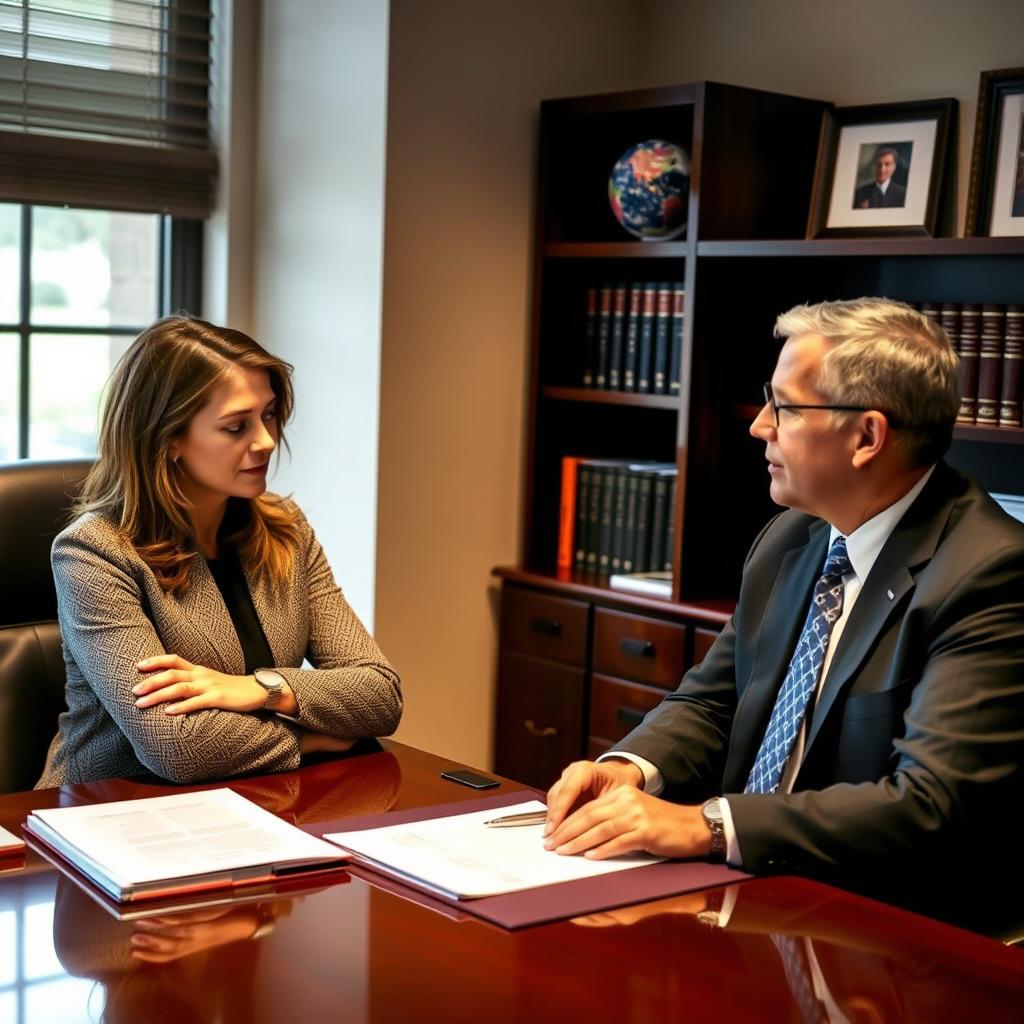
Beach Military Divorce Lawyer Lexington
A Beach Military Divorce Lawyer Lexington handles the unique legal issues for service members and spouses in Lexington, Virginia. Military divorces involve federal laws like the Servicemembers Civil Relief Act and state laws. The Law Offices Of SRIS, P.C. —Advocacy Without Borders. provides focused representation for these complex cases. Our team understands jurisdiction, division of military pensions, and child custody during deployment. (Confirmed by SRIS, P.C.)
Statutory Definition of Military Divorce in Virginia
Virginia military divorce is governed by state code Title 20 and federal statutes like the Uniformed Services Former Spouses’ Protection Act. Virginia Code § 20-107.3 details the equitable distribution of marital property, including military pensions. The Servicemembers Civil Relief Act provides protections against default judgments for deployed personnel. A Beach Military Divorce Lawyer Lexington must handle this dual legal framework. Jurisdiction is a primary concern under Virginia Code § 20-97. The court must have proper authority over the service member.
Military divorce in Lexington adds federal layers to state proceedings. The division of military retired pay is a central issue. The USFSPA allows state courts to treat disposable retired pay as marital property. Virginia courts can order direct payment from the Defense Finance and Accounting Service. Specific calculations are required for the marital share of the pension. A service member’s time in service during the marriage is key. Survivor Benefit Plan elections are also a critical asset division topic.
Child support and custody present unique challenges in military families. Deployment schedules can disrupt standard visitation plans. Virginia courts consider the best interests of the child under Code § 20-124.3. Military parents may need to establish temporary custody arrangements. A parenting plan must account for potential relocations and deployments. A service member’s legal residence, or domicile, determines filing jurisdiction. This is distinct from their state of military assignment.
How is a military pension divided in a Virginia divorce?
The marital share of a military pension is divided under Virginia Code § 20-107.3. The court values the pension earned during the marriage. A coverture fraction determines the divisible portion. The number of years of marriage during service is the numerator. The total years of creditable service is the denominator. The resulting percentage is applied to the disposable retired pay. A domestic relations order is required for direct DFAS payment.
What is the 10/10 rule for military divorce?
The 10/10 rule is a DFAS administrative requirement for direct payment. It is not a state law entitlement to a pension. The rule requires ten years of marriage overlapping ten years of military service. Meeting this rule allows DFAS to make direct payments to the former spouse. If the 10/10 rule is not met, the service member pays the former spouse directly. Virginia courts can still award a share of the pension without the 10/10 rule. Enforcement becomes the responsibility of the former spouse.
Can a deployed service member be served with divorce papers?
Service on a deployed service member follows the Servicemembers Civil Relief Act. The SCRA grants the right to request a stay of proceedings. This stay can delay the divorce case for at least 90 days. The court cannot enter a default judgment without compliance. Proper service often requires coordination with military command. A military divorce lawyer in Lexington ensures SCRA protections are upheld. Failure to follow the SCRA can result in a judgment being overturned.
The Insider Procedural Edge in Lexington Courts
The Rockbridge County Circuit Court handles divorce cases for Lexington residents. This court is located at 5 South Randolph Street, Lexington, VA 24450. The clerk’s Location manages the filing of all divorce complaints and motions. Procedural specifics for Lexington are reviewed during a Consultation by appointment at our Lexington Location. Filing fees are set by Virginia statute and are subject to change. The local procedural timeline can vary based on court docket scheduling.
Military divorce filings require additional documentation. You must provide the service member’s DD Form 214 or current LES. The complaint must allege jurisdictional grounds under Virginia law. Grounds include separation, adultery, or cruelty. Military families often use no-fault grounds based on separation. A one-year separation is required if there are minor children. A six-month separation is required if there are no minor children and a property settlement agreement is filed.
The local court’s temperament towards military issues is practical. Judges in Rockbridge County understand the community’s connection to VMI and Washington and Lee. They are accustomed to cases involving transient military populations. However, they expect strict compliance with procedural rules. All financial disclosures must be complete and timely. Failure to provide required documents can delay the final decree. A local military spouse divorce lawyer Lexington knows these expectations. Learn more about Virginia family law services.
What is the typical timeline for a military divorce in Lexington?
A contested military divorce in Lexington can take nine months to over a year. An uncontested divorce with an agreement may finalize in a few months. The timeline depends on court availability and case complexity. Deployment stays under the SCRA can add significant time. The division of a military pension requires precise drafting of court orders. DFAS takes time to process and implement a division order. Your lawyer’s efficiency in preparing documents directly impacts the schedule.
Where do I file for divorce if I am stationed outside Virginia?
You may file in Virginia if you or your spouse maintain a domicile there. Virginia Code § 20-97 allows filing where either party resides. A service member can retain Virginia domicile even while stationed elsewhere. The legal concept of domicile involves intent to return. Proof can include voter registration, driver’s license, or tax filings. Filing in the correct jurisdiction is the first critical step. A service member divorce lawyer Lexington can assess your domicile status.
Penalties & Defense Strategies in Military Divorce
The most common penalty in divorce is an unfavorable financial and custody order. There are no criminal penalties, but court orders carry the force of law. Failure to comply can result in contempt findings, fines, or wage garnishment. For military members, non-compliance can also be reported to command. This can affect security clearances and promotion eligibility. A strategic defense focuses on protecting your pension, custody rights, and financial stability.
| Offense / Issue | Potential Consequence | Notes |
|---|---|---|
| Failure to Disclose Assets | Contempt of Court; Reopening of Asset Division | Full disclosure is mandatory under Virginia law. |
| Violation of Child Support Order | Wage Garnishment; License Suspension; Contempt | DFAS can garnish military pay for support. |
| Non-Compliance with Custody Order | Loss of Custody Time; Make-Up Visitation; Contempt | Courts modify orders for deployment. |
| Improper Service of Process (SCRA Violation) | Default Judgment Overturned; Case Delayed | Protects deployed service members. |
[Insider Insight] Local prosecutors in family law are the opposing counsel. In Lexington, they often seek a precise division of the military pension. They may push for a larger share of the pension as compensation for other assets. Understanding the local preference for certain settlement structures is key. We prepare detailed pension valuation reports to counter unrealistic demands. We advocate for equitable, not equal, distribution based on all factors under Virginia law.
How can I protect my military pension during divorce?
An accurate valuation of your military pension is the first defense. Hire an actuary or use the DFAS retirement report. Argue for the classification of pre-marital service time as separate property. Negotiate offsetting assets in lieu of a pension division. A lump-sum payment or other property can be exchanged for pension rights. Ensure any court order complies with DFAS formatting requirements. A poorly drafted order can be rejected, causing delay and extra cost.
What happens to my VA disability pay in a divorce?
VA disability compensation is not divisible as marital property under federal law. The Uniformed Services Former Spouses’ Protection Act excludes it from disposable retired pay. However, Virginia courts can consider it as a source of income. It can be factored into spousal support and child support calculations. A waiver of retired pay for disability pay complicates the division. The court may impute income based on the waived amount. This is a complex area requiring specific legal knowledge.
Why Hire SRIS, P.C. for Your Lexington Military Divorce
Bryan Block, a former Virginia State Trooper, leads our military divorce practice. His background provides insight into the structure and discipline of military life. He has handled numerous cases involving service members from all branches. His understanding of procedure is applied to every family law case in Lexington.
SRIS, P.C. has a dedicated team for military family law. We understand the stress of divorce during active duty. Our approach is direct and focused on achieving your objectives. We explain the process in clear terms without legal jargon. We prepare all necessary documents, from complaints to qualified domestic relations orders. We coordinate with financial experienced attorneys for accurate pension valuations. We represent both service members and military spouses in Lexington. Learn more about criminal defense representation.
Our firm differentiator is our systematic case management. We assign a primary attorney and a paralegal to each client. We maintain consistent communication, especially important for deployed clients. We use secure technology for clients stationed overseas. We have a track record of resolving complex military pension divisions. We advocate for fair custody arrangements that account for military duties. We provide strong criminal defense representation should any related issues arise.
Localized FAQs for Military Divorce in Lexington
Can I get a divorce in Lexington if my spouse is deployed?
Yes, but the Servicemembers Civil Relief Act may grant a stay. The court must follow specific procedures for serving a deployed member. The divorce can proceed after the stay period or with the member’s participation. A military divorce lawyer ensures legal compliance.
How is child custody determined for a military parent?
Virginia courts use the child’s best interest standard under Code § 20-124.3. Deployment is one factor considered. Courts typically create a detailed parenting plan. This plan includes provisions for communication during deployment and reintegration afterwards. Temporary custody during deployment is often granted to the other parent.
What is the difference between domicile and legal residence?
Domicile is your permanent home where you intend to return. Legal residence for military is often the state where you are stationed. For divorce jurisdiction, domicile is the determining factor. A service member can have a Virginia domicile while stationed in another state.
Will my security clearance be affected by a divorce?
Divorce itself does not automatically affect a clearance. Financial problems or failure to follow court orders can cause issues. Adultery allegations may be reviewed under military conduct standards. Full disclosure and compliance with legal obligations are critical.
How long do I have to live in Virginia to file for divorce?
At least one party must be a domiciliary of Virginia for six months before filing. The residency requirement is found in Virginia Code § 20-97. Military stationing outside Virginia does not necessarily change domicile. Proof of intent to maintain Virginia domicile is key.
Proximity, CTA & Disclaimer
Our Lexington Location serves clients throughout Rockbridge County. We are accessible to military families connected to the Virginia Military Institute and the local community. Procedural specifics for your case are reviewed during a Consultation by appointment. Call 888-437-7747. Our line is open 24/7 for initial contact. SRIS, P.C. provides focused legal support for service members and spouses. We are a Virginia-based firm with a national perspective on military law. Contact us to discuss your military divorce in Lexington with a our experienced legal team member.
Law Offices Of SRIS, P.C.
—Advocacy Without Borders.
Consultation by appointment. Call 888-437-7747. 24/7.
Past results do not predict future outcomes.