
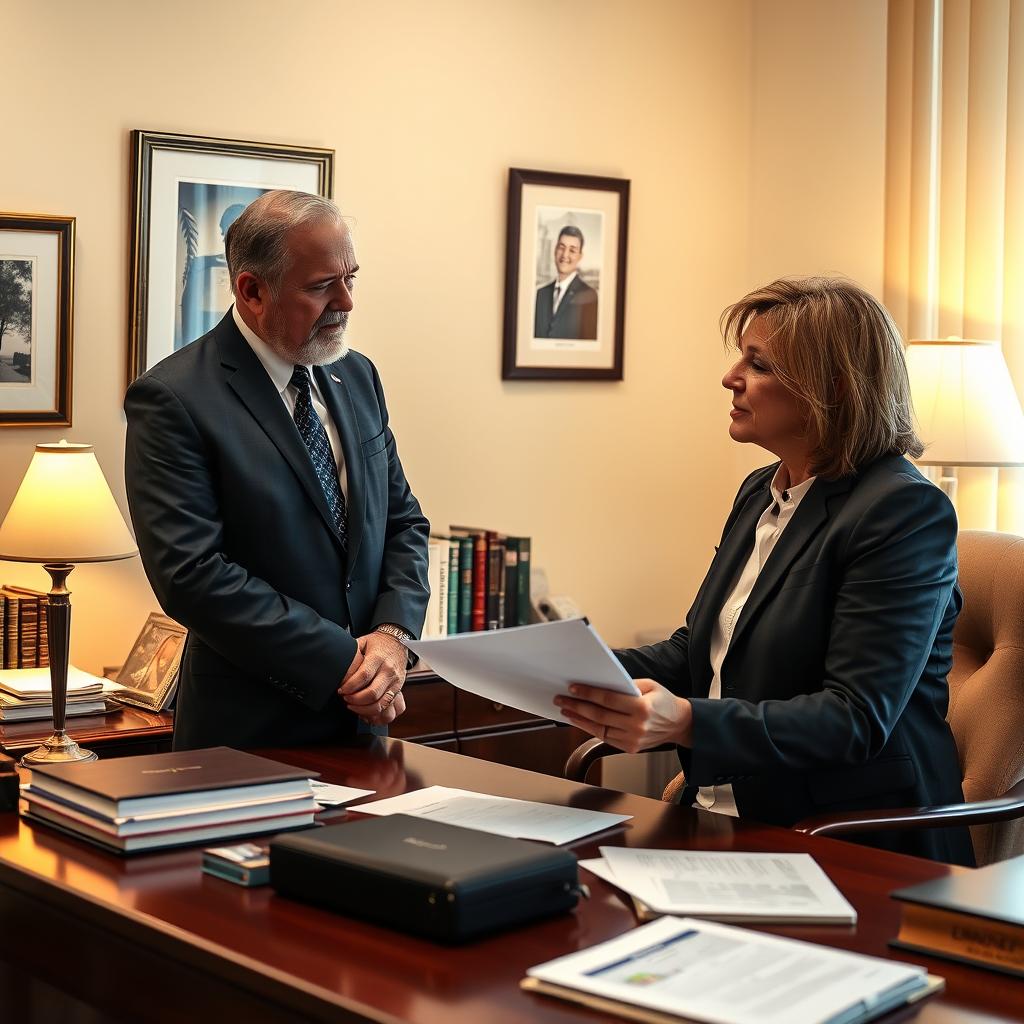
Desertion Divorce Lawyer Dinwiddie County, VA
If your spouse left the marital home without justification and has been absent for an extended period, you may be considering a fault‑based divorce on the ground of desertion. In Dinwiddie County, Virginia, desertion is one of the fault grounds recognized under Va. Code § 20‑91, and the Dinwiddie County Circuit Court retains exclusive jurisdiction over the dissolution of the marriage. Law Offices Of SRIS, P.C. represents spouses throughout Dinwiddie County in desertion‑based divorce proceedings. Mr. Sris and his Of Counsel team bring extensive experience with fault‑ground litigation, guiding clients from the initial consultation through the final decree. To schedule a consultation, reach our Richmond location at (804) 201‑9009 or call toll‑free (888) 437‑7747. Law Offices Of SRIS, P.C. — Advocacy Without Borders.
What Desertion Divorce Means in Dinwiddie County
Virginia law authorizes a divorce from the bond of matrimony when one spouse has willfully deserted or abandoned the other for a continuous one‑year period. Desertion means a voluntary departure without the consent of the other spouse, accompanied by an intent not to return. The clock does not begin to run until the desertion becomes willful; a separation that starts as mutual consent may later ripen into desertion if one spouse unilaterally decides to stay away without cause. The Dinwiddie County Circuit Court, located at the Dinwiddie Courthouse in Dinwiddie, VA 23841, hears all complaints for divorce, including those based on desertion. The court is part of the Eleventh Judicial District and handles the equitable distribution of marital property, spousal support, and child‑related issues that often accompany a fault‑based divorce.
Willful desertion or abandonment for one year is a fault ground for divorce in Virginia (Va. Code § 20‑91).
Source: Virginia Code § 20‑91. Virginia Legislative Information System
Reviewed by Mr. Sris, admitted in VA, MD, DC, NJ, NY.
Proving desertion requires competent evidence—typically testimony from the deserted spouse and corroborating witnesses, along with documentation showing the absence and lack of justification. Mr. Sris and his Of Counsel have handled fault‑based divorce matters in Richmond‑area courts, including Dinwiddie County, and understand the local evidentiary expectations. The firm’s Richmond location serves clients throughout the county and is prepared to marshal the proof that a desertion petition demands. Results may vary.
How Mr. Sris and His Of Counsel Handle Desertion Divorce Cases
Every desertion divorce begins with a thorough consultation during which Mr. Sris and his Of Counsel listen to the circumstances of the separation, review any existing separation agreements, and explain how Virginia’s equitable‑distribution scheme may be affected by a fault finding. Because desertion can influence spousal support and property division, the team works to build a record that supports the claim while also positioning the client to protect their financial interests.
The complaint for divorce is filed in the Dinwiddie County Circuit Court, and service is made on the defendant. If the defendant contests the desertion allegation, the case proceeds through discovery and, if necessary, a trial where the plaintiff must prove willful desertion by a preponderance of the evidence. Throughout the process, the firm’s counsel negotiates with opposing parties to explore settlement while preparing for trial, always with the aim of achieving a resolution that reflects the client’s objectives. Mr. Sris and his Of Counsel work toward favorable outcomes for individuals navigating this challenging family‑law transition.
About Mr. Sris and His Of Counsel Team
Mr. Sris, Owner and Founder of Law Offices Of SRIS, P.C., has practiced law since 1997 and is a former prosecutor. He is admitted in Virginia, Maryland, the District of Columbia, New Jersey, and New York, giving the firm multi‑state capability. Mr. Sris testified before the Virginia House Courts of Justice Committee in support of 2019 HB 635 (chief patron Del. David Bulova), and his understanding of statutory frameworks informs the firm’s approach to fault‑based divorce matters. He is supported by a team of Of Counsel attorneys—non‑employee practitioners engaged through Excella—who collectively bring experience in litigation, family‑law procedure, and trial advocacy.
Frequently Asked Questions
What is desertion as a ground for divorce in Virginia?
Desertion is a fault‑based ground for divorce in Virginia, requiring proof that one spouse willfully left the marital home with the intent to abandon the marriage for at least one year. Va. Code § 20‑91 recognizes desertion as grounds for an absolute divorce. The spouse seeking the divorce must show that the departure was not justified—for example, it was not in response to cruelty or mutual agreement. If the court finds desertion, it may affect spousal support and equitable distribution. For guidance on whether your situation qualifies as desertion, contact Law Offices Of SRIS, P.C. at (888) 437‑7747.
How long must a spouse be absent to file for desertion divorce in Virginia?
The desertion must continue for a full year before the deserted spouse may file for divorce on that ground. The one‑year period begins when the desertion becomes truly willful—when it is clear the departing spouse has no intention of returning and no valid reason for staying away. The plaintiff must also satisfy Virginia’s six‑month residency requirement. The complaint is filed in the Circuit Court, such as the Dinwiddie County Circuit Court. To discuss the timing of your case, reach Mr. Sris and his Of Counsel at (888) 437‑7747.
Do I need a lawyer for a desertion divorce in Dinwiddie County?
You are not required to hire a lawyer, but desertion is a fact‑intensive fault ground that often benefits from legal representation. Proving willful desertion involves testimony, documentary evidence, and the ability to meet Virginia’s evidentiary requirements. An attorney can help gather corroborating evidence, prepare the complaint, and present the case effectively in the Dinwiddie County Circuit Court. Law Offices Of SRIS, P.C. offers consultations to help you understand your options—call (888) 437‑7747 to schedule.
How is desertion proven in a Virginia divorce proceeding?
Desertion is proven through the testimony of the deserted spouse, corroborated by independent evidence such as witnesses, correspondence, and documentation of the absence. Virginia requires at least one corroborating witness to substantiate the critical elements of the claim. The plaintiff must demonstrate that the departure was both willful and without justification. Mr. Sris and his Of Counsel work to assemble the necessary proof and, when appropriate, negotiate a settlement that avoids a contested hearing. For a consultation about your specific proof, contact our Richmond location at (804) 201‑9009.
Can a desertion divorce affect property division or spousal support?
Yes, a finding of desertion can influence the court’s decisions on equitable distribution and spousal support. Under Va. Code § 20‑107.3, the court considers the circumstances and factors that contributed to the dissolution of the marriage, and fault may be one such factor. Desertion can also affect a spouse’s entitlement to support. Because every case is different, the outcome depends on the specific facts. To discuss how a fault‑based claim might impact your financial picture, reach Law Offices Of SRIS, P.C. at (888) 437‑7747.
Related family‑law pages: Family Law Lawyer in Fairfax County · Family Law Lawyer in Prince William County · Family Law Lawyer in Manassas City · Family Law Lawyer in Fairfax City
Attorney advertising. Prior results do not guarantee a similar outcome. Results may vary.
Case results depend on a variety of factors unique to each case.