
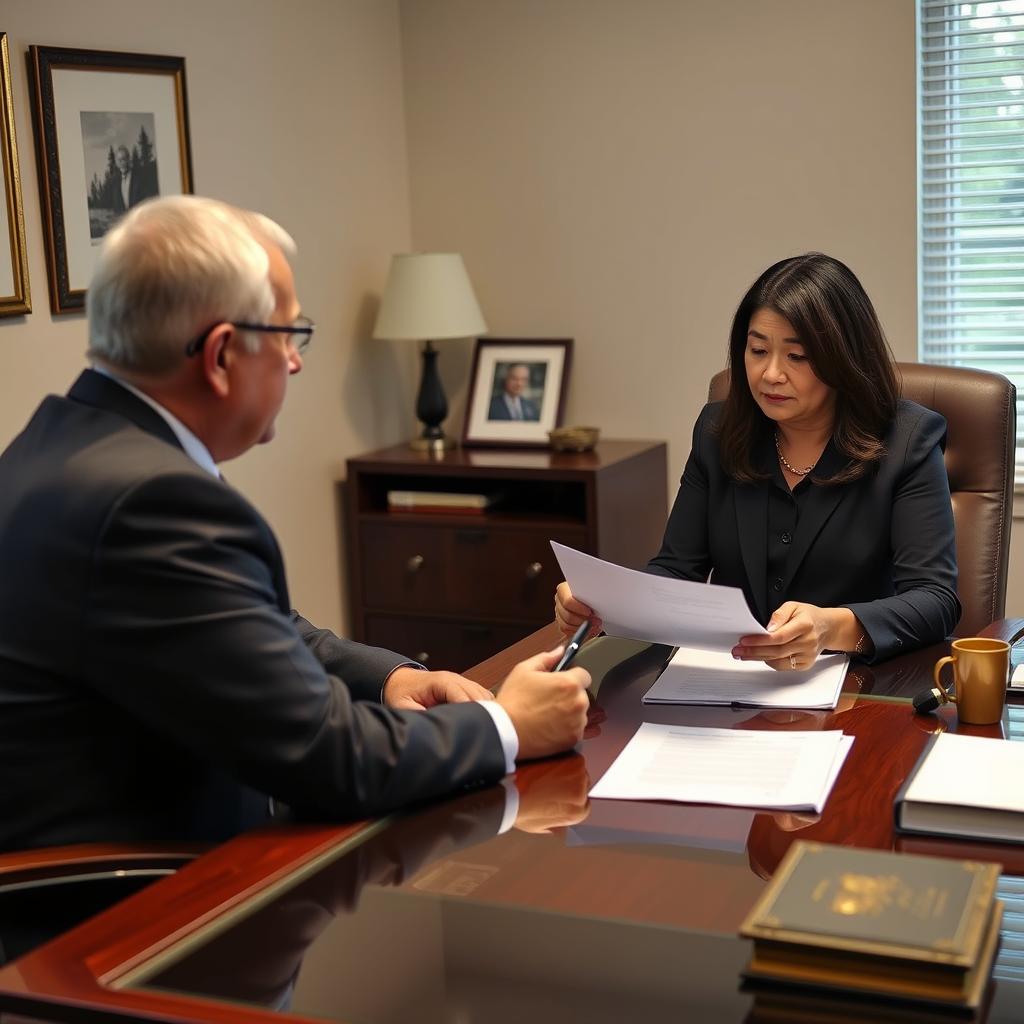
Equitable Distribution Lawyer King William County, VA
You have decided to end your marriage, and now you face a difficult question: how will your property be divided? In King William County, Virginia, the answer depends on equitable distribution—a legal framework that requires the court to divide marital property fairly, though not necessarily equally. Whether you own a family home near the Mattaponi River, a business in West Point, retirement accounts, or other assets accumulated during your marriage, how those assets are classified and divided will shape your financial future. Virginia is not a community property state, so a judge does not simply split everything down the middle. Instead, the King William County Circuit Court applies eleven statutory factors under Va. Code § 20-107.3 to determine what is fair. Mr. Sris and the firm’s Of Counsel attorneys represent clients in equitable distribution matters before the King William County Circuit Court at 351 Courthouse Lane, Suite 201, King William, VA 23086. Reach Law Offices Of SRIS, P.C. at (888) 437-7747 to schedule a consultation. Law Offices Of SRIS, P.C. – Advocacy Without Borders.
What Equitable Distribution Means for Your King William County Divorce
Equitable distribution is the process by which a Virginia circuit court identifies, classifies, values, and divides property when a marriage ends. The term “equitable” means fair—not necessarily equal. A judge may award one spouse a larger share of the marital estate after weighing the statutory factors. The process governs everything from the family home and bank accounts to retirement plans, business interests, and debts. In King William County, all divorce and property division matters are heard in the Circuit Court, which has exclusive jurisdiction over divorce under Va. Code § 20-96. The court sits at 351 Courthouse Lane in King William and serves communities including West Point and Aylett.
The court first classifies each asset as marital, separate, or hybrid. Marital property generally includes everything acquired during the marriage by either spouse, regardless of whose name is on the title. Separate property includes assets owned before the marriage, as well as gifts and inheritances received individually during the marriage. Hybrid property—an asset that is partly marital and partly separate—requires careful tracing. Once classified, the property is valued, and the court weighs the eleven factors listed in Va. Code § 20-107.3: the contributions of each spouse to the family’s well-being, the duration of the marriage, the ages and health of the parties, how and when property was acquired, debts and liabilities, tax consequences, and other considerations. A property settlement agreement signed by both spouses can resolve all issues without a trial, but when negotiation is not possible, the court decides. For complex estates involving business valuations or significant retirement assets, forensic accountants and valuation professionals are often engaged.
How the Firm’s Of Counsel Attorneys Approach Property Division Cases
Dividing marital property in King William County requires a clear understanding of what the court will consider and how it applies the statutory factors. The firm’s Of Counsel attorneys begin by working with clients to identify every asset and debt, including accounts, real estate, vehicles, business interests, professional practices, retirement plans, and stock options. Proper classification of each item as marital or separate property is essential, because the classification determines what is subject to division. When assets are in dispute, the firm engages financial attorneys to trace funds, value businesses, and analyze complex compensation structures.
Once the marital estate is identified and valued, the firm’s Of Counsel attorneys negotiate toward a settlement that reflects the client’s priorities and the statutory factors the court would apply if the matter went to trial. Many King William County cases resolve through a signed separation agreement, which allows the parties to retain control over the outcome rather than leaving it to a judge. When negotiation does not produce a fair resolution, the firm’s attorneys are prepared to litigate the property division before the King William County Circuit Court. The approach is built on thorough preparation: understanding each asset, presenting clear evidence of value and classification, and arguing how the eleven statutory factors should apply to the specific facts of the case.
About Mr. Sris and the Firm’s Of Counsel Attorneys
Mr. Sris, Owner and Founder of Law Offices Of SRIS, P.C., has practiced family law since founding the firm in 1997. A former prosecutor, he brings trial experience to property division disputes that require courtroom advocacy. Mr. Sris testified before the Virginia House Courts of Justice Committee in support of 2019 HB 635 (chief patron Del. David Bulova), the legislation that revised subsection (g) of Virginia’s equitable distribution statute, Va. Code § 20-107.3. That firsthand familiarity with the statute’s development informs the firm’s approach to property division cases across Virginia. Mr. Sris is admitted in Virginia, Maryland, the District of Columbia, New Jersey, and New York.
The firm’s Of Counsel attorneys bring experience to equitable distribution matters, including cases involving business valuation, retirement asset division, and high-net-worth estates. Clients in King William County are served from the firm’s Richmond Location. The firm handles property division matters with attention to both the financial details and the long-term implications for each client. For a consultation about your equitable distribution matter, reach Law Offices Of SRIS, P.C. at (888) 437-7747.
Frequently Asked Questions About Equitable Distribution in Virginia
Is Virginia a community property state?
No, Virginia is an equitable distribution state, not a community property state. In a community property system, marital assets are divided equally between spouses. Virginia law instead directs the court to divide marital property fairly—but not necessarily equally—after considering the eleven factors set out in Va. Code § 20-107.3. King William County Circuit Court, located at 351 Courthouse Lane, Suite 201, King William, VA 23086, handles all property division matters. Separate property, including assets owned before the marriage and gifts or inheritances received individually, is not subject to division. The distinction between community property and equitable distribution has significant practical consequences for how assets are valued and allocated.
What factors does the court consider under Va. Code § 20-107.3?
Virginia Code § 20-107.3 directs the court to weigh eleven factors when dividing marital property. These include the monetary and non-monetary contributions of each spouse to the family’s well-being, the duration of the marriage, the ages and physical condition of the parties, the circumstances that contributed to the dissolution of the marriage, how and when specific assets were acquired, the debts and liabilities of each spouse, the liquid or non-liquid character of the marital property, and the tax consequences of the division. The court also considers any other factors it deems necessary to reach a fair result. No single factor controls the outcome; the judge weighs them together based on the evidence presented.
How is marital property different from separate property?
Marital property is generally everything acquired during the marriage by either spouse, while separate property is owned before the marriage or received individually as a gift or inheritance. The distinction matters because only marital property is subject to equitable distribution. Separate property remains with the spouse who owns it. Some assets are hybrid—partly marital and partly separate—and require tracing to determine what portion is subject to division. For example, a retirement account started before the marriage but contributed to during the marriage contains both separate and marital components. The court classifies the property first, then values it, and finally determines an equitable distribution of the marital portion.
Can my spouse and I agree on how to divide property without going to court?
Yes, spouses can resolve property division through a written separation agreement without a trial. A property settlement agreement signed by both parties can address all aspects of equitable distribution, including the division of real estate, bank accounts, retirement assets, business interests, and debts. When a signed agreement is presented to the King William County Circuit Court, and the court finds it fair and voluntary, the agreement can be incorporated into the final divorce decree. Reaching an agreement allows the parties to maintain control over the outcome, avoid the cost and uncertainty of litigation, and resolve matters on their own timeline rather than the court’s calendar.
What happens to retirement accounts in equitable distribution?
Retirement accounts, pensions, and deferred compensation plans acquired or contributed to during the marriage are generally marital property subject to division. The marital share of a retirement account is the portion accumulated during the marriage. The court may award a percentage of the marital share to one spouse and enter a qualified domestic relations order to effectuate the division. The 2019 revision to Va. Code § 20-107.3(g), the subject of the legislative testimony Mr. Sris provided in Richmond, addressed procedural issues related to retirement account division. Valuation of defined-benefit pensions, 401(k) plans, IRAs, and military retirement benefits often requires input from financial professionals.
How does the court value a business or professional practice in a divorce?
Business interests and professional practices acquired or grown during the marriage are marital property, and their value must be determined before equitable distribution. Valuation typically involves a forensic accountant or business valuator who analyzes financial records, revenue, goodwill, and market conditions. For closely held businesses common in King William County—such as farms, retail operations, or professional practices—the valuation process can be complex. The court considers both enterprise goodwill and personal goodwill, and their treatment differs under Virginia law. Whether the business is divided in kind or offset by other assets depends on the specific circumstances of the marriage and the statutory factors.
Additional resources:
- King William County Divorce Lawyer
- Property Division Attorney King William County
- High Net Worth Divorce Lawyer King William County
- For a broader discussion of Virginia family law, visit Law Offices Of SRIS, P.C. — Divorce Practice.
Virginia primary sources:
Attorney advertising. Prior results do not guarantee a similar outcome.
Results may vary. Case results depend on a variety of factors unique to each case.