
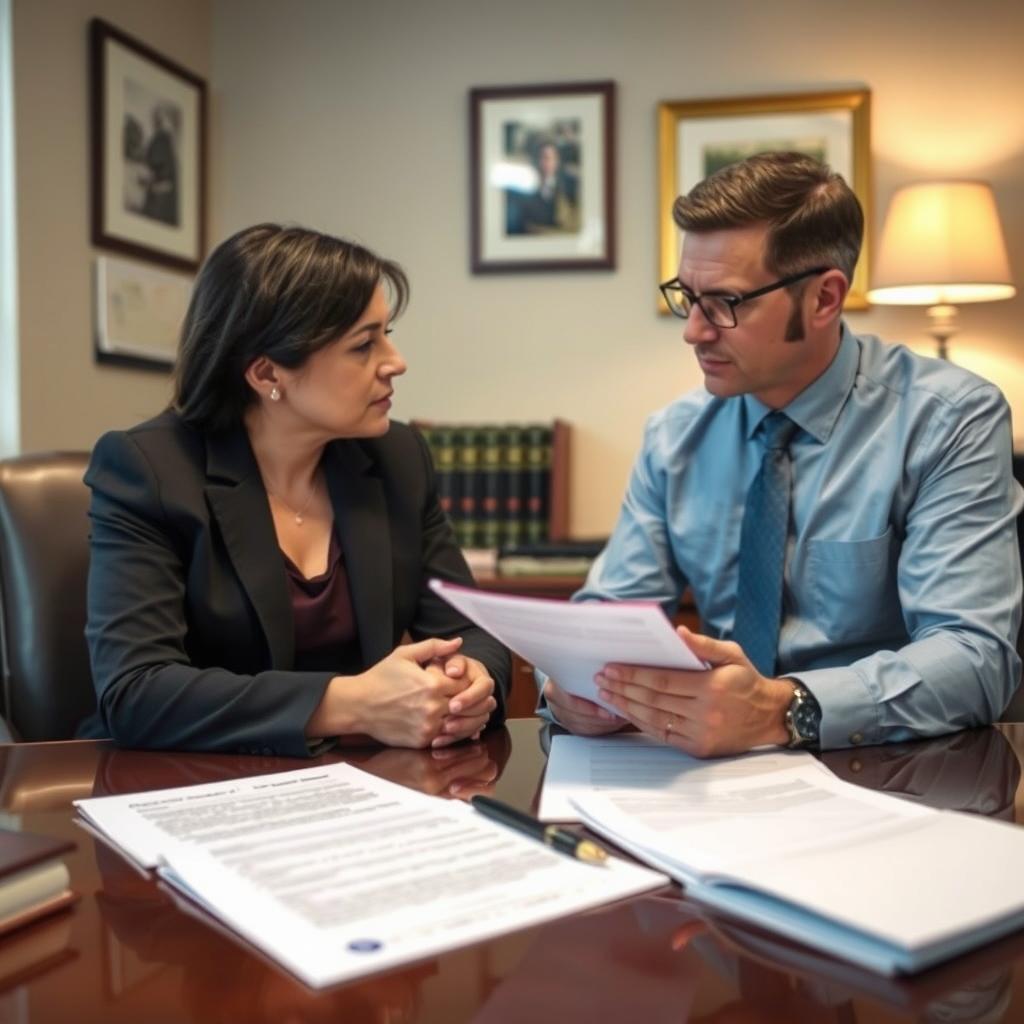
Felony Conviction Divorce Lawyer King William County, VA
When a marriage ends because one spouse has been convicted of a serious crime, the legal process involves specific statutory grounds, filing requirements, and court procedures. In King William County, Virginia, a divorce based on a felony conviction is governed by Va. Code § 20‑91(A)(3), which permits a spouse to seek a dissolution of the marriage if the other spouse has been convicted of a felony and sentenced to confinement for more than one year. The Circuit Court of King William County at 351 Courthouse Lane handles all divorce, equitable distribution, and spousal support matters. Law Offices Of SRIS, P.C., practicing since 1997, represents clients throughout King William County, including King William, West Point, and Aylett. Mr. Sris and his Of Counsel team focus on achieving a fair resolution under Virginia’s equitable distribution framework. Reach our Richmond location at (888) 437‑7747 to discuss your situation. Law Offices Of SRIS, P.C. — Advocacy Without Borders.
Under Va. Code § 20‑91(A)(3), a spouse may obtain a divorce if the other spouse has been convicted of a felony and sentenced to confinement for more than one year.
Source: Va. Code § 20‑91
Reviewed by Mr. Sris, admitted in VA/MD/DC/NJ/NY.
What Felony Conviction Divorce Means in King William County
Virginia law allows a fault‑based divorce on the ground that one spouse has been convicted of a felony and is serving a sentence of more than one year. Unlike no‑fault divorce—which requires a separation period of six months or one year—a divorce based on felony conviction can be filed without waiting out a separation interval. The case proceeds in the King William County Circuit Court, which has exclusive jurisdiction over divorce under Va. Code § 20‑96. Because the action involves a criminal conviction, questions about property division, spousal support, and child custody are addressed under the usual equitable distribution and best‑interest standards.
King William County, part of Virginia’s Ninth Judicial District, is a rural community where family law matters are heard by the Circuit Court at the historic courthouse on Courthouse Lane. The court applies the ten best‑interest factors of Va. Code § 20‑124.3 when determining custody and the thirteen statutory factors under Va. Code § 20‑107.1 for spousal support. Mr. Sris and his Of Counsel regularly appear in the King William County Circuit Court and the Juvenile and Domestic Relations District Court, bringing extensive experience in both fault‑based and no‑fault divorce proceedings.
How Mr. Sris and His Of Counsel Handle Felony Conviction Divorce Cases
Every divorce based on a felony conviction begins with a review of the underlying criminal record, the length of the sentence, and the status of any post‑conviction proceedings. Mr. Sris and his Of Counsel team examine the legal elements required by Va. Code § 20‑91(A)(3)—a felony conviction and a sentence of confinement exceeding one year—to confirm that the ground is properly alleged in the complaint. Because a felony conviction can also affect property division and spousal support, the team evaluates the marital estate, identifies separate and marital assets, and determines whether the conviction has caused any dissipation of marital funds.
The process typically involves filing a Complaint for Divorce in the King William County Circuit Court, serving the incarcerated spouse through approved methods, and presenting evidence of the conviction and sentence. If children are involved, custody and support matters may proceed concurrently in the Juvenile and Domestic Relations District Court. Mr. Sris and his Of Counsel work to protect the interests of the filing spouse, address security concerns, and pursue a resolution that reflects the statutory criteria for equitable distribution, support, and parenting time. Results may vary.
About Mr. Sris and His Of Counsel Team
Mr. Sris, Owner and Founder of Law Offices Of SRIS, P.C., has practiced family law in Virginia since 1997. As a former prosecutor, he brings firsthand courtroom experience to complex divorce matters, including those involving felony convictions. Mr. Sris testified before the Virginia House Courts of Justice Committee in support of 2019 HB 635 (chief patron Del. David Bulova), a bill that revised Virginia’s equitable distribution statute. His understanding of both criminal and family law ensures that a felony‑conviction divorce is approached with thorough preparation and an awareness of the interplay between the two areas.
Mr. Sris is supported by a team of Of Counsel attorneys who collectively bring over 120 years of combined legal experience, with 4,739+ documented firm-wide results. Results may vary. Each Of Counsel has handled family law cases across multiple jurisdictions, and they work collaboratively to prepare filings, evaluate settlement options, and, when necessary, present evidence in court. The firm’s Richmond location at 7400 Beaufont Springs Drive, Suite 300, Room 395, Richmond, VA 23225, serves clients in King William County and surrounding areas. Consultations are by appointment only; call (888) 437‑7747 to schedule.
Frequently Asked Questions
What does it mean to file for divorce based on a felony conviction in Virginia?
A divorce based on a felony conviction in Virginia uses the fault ground in Va. Code § 20‑91(A)(3), which permits divorce when a spouse is convicted of a felony and sentenced to confinement for more than one year. This ground allows the innocent spouse to proceed without waiting for a separation period. The conviction must be final and the sentence must exceed one year. The filing spouse must still meet Virginia’s six‑month residency requirement under § 20‑97, and the case is filed in the circuit court. Law Offices Of SRIS, P.C., can advise on the specific procedural steps after reviewing the criminal record.
How does the felony conviction divorce process work in King William County?
The process begins with filing a Complaint for Divorce in the King William County Circuit Court, serving the incarcerated spouse, and presenting evidence of the conviction. Because the defendant may be confined, service of process may require special procedures. If custody or support issues exist, the Juvenile and Domestic Relations District Court may become involved. The court will decide property division, support, and any parenting matters under Virginia’s equitable distribution and best‑interest standards. Mr. Sris and his Of Counsel handle all phases, from drafting the initial complaint to appearing at hearings.
Can a spouse in prison contest a felony conviction divorce?
Yes, an incarcerated spouse has the right to file an answer and contest the divorce, though practical challenges such as limited access to counsel and communication can affect the process. The court may appoint a guardian ad litem for an incarcerated spouse in certain circumstances. If custody or visitation is contested, the court will focus on the child’s best interests, and the fact of incarceration alone does not automatically terminate parental rights. Our team works to ensure the filing spouse’s position is fully presented, even when the other side is confined.
How is property divided when a divorce is based on a felony conviction?
Virginia law divides marital property under equitable distribution, not automatically 50‑50, after classifying assets as marital or separate. A felony conviction may become relevant if marital funds were misused, such as to pay legal fees or fines. The court considers the 11 factors in Va. Code § 20‑107.3, including each party’s contributions, the duration of the marriage, and the circumstances that led to the divorce. Mr. Sris’s experience with both criminal and family law helps identify when a conviction should influence the division of assets.
Do I need a lawyer for a felony conviction divorce in King William County?
While you are not legally required to have a lawyer, a felony conviction divorce involves fault grounds, service on an incarcerated party, and potential property and custody disputes that make professional guidance valuable. An attorney can verify that the conviction meets the statutory criteria, handle service logistics, and advocate for proper distribution of marital assets. Law Offices Of SRIS, P.C., offers consultations by appointment at (888) 437‑7747 to discuss whether representation is appropriate in your case.
How long does a felony conviction divorce take in Virginia?
The timeline depends on whether the case is contested, the availability of the incarcerated spouse, and the court’s calendar. Unlike no‑fault divorce, a fault‑based divorce may proceed without a mandatory separation interval, but still requires service of process, a hearing, and a final decree. An uncontested felony‑conviction divorce in King William County may resolve within several months from filing, while a contested case can take longer. Mr. Sris and his Of Counsel work to move the matter forward efficiently through the Circuit Court.
Primary sources: Va. Code § 20‑91 – Virginia grounds for divorce; King William County Circuit Court – court information; Va. Code § 20‑107.3 – equitable distribution.
Attorney advertising. Prior results do not guarantee a similar outcome. Results may vary.
Case results depend on a variety of factors unique to each case.