
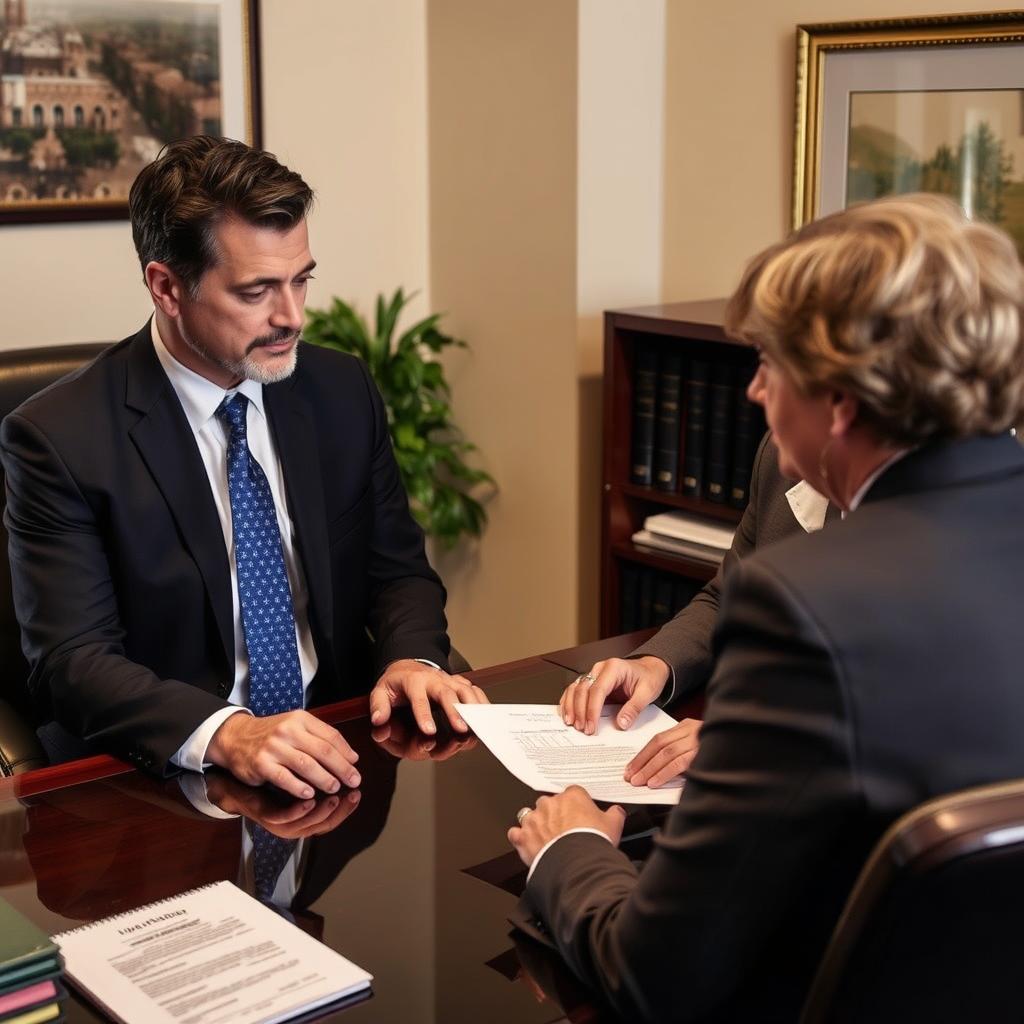
Post Divorce Enforcement Lawyer Colonial Heights, VA
When a final divorce decree orders one party to pay spousal support, transfer property, or comply with custody and visitation terms, but that party refuses to follow through, the other spouse is left with a court order that is not being honored. Post‑divorce enforcement is the legal process of compelling compliance with those existing court orders. In Colonial Heights, Virginia, enforcement actions are heard in the Colonial Heights Circuit Court—which retains jurisdiction over equitable distribution, spousal support, and property‑division matters—or in the Colonial Heights Juvenile and Domestic Relations District Court when the dispute centers on custody, visitation, or child support. Mr. Sris and his Of Counsel help clients in Colonial Heights and the surrounding area move enforcement proceedings forward when a former spouse fails to meet obligations set out in a divorce decree. To discuss your situation, contact Law Offices Of SRIS, P.C. at (888) 437‑7747. Law Offices Of SRIS, P.C. – Advocacy Without Borders.
Direct Answer Expansion: How Post‑Divorce Enforcement Works in Colonial Heights
Post‑divorce enforcement is not a new lawsuit; it is a continuation of the original divorce case. The court that entered the decree keeps the authority to enforce it. In Colonial Heights, that typically means the Colonial Heights Circuit Court for property division, spousal support, and retirement‑plan orders, and the Colonial Heights Juvenile and Domestic Relations District Court for child‑support and custody orders. The party seeking enforcement files a motion asking the court to compel the other side to comply. The motion must identify the specific provision of the decree that has been violated and describe the non‑compliance with enough detail for the court to act.
Virginia law gives courts several tools to secure compliance. A judge may find the non‑complying party in contempt, which can result in fines or, in some circumstances, incarceration until the party purges the contempt by doing what the order requires. The court can also enter a judgment for the amount of unpaid support, garnish wages, place a lien on property, or require the non‑complying party to pay the other side’s attorney fees and costs. In custody cases, the court can modify the parenting schedule or order make‑up time with the child. Enforcement motions are document‑intensive, so working with an experienced family‑law attorney helps ensure the motion is properly supported and presented.
Frequently Asked Questions
What is post‑divorce enforcement in Virginia?
Post‑divorce enforcement is the legal process a party uses when the other side fails to follow the terms of a final divorce decree, such as unpaid support, un‑transferred property, or ignored custody orders. The enforcing party asks the court to force compliance through contempt sanctions, wage garnishment, property liens, or other remedies. The same court that issued the original decree retains authority to enforce it, so no new lawsuit is needed.
How does the court enforce a divorce decree in Colonial Heights?
The court enforces a divorce decree by issuing orders that compel the non‑complying party to act, often through contempt proceedings or money judgments for unpaid support. In Colonial Heights, the Circuit Court handles enforcement of property‑division and spousal‑support obligations, while the Juvenile and Domestic Relations District Court handles enforcement of child support, custody, and visitation. A motion for a rule to show cause is a common enforcement tool; it requires the non‑complying party to appear and explain why they should not be held in contempt.
What remedies are available when an ex‑spouse ignores a support order?
Virginia courts can impose several remedies for unpaid support, including entry of a judgment for the arrears, wage garnishment, interception of tax refunds, suspension of a driver’s license or professional license, and contempt findings that may carry fines or jail time. The court may also order the non‑paying party to cover the other side’s attorney fees and costs incurred in bringing the enforcement action. The specific remedy depends on the facts and the court’s assessment of the party’s ability to pay.
Do I need a lawyer to enforce my divorce decree in Colonial Heights?
You are not legally required to have a lawyer to file an enforcement motion, but the process involves detailed procedural rules and evidentiary standards that are difficult to navigate without experienced counsel. An attorney can help draft the motion, gather the necessary financial records and correspondence, and present the case effectively at the show‑cause hearing. Mr. Sris and his Of Counsel have extensive experience handling post‑divorce enforcement matters in Virginia courts and can guide you through the process.
What is contempt of court in Virginia family law?
Contempt of court in a family‑law context is a finding by the judge that a party willfully disobeyed or disregarded a lawful court order, such as a divorce decree. Civil contempt is used to compel compliance—the party “holds the keys to the jailhouse door” and can be released once they comply. Criminal contempt punishes past disobedience and can result in a fixed jail sentence. Enforcement proceedings in divorce cases most often involve civil contempt.
How long does a post‑divorce enforcement action take?
The timeline for an enforcement action varies based on the court’s calendar, the complexity of the issues, and whether the non‑complying party contests the motion. A straightforward show‑cause hearing may be scheduled within a few months, while a case involving disputed financial records or multiple allegations of non‑compliance can take longer. Contacting an attorney early helps set realistic expectations and avoids unnecessary delay.
Can I recover my attorney fees if I win an enforcement motion?
Virginia courts have the authority to order the non‑complying party to pay the other side’s reasonable attorney fees and costs incurred in bringing the enforcement action. The court considers the parties’ financial circumstances and the degree of non‑compliance. While fee‑shifting is not automatic, it is a remedy that is available and is commonly requested in enforcement pleadings.
What if my ex‑spouse lives in another state?
When an ex‑spouse moves out of Virginia but a Virginia court issued the original divorce decree, enforcement can often still proceed in Virginia because the court retains continuing jurisdiction over the decree. The enforcing party may need to serve the non‑complying spouse under the rules for out‑of‑state service. An attorney can determine the most efficient route, whether that is bringing the action in Virginia or registering the foreign judgment in the other state’s court.
Can the court modify the divorce decree instead of enforcing it?
An enforcement motion asks the court to compel compliance with the existing order; a modification petition asks the court to change the order because of a material change in circumstances. If the non‑complying party claims they can no longer pay the ordered amount or that custody should be changed, they typically must file a separate modification request. The court will not re‑write the original decree through an enforcement proceeding.
What evidence is needed to support an enforcement motion?
An enforcement motion should be supported by the original divorce decree or court order, records of payments made and missed, correspondence between the parties, and any other documentation that shows the specific provision violated and the extent of the non‑compliance. For support cases, pay‑stubs, bank statements, and accounting ledgers are often used. In custody enforcement cases, a calendar showing denied visitation dates and any police reports may be relevant.
How do I start enforcement proceedings in Colonial Heights?
To start an enforcement proceeding, you file a motion with the court that entered the original decree, describing the specific obligation that has been violated and the relief you seek. The motion is served on the other party, and a hearing date is set. An attorney can help evaluate your case, prepare the motion, and represent you at the hearing. Contact Law Offices Of SRIS, P.C. at (888) 437‑7747 to schedule a consultation about your situation.
What is the difference between enforcement and modification of a divorce decree?
Enforcement seeks to compel compliance with the existing decree, while modification asks the court to change the terms of the decree because circumstances have materially changed since it was entered. For example, if a party fails to pay spousal support, enforcement is the remedy; if the paying party lost their job through no fault of their own, they might seek a modification of the support amount. The two actions are legally distinct and are handled under different legal standards.
About Mr. Sris and His Of Counsel Team
Mr. Sris, Owner and Founder of Law Offices Of SRIS, P.C., is admitted to practice in Virginia, Maryland, the District of Columbia, New Jersey, and New York. A former prosecutor, he founded the firm in 1997 and has concentrated his practice on family law matters, including post‑divorce enforcement, for more than two decades. Mr. Sris and his Of Counsel bring extensive combined legal experience to every enforcement case, working to secure compliance with court orders while protecting clients’ rights. Results may vary. For a consultation about enforcing a divorce decree in Colonial Heights, call (888) 437‑7747.
Related practice areas in Virginia:
- Family Law Lawyer Fairfax County, VA
- Family Law Lawyer Fairfax (City), VA
- Family Law Lawyer Prince William County, VA
Virginia primary legal resources (open in new tab):
- Virginia Code Title 20 – Domestic Relations
- Colonial Heights Circuit Court
- Colonial Heights Juvenile and Domestic Relations District Court
Attorney advertising. Prior results do not guarantee a similar outcome. Case results depend on a variety of factors unique to each case. Results may vary.