
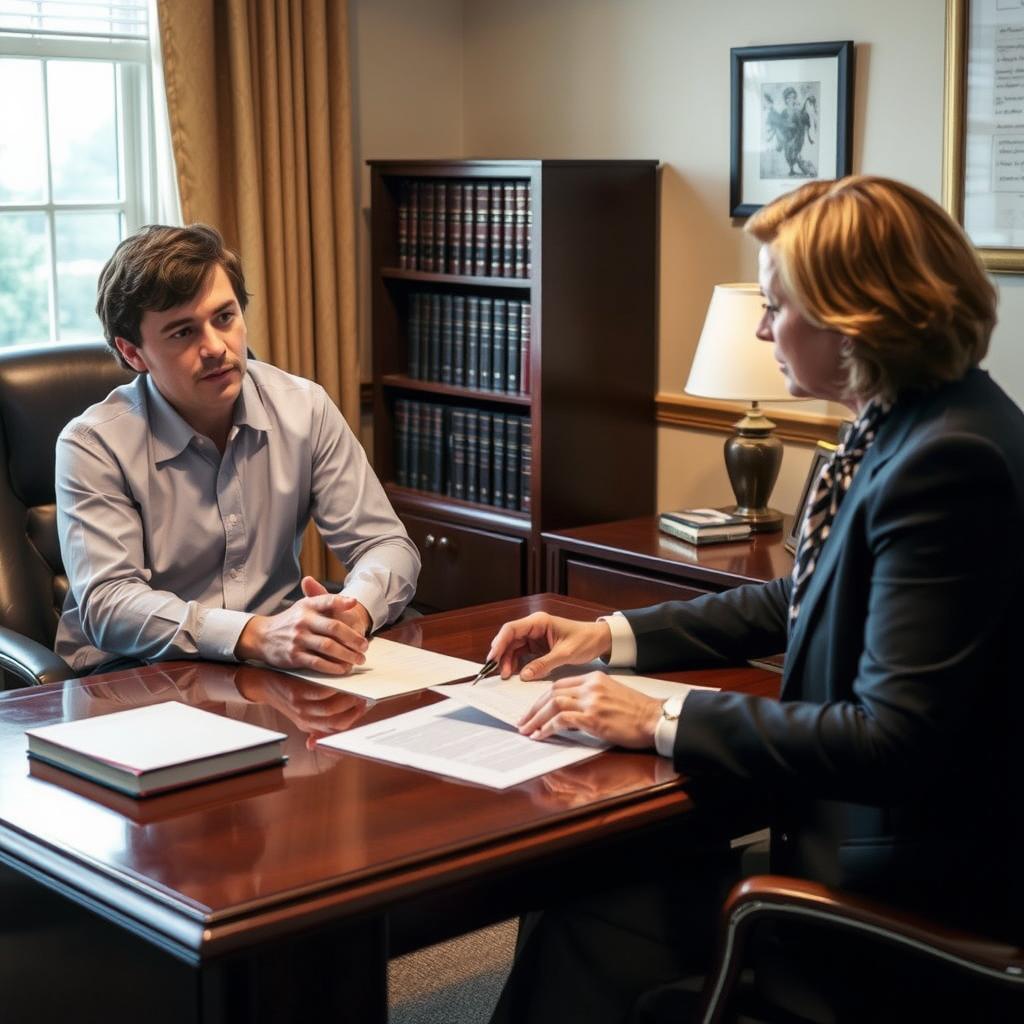
Postnup Lawyer Roanoke County, VA
A postnuptial agreement is a legal contract entered into by spouses after marriage that addresses property division, spousal support, and other financial matters in the event of separation or divorce. In Roanoke County, Virginia, postnuptial agreements are governed by the Virginia Premarital Agreement Act, Va. Code § 20‑147 et seq. Whether you are considering an agreement to bring clarity to your marriage or need representation in a dispute over an existing agreement, Law Offices Of SRIS, P.C. provides experienced legal guidance. Mr. Sris and his Of Counsel understand how the Roanoke County Circuit Court and the Roanoke County Juvenile & Domestic Relations District Court handle matters involving spousal contracts. Our Shenandoah/Woodstock Location serves clients throughout the Roanoke Valley, including Salem, Vinton, Cave Spring, Hollins, and Catawba. To discuss your postnuptial agreement needs, reach our firm at (888) 437‑7747. Law Offices Of SRIS, P.C. – Advocacy Without Borders.
What Postnuptial Agreements Mean in Roanoke County
A postnuptial agreement, sometimes called a marital agreement or post-marital contract, allows spouses to define their financial rights and obligations while they are still together. Unlike a divorce settlement that is negotiated under the pressure of an impending separation, a postnup is created during a period of marital harmony, often to resolve financial disagreements, protect assets, or provide for children from a previous relationship. In Virginia, which is an equitable distribution state, courts divide marital property according to factors set out in Va. Code § 20‑107.3, but a valid postnuptial agreement can override the default statutory rules and give spouses greater control over how their assets and debts will be treated if the marriage ends.
In Roanoke County, postnuptial agreements are often presented to the Roanoke County Circuit Court as part of a divorce proceeding, or to the Roanoke County Juvenile & Domestic Relations District Court when custody and support are involved. The courts applying Virginia law will examine whether the agreement was entered into voluntarily, with full and fair disclosure of each spouse’s financial circumstances, and whether its terms are conscionable. The Twenty‑third Judicial District, which includes Roanoke County, applies the same statutory framework as the rest of the Commonwealth, so local practice aligns with statewide law. Because a postnuptial agreement can have lasting implications for spousal support, property division, and even estate planning, careful preparation is important. Residents of Salem, Vinton, Cave Spring, Hollins, and Catawba who are considering a postnup can consult with our attorneys to understand how Virginia’s equitable distribution principles interact with private agreements.
How Mr. Sris and His Of Counsel Handle Postnuptial Agreement Cases
Every postnuptial agreement case begins with a thorough consultation to understand the spouses’ goals, the marital asset picture, and any special circumstances—such as business ownership, professional practices, or retirement accounts—that may require detailed drafting. Mr. Sris and his Of Counsel start by reviewing the applicable Virginia statutory requirements, including those of the Premarital Agreement Act, and then work with the client to craft an agreement that reflects the parties’ intentions while satisfying the legal standards for enforceability. The process may involve exchanging financial disclosures, negotiating terms with opposing counsel when both sides are represented, and preparing the final executed document.
When a postnuptial agreement is later challenged—for example, on grounds of duress, fraud, or unconscionability—Mr. Sris and his Of Counsel are prepared to litigate the matter in the Roanoke County Circuit Court. In such cases, the attorney’s role is to present evidence regarding the circumstances of the agreement’s execution, the adequacy of disclosure, and the overall fairness of the terms, guided by the factors Virginia courts consider. Because postnuptial agreements sit at the intersection of contract law and family law, handling them requires a command of both areas of practice. Mr. Sris and his Of Counsel bring extensive combined legal experience to these matters, working to achieve resolutions that protect the client’s interests. Results may vary.
About Mr. Sris and His Of Counsel Team
Mr. Sris, Owner and Founder of Law Offices Of SRIS, P.C., has been practicing since 1997. A former prosecutor, he brings a courtroom-tested perspective to family law matters and is admitted to practice in Virginia, Maryland, the District of Columbia, New Jersey, and New York. He has testified before the Virginia House Courts of Justice Committee in support of 2019 HB 635 (chief patron Del. David Bulova). His extensive experience handling complex family law cases informs the representation the firm provides in postnuptial agreement matters.
Working alongside Mr. Sris is a team of Of Counsel attorneys who contribute a broad range of litigation and transactional experience. Because the firm operates across five jurisdictions and has handled family law issues for clients throughout Virginia, the Of Counsel team is well positioned to address the nuances of postnuptial agreements. Mr. Sris and his Of Counsel are supported by staff who help coordinate consultations, court filings, and communications with clients. To schedule a consultation with Mr. Sris or a member of his Of Counsel team regarding a postnuptial agreement in Roanoke County, call (888) 437‑7747.
Frequently Asked Questions
What is a postnuptial agreement in Virginia?
A postnuptial agreement is a contract entered into by spouses after marriage to establish their property rights, support obligations, and other financial matters if the marriage ends. Under Virginia’s Premarital Agreement Act (Va. Code § 20‑147 et seq.), such agreements are enforceable if they are in writing, signed by both parties, and entered into voluntarily with adequate financial disclosure. Postnuptial agreements can address the division of marital and separate property, spousal support, and even rights to life insurance or estate claims. They are often used to resolve financial uncertainty and avoid contested litigation later.
Are postnuptial agreements enforceable in Roanoke County?
Yes, postnuptial agreements are generally enforceable in Roanoke County courts so long as they satisfy Virginia’s statutory and common‑law requirements. The Roanoke County Circuit Court, which has jurisdiction over divorce and equitable distribution, will enforce a postnuptial agreement unless it finds that it was obtained through fraud, duress, or mistake, or that its terms are unconscionable at the time of enforcement. The court will also examine whether there was full financial disclosure and whether each party had the opportunity to consult with independent counsel. For guidance on your specific situation, reach Law Offices Of SRIS, P.C. at (888) 437‑7747.
Can a postnuptial agreement affect spousal support and property division?
Yes, a valid postnuptial agreement can control both spousal support and the division of marital property, overriding Virginia’s default equitable distribution rules. Spouses can agree to waive or limit spousal support, define what constitutes marital versus separate property, and set out how specific assets will be divided. However, if a term would cause one spouse to become a public charge or is otherwise contrary to public policy, a court may decline to enforce that particular term. The agreements must be drafted with precision to survive judicial scrutiny in Roanoke County.
How does a court in Roanoke County review a postnuptial agreement?
The court applies a two‑pronged inquiry: whether the agreement was validly executed and whether its substantive terms are conscionable. The Roanoke County Circuit Court will consider factors such as the presence of independent legal advice, the completeness of financial disclosures, the timing of the agreement relative to any divorce filing, and any evidence of coercion. The judge may hold an evidentiary hearing to assess the validity of the agreement. Because the court’s analysis is fact‑specific, experienced legal representation is important to present the relevant evidence.
Do I need a lawyer to create a postnuptial agreement in Virginia?
Virginia law does not require each spouse to have a lawyer, but having legal counsel is strongly recommended to ensure the agreement is enforceable. A postnuptial agreement that is drafted without legal guidance may later be challenged as invalid on grounds that one party did not understand the rights being waived. An attorney can help you understand your rights, propose fair terms, and prepare an agreement that complies with Virginia law. Mr. Sris and his Of Counsel can assist either spouse in drafting or reviewing a postnuptial agreement.
What if my spouse refuses to sign or later contests the agreement?
If a spouse refuses to sign, the agreement cannot be imposed unilaterally—both parties must voluntarily consent. If a signed agreement is later contested in a divorce proceeding, the Roanoke County Circuit Court will evaluate its enforceability under the Premarital Agreement Act. Typical challenges include claims of fraud, duress, or unfairness. The attorney defending the agreement must be prepared to present evidence of the circumstances surrounding its execution. To discuss the details of your matter, contact Law Offices Of SRIS, P.C. at (888) 437‑7747.
Additional resources for family law matters in Virginia can be found at the official sources:
Related family law pages:
- Family Law Lawyer Fairfax County, VA
- Family Law Lawyer Fairfax (City), VA
- Family Law Lawyer Falls Church (City), VA
- Family Law Lawyer Prince William County, VA
- Family Law Lawyer Manassas (City), VA
Attorney advertising. Prior results do not guarantee a similar outcome. Results may vary. Case results depend on a variety of factors unique to each case.