
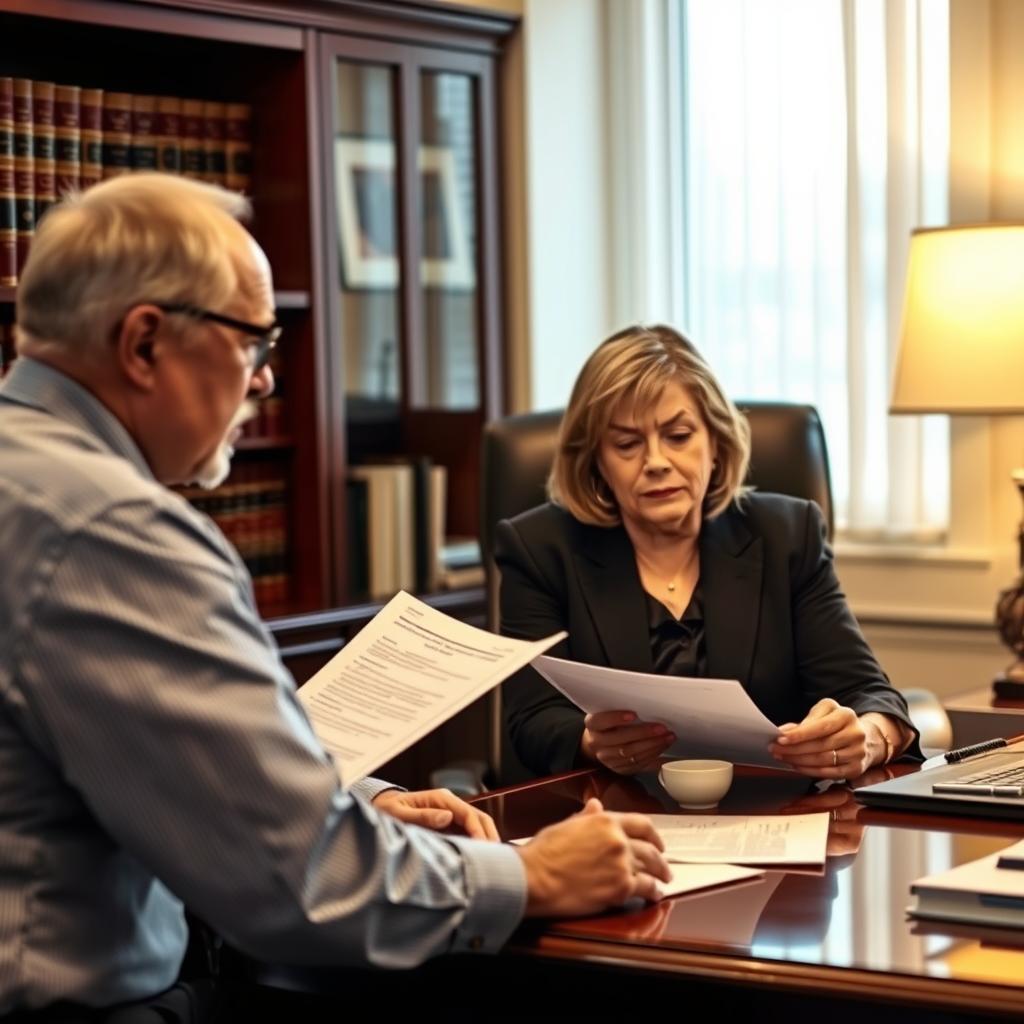
Property Division Lawyer Isle of Wight County, VA
You married years ago in Smithfield or Windsor, built a life together, and accumulated a home, retirement accounts, vehicles, maybe a family business. Now the marriage is ending, and you need to sort out what belongs to each of you under Virginia law. Property division in a divorce is often one of the most stressful and financially significant parts of the process. At Law Offices Of SRIS, P.C., we represent clients throughout Isle of Wight County in equitable distribution matters, helping them protect their financial interests and move forward. Virginia is an equitable distribution state — not a community property state — so the court divides marital assets fairly but not necessarily equally. Our attorneys appear regularly before the Isle of Wight County Circuit Court, located at 17122 Monument Circle, Suite A, to advocate for a division that reflects your contributions and future needs. Reach us at (888) 437-7747 to request a consultation. Law Offices Of SRIS, P.C. – Advocacy Without Borders.
What Property Division Means in Isle of Wight County
Virginia’s equitable distribution statute, Va. Code § 20-107.3, governs how property is divided when a marriage ends. The Isle of Wight County Circuit Court has exclusive jurisdiction over divorce and the accompanying division of assets and debts. Under the statute, the first step is classifying property as separate or marital. Separate property includes assets owned before the marriage, gifts, and inheritances — generally preserved for the original owner. Marital property encompasses everything acquired during the marriage, regardless of whose name is on the title. A family home purchased after the wedding, retirement accounts funded during the marriage, and business growth achieved through shared effort all fall within the marital estate.
The court then determines a fair distribution based on eleven factors: the duration of the marriage, each spouse’s contributions to the family’s well‑being and to the acquisition of the property, the parties’ ages and health, the circumstances that led to the divorce, and other considerations. The judge assigned to the Isle of Wight County Circuit Court will weigh these factors without any automatic 50‑50 split. Because the outcome is fact‑specific, having counsel who understands local practice and can present a clear financial picture is essential. The court also addresses debts, tax consequences, and whether certain assets — such as a closely‑held business — should be sold or assigned to one spouse with an offset payment. Mediation is available in the county but is not mandatory, so many cases resolve through negotiation while others require trial.
How Mr. Sris and the Firm’s Of Counsel Attorneys Handle Property Division Cases
Every equitable distribution matter starts with a thorough inventory of the marital estate. Mr. Sris and the firm’s Of Counsel attorneys work with clients to identify all assets and liabilities: bank accounts, brokerage holdings, real estate, retirement plans, business interests, vehicles, and personal property. When necessary, we coordinate with forensic accountants, business valuators, and pension attorneys to establish accurate values for assets that are not easily quantified.
We then develop a strategy aimed at achieving a division that is both fair and practical. That may involve negotiating a separation agreement that both spouses can live with, or, when compromise is not possible, preparing for a contested hearing in the Isle of Wight County Circuit Court. Our goal is to present the court with a clear, evidence‑supported proposal that highlights the contributions, needs, and future earning capacity of each party. Throughout the process we keep clients informed about the steps ahead, the likely timeline, and the legal issues at play. To discuss your situation, call (888) 437-7747.
About Mr. Sris and the Firm’s Of Counsel Attorneys
Mr. Sris, Owner and Founder, is a former prosecutor who has practiced in family law and other areas since 1997. He testified before the Virginia House Courts of Justice Committee in support of 2019 HB 635 (chief patron Del. David Bulova), the legislation that revised the equitable distribution statute now codified at Va. Code § 20-107.3. That firsthand involvement with the statutory framework gives clients an advocate who understands how the law was shaped and what the legislature intended.
Mr. Sris and the firm’s Of Counsel attorneys bring extensive combined legal experience. Results may vary. The firm’s multi‑state practice includes Virginia, Maryland, the District of Columbia, New Jersey, and New York, and its Richmond Location — serving clients in Isle of Wight County and across central Virginia — allows convenient access for meetings and court appearances. All consultations are by appointment; reach us at (888) 437-7747.
Frequently Asked Questions
How does equitable distribution differ from community property?
Virginia is an equitable distribution state, meaning the court divides marital property fairly based on statutory factors rather than automatically splitting assets 50‑50. Community property states, in contrast, generally split marital assets equally. In Isle of Wight County, the judge evaluates contributions, the marriage’s duration, and other considerations before deciding what share each spouse receives. Separate property remains with the original owner. This discretionary approach makes legal guidance valuable because the outcome depends on the specific facts of your case.
What is the difference between separate and marital property?
Separate property includes assets owned before the marriage, gifts, and inheritances received individually; marital property encompasses everything acquired during the marriage. Under Va. Code § 20-107.3, the court must classify each asset before dividing the estate. Income earned during the marriage, real estate purchased jointly, and retirement contributions made after the wedding are marital, while pre‑marriage savings and personal gifts remain separate. Sometimes an asset has both separate and marital components — such as a business started before marriage that grew in value during the union — and those situations require careful tracing.
What factors does the Isle of Wight County Circuit Court consider when dividing property?
The court considers eleven factors under Va. Code § 20-107.3, including the marriage’s length, each spouse’s monetary and non‑monetary contributions, the parties’ ages and health, and the reasons for the divorce. It also weighs debts, tax consequences, and the liquid or non‑liquid nature of the assets. There is no presumption that an equal division is fair; the judge has broad discretion to tailor the outcome to the couple’s unique circumstances. Presenting a well‑documented financial picture helps the court apply these factors in your favor.
Do I need a lawyer for property division in Isle of Wight County?
You are not legally required to hire a lawyer, but property division involves complex legal and financial issues that can have long‑term consequences. Valuation of businesses, retirement accounts, and real estate, tracing separate and marital contributions, and understanding tax implications often require professional analysis. Mistakes in classification or valuation can be difficult to correct later. An experienced family law attorney can protect your interests and help you avoid hidden pitfalls. For guidance on your specific situation, reach Law Offices Of SRIS, P.C. at (888) 437-7747.
How long does property division take in Isle of Wight County?
The timeline depends on whether the spouses agree on a settlement or the case goes to trial, and on the complexity of the assets involved. An uncontested divorce with a signed separation agreement can resolve property issues in a few months, while a contested equitable distribution case involving business valuation or forensic accounting may take a year or more. The Isle of Wight County Circuit Court’s docket also affects scheduling. Working with counsel who can efficiently organize financial information and negotiate a settlement usually shortens the process.
What if my spouse is hiding assets?
Virginia law requires full financial disclosure, and a lawyer can use discovery tools — interrogatories, document requests, depositions, and subpoenas — to uncover hidden or undervalued assets. The court can sanction a spouse who deliberately conceals property by awarding a larger share to the other party. Forensic accountants are often engaged to trace funds, examine business records, and identify unreported income or offshore accounts. If you suspect your spouse is not being transparent, consult counsel promptly. To discuss the details of your matter, contact Law Offices Of SRIS, P.C. at (888) 437-7747.
Family Law in Fairfax County |
Family Law in Prince William County |
Family Law in Loudoun County |
Family Law in Richmond
For additional statutory information, visit the Virginia Legislative Information System’s equitable distribution statute and the Isle of Wight County Circuit Court. You may also review the Virginia Judicial System website for general court information.
Attorney advertising. Prior results do not guarantee a similar outcome. Results may vary.
Case results depend on a variety of factors unique to each case.