
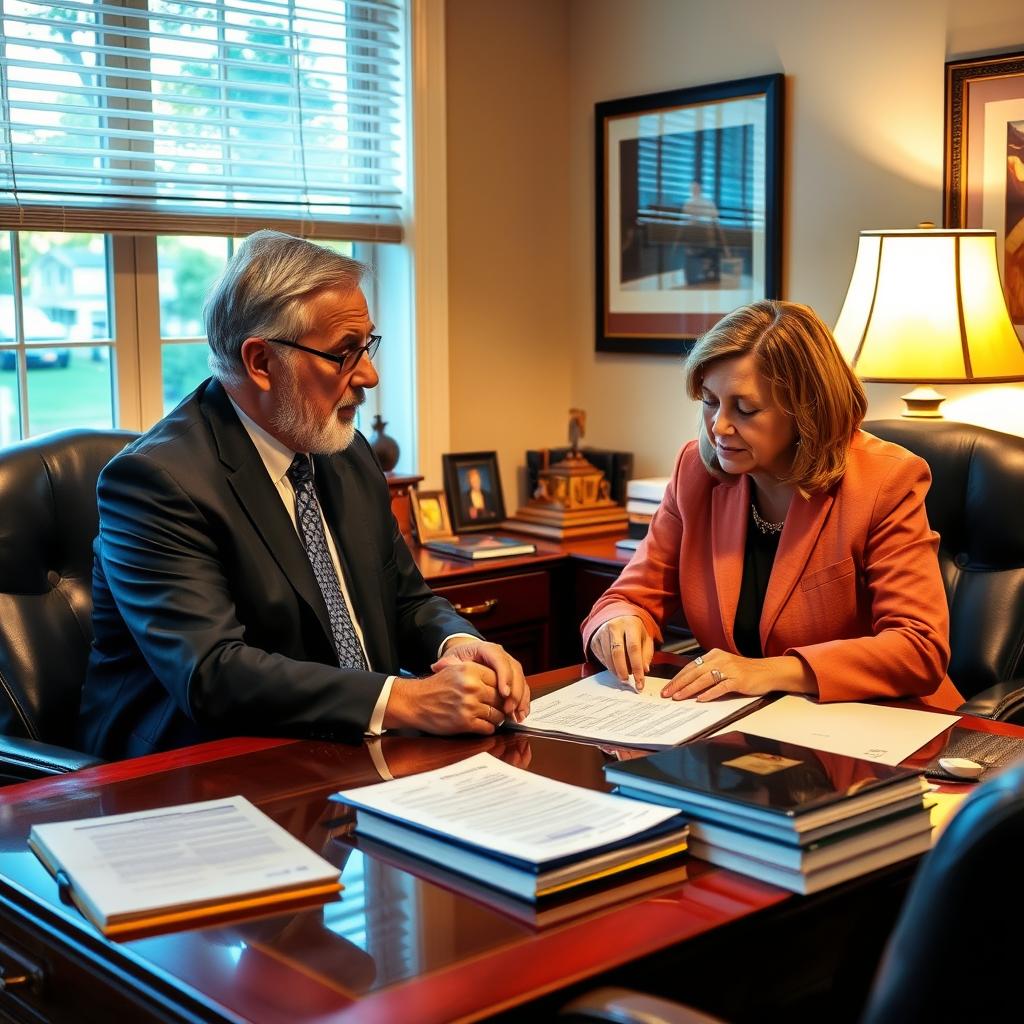
Property Division Lawyer Rappahannock County, VA
Dividing property during a divorce in Rappahannock County requires a clear understanding of Virginia’s equitable distribution framework. Under Va. Code § 20-107.3, the court classifies assets as marital, separate, or hybrid and then distributes marital property fairly—not necessarily equally. The Rappahannock County Circuit Court at 250 Gay Street, Suite 1, Washington, VA 22747 has exclusive jurisdiction over divorce and property division matters. Whether your marital estate includes a family business, retirement accounts, real estate, or complex financial instruments, Mr. Sris and the firm’s Of Counsel attorneys work to protect your interests. To discuss your situation with a property division lawyer serving Rappahannock County, call Law Offices Of SRIS, P.C. at (888) 437-7747. Law Offices Of SRIS, P.C. – Advocacy Without Borders.
What Property Division Means in Rappahannock County
Property division in Virginia is governed by equitable distribution, not community property. The Rappahannock County Circuit Court follows the statutory framework in Va. Code § 20-107.3, which requires a three-step process: classification, valuation, and distribution. First, the court determines whether each asset is marital property (acquired during the marriage and not by gift or inheritance), separate property (owned before marriage or received as a gift or inheritance), or hybrid. Second, the court assigns a value to the marital estate. Third, the court divides the marital property after weighing eleven statutory factors, including the duration of the marriage, each spouse’s contributions to the family’s wellbeing, the age and health of the parties, and the circumstances that led to the divorce.
Because Rappahannock County is a rural jurisdiction within the Twentieth Judicial District, local practice often emphasizes practicality. Cases involving farms, small businesses, or significant real estate holdings require careful attention to valuation and the classification of assets that may have been acquired or improved over many years. The court’s docket is managed in a way that encourages resolution through negotiation or mediation when possible, but when trial is necessary, counsel must present a clear, well-documented picture of the marital estate. Law Offices Of SRIS, P.C. serves clients in Washington, Sperryville, Flint Hill, and surrounding communities from the firm’s Fairfax location, with attorneys who appear regularly in Rappahannock County courts.
How Mr. Sris and the Firm’s Of Counsel Attorneys Handle Property Division Cases
When you engage the firm for a property division matter in Rappahannock County, the process begins with a thorough review of all assets and liabilities. Mr. Sris and the firm’s Of Counsel attorneys work with you to identify marital property—including real estate, bank accounts, investment portfolios, retirement accounts, business interests, and personal property—and to distinguish it from separate property. Where complex assets are involved, the team collaborates with forensic accountants, business valuators, and other professionals to establish accurate valuations.
From there, the approach depends on the level of cooperation between the parties. If both sides are willing to negotiate, the firm drafts or reviews a property settlement agreement that addresses all assets and debts. When agreement is not possible, the firm prepares for litigation in the Rappahannock County Circuit Court, presenting evidence under the factors in Va. Code § 20-107.3. Throughout the process, the goal is to secure a fair and enforceable division that protects your financial future. Because every estate is different, the strategy is tailored to the specific facts, without reliance on one-size-fits-all formulas.
About Mr. Sris and the Firm’s Of Counsel Attorneys
Mr. Sris, Owner and Founder of Law Offices Of SRIS, P.C., has practiced law since 1997. A former prosecutor, he brings extensive courtroom experience to family law matters, including property division cases. Mr. Sris testified before the Virginia House Courts of Justice Committee in support of 2019 HB 635 (chief patron Del. David Bulova). He is admitted to practice in Virginia, Maryland, the District of Columbia, New Jersey, and New York.
The firm’s Of Counsel attorneys add further depth. All Of Counsel are independent practitioners who contract directly with the firm; they contribute broad experience in areas such as complex financial litigation, business valuation, and family law. Together, Mr. Sris and the firm’s Of Counsel attorneys bring substantial combined legal experience to property division matters, working collaboratively to address both the legal and practical aspects of dividing marital estates. To reach a member of the team, call (888) 437-7747.
Frequently Asked Questions
How is property divided in a Rappahannock County divorce?
Virginia law requires equitable distribution, meaning the court divides marital property fairly but not necessarily 50/50. Under Va. Code § 20-107.3, the Rappahannock County Circuit Court classifies assets as marital or separate, values the marital estate, and then divides it after considering factors such as the length of the marriage, each spouse’s contributions, and the reasons for the divorce. Separate property—assets owned before marriage or received by gift or inheritance—generally remains with the owning spouse. The court may also assign debt. A property settlement agreement reached by the parties can resolve distribution without a trial.
What factors does a Virginia court consider in property division?
The court weighs eleven statutory factors under Va. Code § 20-107.3, including the duration of the marriage, each party’s monetary and non-monetary contributions, the age and health of the spouses, and how and when specific property was acquired. Additional considerations include the tax consequences of any proposed division, the liquidity of the assets, and any other factor the court deems relevant. No single factor controls; the court balances them to reach an equitable result. An experienced attorney can show how these factors apply to the specific facts of your case.
Do I need a lawyer for property division in Rappahannock County?
You are not legally required to hire a lawyer, but property division involves complex issues of classification, valuation, and statutory interpretation that can have long-term financial consequences. Mistakes in identifying marital property or failing to address retirement accounts properly can be difficult to correct after a decree is entered. Mr. Sris and the firm’s Of Counsel attorneys help clients in Rappahannock County navigate the process, whether through negotiation of a separation agreement or litigation in the Circuit Court. For a consultation, call (888) 437-7747.
What should I bring to a consultation about property division?
Bring a list of all assets and debts you are aware of, along with any recent financial statements, tax returns, and documents showing how and when property was acquired. This includes deeds, vehicle titles, bank and brokerage statements, retirement account summaries, business ownership records, and credit card or loan statements. The more complete the financial picture, the more productive the initial consultation. Contact Law Offices Of SRIS, P.C. at (888) 437-7747 to schedule a meeting.
Can a property settlement agreement avoid court in Rappahannock County?
Yes, a signed property settlement agreement (separation agreement) that resolves all issues can allow the divorce to proceed on an uncontested basis, often without a contested trial. The agreement must be in writing and signed by both parties. Once filed with the Rappahannock County Circuit Court and incorporated into the final decree, it becomes an enforceable court order. Experienced legal review helps ensure the agreement is complete, fair, and unlikely to be set aside later.
Related pages:
Fairfax County Family Law Lawyer |
Fairfax City Family Law Lawyer |
Falls Church Family Law Lawyer |
Prince William County Family Law Lawyer |
Manassas Family Law Lawyer
Primary legal sources:
Virginia Code § 20-107.3 – Equitable Distribution |
Virginia Circuit Courts
Reviewed by Mr. Sris, Owner and Founder. Admitted in Virginia, Maryland, District of Columbia, New Jersey, and New York. Practicing since 1997.
Attorney advertising. Prior results do not guarantee a similar outcome. Case results depend on a variety of factors unique to each case. Results may vary.