
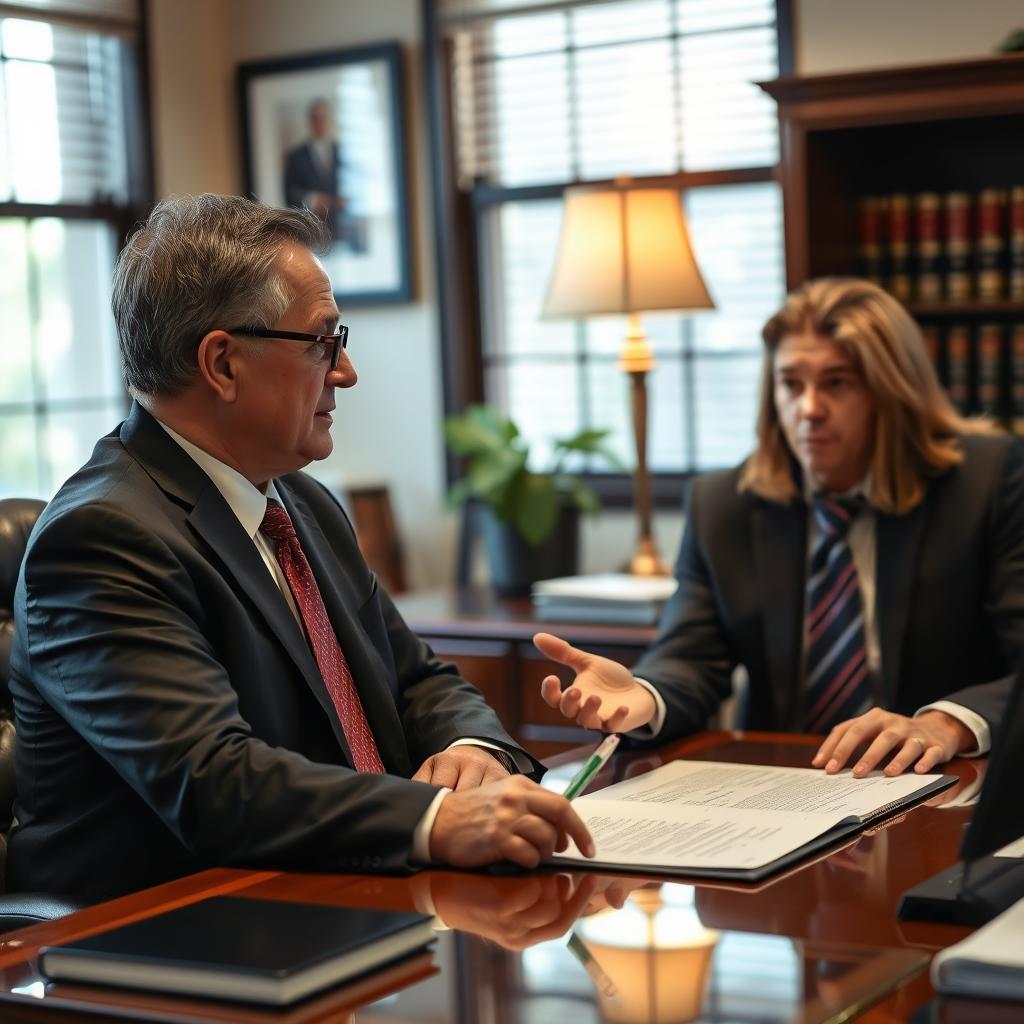
Property Settlement Lawyer King William County, VA
When a marriage ends, dividing property can become one of the most contested aspects of a divorce. In Virginia, property division is governed by equitable distribution principles under Virginia Code § 20‑107.3, which requires the court to classify, value, and divide marital assets and debts fairly—though not necessarily equally. If you are facing a property settlement matter in King William County, Virginia, you need an attorney who understands how the local courts apply these principles and who can advocate effectively for your interests. The King William County Circuit Court at 351 Courthouse Lane handles all divorce and equitable distribution matters for the county, while the King William County Juvenile and Domestic Relations Court addresses custody and support issues that often intersect with property division. Law Offices Of SRIS, P.C. represents clients in property settlement negotiations and litigation across King William County, including the communities of King William, West Point, and Aylett. Mr. Sris and his Of Counsel bring extensive combined legal experience to family law matters, working to achieve favorable outcomes for clients. Results may vary. To discuss your situation, reach Law Offices Of SRIS, P.C. at (888) 437-7747. Law Offices Of SRIS, P.C. – Advocacy Without Borders.
What Property Settlement Means in King William County, Virginia
Property settlement in a Virginia divorce is the process of identifying, valuing, and dividing the assets and debts accumulated during the marriage. Because Virginia is an equitable distribution state rather than a community property state, the court does not automatically split everything 50/50. Instead, the judge considers eleven statutory factors set out in Virginia Code § 20‑107.3(E)—including the duration of the marriage, each spouse’s contributions to the family’s well‑being, the circumstances that led to the divorce, and the tax consequences of the division—to arrive at a division that is fair under the specific facts of the case.
In King William County, all property division issues that are part of a divorce proceeding are handled by the King William County Circuit Court. The court has the authority to classify assets as marital, separate, or hybrid, to value businesses, retirement accounts, and real estate, and to order the transfer or sale of property. When the parties can agree on a division, they may sign a property settlement agreement—also called a separation agreement—that resolves all property, support, and related issues without a trial. Virginia law requires at least one corroborating witness for an uncontested divorce hearing, and a well‑drafted agreement can streamline the process. If the parties cannot reach an agreement through negotiation or mediation, the Circuit Court will hold an evidentiary hearing and decide the matter. Mr. Sris and his Of Counsel are familiar with how King William County judges approach equitable distribution and work to present each client’s financial picture clearly. Our Richmond location routinely serves clients from King William, West Point, and Aylett, and we appear regularly at the courthouse on Courthouse Lane.
How Mr. Sris and His Of Counsel Handle Property Settlement Cases
Every property settlement case begins with a thorough inventory of the marital estate. Mr. Sris and his Of Counsel work with clients to identify all assets and debts—real estate, bank accounts, investment portfolios, business interests, retirement accounts, vehicles, and personal property—and to determine which are marital and which are separate. In complex cases, the firm may engage forensic accountants, business valuators, or appraisers to assess the value of hard‑to‑value items such as a closely held business or professional practice.
Once the estate is identified and valued, the focus shifts to negotiation. The goal is to reach a written property settlement agreement that resolves all financial issues and, where applicable, custody and support. Mediation is available but not required in Virginia, and Mr. Sris and his Of Counsel regularly represent clients in mediation sessions. If an agreement cannot be reached, the matter proceeds to litigation before the King William County Circuit Court. At trial, the attorney presents evidence supporting the client’s proposed division, cross‑examines opposing valuations, and argues for a fair outcome under the statutory factors. Throughout the process, the team keeps clients informed and helps them understand the legal and practical implications of each decision.
About Mr. Sris and His Of Counsel Team
Mr. Sris, Owner and Founder of Law Offices Of SRIS, P.C., has practiced law since 1997 and is admitted in Virginia, Maryland, the District of Columbia, New Jersey, and New York. A former prosecutor, he brings a disciplined, fact‑based approach to family law disputes. Mr. Sris testified before the Virginia House Courts of Justice Committee in support of 2019 HB 635 (chief patron Del. David Bulova), which revised the equitable distribution statute that governs property division in Virginia. His first‑hand understanding of the legislative intent behind Virginia Code § 20‑107.3 informs the strategies he develops for clients.
Mr. Sris is joined by Of Counsel attorneys who contribute extensive combined legal experience across multiple practice areas. The team includes former law enforcement professionals and litigators with decades of courtroom experience. Together, they handle property settlement matters throughout King William County, appearing in the Circuit Court and advocating for clients in negotiation, mediation, and trial. The firm’s Richmond location serves the King William community; clients can schedule a consultation by calling (888) 437-7747.
Frequently Asked Questions
What is a property settlement agreement in a Virginia divorce?
A property settlement agreement is a written contract between spouses that resolves all financial issues arising from their divorce. It typically addresses the division of marital assets and debts, spousal support, and, if applicable, child custody and support. Once signed by both parties and accepted by the King William County Circuit Court, the agreement becomes part of the final divorce decree. Virginia law encourages parties to reach their own settlement, and a well‑drafted agreement can avoid the expense and uncertainty of a trial.
How is marital property divided in King William County, Virginia?
Marital property is divided equitably—not necessarily equally—under Virginia Code § 20‑107.3. The King William County Circuit Court identifies which assets and debts are marital, values them, and then applies eleven statutory factors to determine a fair division. Factors include the length of the marriage, each spouse’s monetary and non‑monetary contributions, the reasons for the divorce, and the tax consequences of the proposed division. Separate property, such as assets owned before the marriage or received as a gift or inheritance, is generally not subject to division.
Can we reach a property settlement without going to court?
Yes, most property settlements are resolved without a trial. Spouses can negotiate directly, through their attorneys, or with the assistance of a mediator. If they reach an agreement on all issues, their attorneys can draft a property settlement agreement. The agreement is then presented to the King William County Circuit Court at an uncontested divorce hearing, where the judge will review it for fairness and incorporate it into the final decree. Mr. Sris and his Of Counsel help clients negotiate settlements that protect their interests while avoiding the cost and time of litigation.
What if my spouse hides assets during a divorce in Virginia?
A spouse who conceals assets risks serious legal consequences. Virginia Code § 20‑107.3(A) requires full financial disclosure. If hidden assets are discovered, the court may award a larger share of the marital estate to the other spouse, and the concealing spouse may be ordered to pay the other’s attorney’s fees. Mr. Sris and his Of Counsel use forensic accounting techniques and formal discovery requests—such as interrogatories, depositions, and subpoenas—to uncover unreported assets and ensure a complete and accurate inventory of the marital estate.
Do I need a lawyer for a property settlement in King William County?
While you are not legally required to hire an attorney, having experienced counsel is strongly advisable. Property division can involve complex legal and financial issues—business valuations, retirement accounts, real estate, and debts—that have long‑term consequences. An attorney can identify property that might otherwise be overlooked, negotiate terms that protect your future, and ensure the agreement complies with Virginia law. To discuss your situation, reach Law Offices Of SRIS, P.C. at (888) 437-7747.
How does the King William County court handle business valuation in a divorce?
The court considers experienced attorney valuations and applies the statutory equitable distribution factors. When a business is part of the marital estate, its value must be determined. Mr. Sris and his Of Counsel typically engage forensic accountants or business valuation attorneys to assess fair market value, taking into account goodwill, income, and market conditions. The King William County Circuit Court will weigh the expert reports along with the statutory factors to decide whether the business is divided, sold, or offset with other assets. Early guidance from an attorney can help protect a business owner’s interests.
Additional resources: For more on Virginia family law, see our Fairfax County family law page, Prince William County family law page, and Manassas family law page. You may also visit the firm’s divorce practice overview.
For authoritative statutory information, consult the Virginia Code Title 20 (Virginia Code Title 20) and the Virginia Judicial System website (Virginia Courts).
Attorney advertising. Prior results do not guarantee a similar outcome. Results may vary.
Case results depend on a variety of factors unique to each case.