
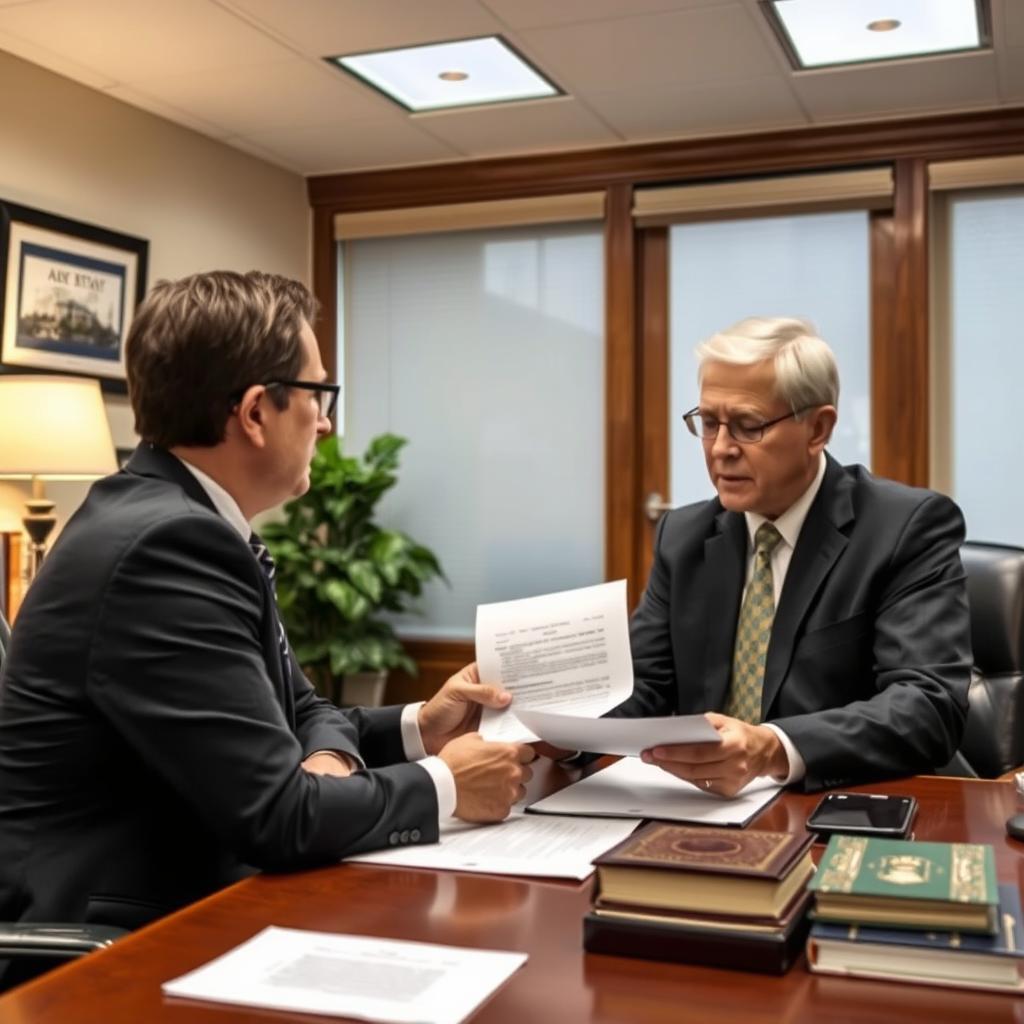
Real Estate Division Lawyer Fauquier County, VA
If you and your spouse own a house in Warrenton, a vacation property in New Baltimore, or investment real estate in The Plains, deciding who gets what can quickly become the most stressful part of your divorce. The Fauquier County Circuit Court at 6 Court Street applies Virginia’s equitable distribution statute to divide marital property—but “equitable” does not always mean a 50‑50 split. Having an experienced lawyer who understands the local bench and the eleven statutory factors under Va. Code § 20‑107.3 can make a meaningful difference. To discuss your real estate division in a Fauquier County divorce, call (888) 437‑7747 to request a consultation. Law Offices Of SRIS, P.C. – Advocacy Without Borders.
Strategy Options for Real Estate Division in Fauquier County
The approach your case takes depends largely on whether you and your spouse can agree on the value and the division of the real property. When both sides are willing to negotiate, a property settlement agreement drafted with the help of counsel can resolve all real estate issues out of court. The agreement must be in writing and signed by both parties, and it spares the expense and uncertainty of litigation.
If negotiations stall, mediation is available. A neutral mediator can help the couple reach a compromise on property classification and buy‑out terms. Virginia does not require mediation in divorce cases, but many Fauquier County judges encourage it before a full trial. When neither negotiation nor mediation succeeds, the case proceeds to an equitable distribution hearing before the Fauquier County Circuit Court, where a judge determines what is marital property, how much it is worth, and how to divide it under the factors in § 20‑107.3.
What to Expect When Dividing Real Estate in Virginia
Real estate division in a Virginia divorce follows a three‑step process. First, the court classifies each parcel as marital, separate, or hybrid. Generally, any real estate purchased during the marriage with marital funds is marital property. Property one spouse owned before the marriage, or received as a gift or inheritance during the marriage, is separate and not subject to division. A property that increased in value during the marriage may be part marital, part separate—a hybrid asset that requires careful appraisal.
Second, the property must be valued. In Fauquier County, this often involves a real estate appraiser, and for commercial or investment property, a forensic accountant may be necessary. The valuation date is typically the date of the evidentiary hearing. Third, after classification and valuation, the judge weighs the eleven statutory factors—including each spouse’s contributions to the acquisition and care of the property, the duration of the marriage, and the tax consequences of the division—to arrive at an equitable distribution. The court can order the property sold and the proceeds divided, or award the property to one spouse with a monetary offset to the other.
How Virginia Law Handles Real Estate Division
Virginia is an equitable distribution state, not a community property state. Under Va. Code § 20‑107.3, the Fauquier County Circuit Court divides real estate in a manner that is fair but not necessarily equal. The eleven factors the court considers range from the ages and health of the parties to the circumstances that contributed to the dissolution of the marriage. The court also examines whether one spouse’s efforts during the marriage significantly increased the value of separate real estate.
When a real estate asset is entirely marital—for example, a family home bought together after the wedding—the judge has broad discretion to award it to either spouse, order its sale, or set up a buy‑out arrangement. For income‑producing property such as rental homes in Marshall or Bealeton, the court may consider which spouse has been managing the asset and whether a continued joint ownership is feasible. Because Fauquier County includes both suburban subdivisions and large rural tracts, property division often involves unique valuation challenges involving acreage, zoning, and agricultural use.
How Mr. Sris and the Firm’s Of Counsel Attorneys Approach Property Division
Mr. Sris, Owner and Founder of Law Offices Of SRIS, P.C., has practiced family law since founding the firm in 1997. A former prosecutor, he brings a practical, detail‑oriented approach to complex property division. Together with the firm’s Of Counsel attorneys—who bring extensive combined legal experience—the firm handles real estate division matters that involve high‑value homes, investment portfolios, and business‑owned realty. Mr. Sris and the firm’s Of Counsel attorneys work with appraisers, accountants, and other financial professionals to present a clear valuation picture to the court. Results may vary.
Law Offices Of SRIS, P.C. represents clients across Virginia, including in Fauquier County Circuit Court at 6 Court Street, Warrenton, VA 20186. The firm’s Fairfax location is within easy reach of the Twentieth Judicial District. Mr. Sris has appeared in Virginia courts throughout his career and testified before the Virginia House Courts of Justice Committee in support of 2019 HB 635 (chief patron Del. David Bulova), legislation that affected the equitable distribution statute. While that testimony is not a guarantee of any case outcome, it reflects the firm’s familiarity with the statutory framework governing real estate division.
Frequently Asked Questions
How is real estate divided in a Virginia divorce?
Virginia law divides real estate using equitable distribution, which means the court divides property fairly but not always equally, after classifying each asset as marital, separate, or hybrid. The Fauquier County Circuit Court first decides what is marital property, then values it, and finally divides it according to the eleven factors listed in Va. Code § 20‑107.3. Marital real estate may be awarded to one spouse or sold with the proceeds split. Separate property—such as a home owned before marriage—remains with the owning spouse, though any increase in value during the marriage may be subject to division.
What is equitable distribution in Virginia?
Equitable distribution means the judge has broad discretion to divide marital property in a way that is fair, after considering statutory factors, rather than automatically dividing everything 50‑50. The factors include the length of the marriage, each spouse’s contributions—both financial and non‑financial—to the acquisition and care of the property, the parties’ ages and health, and the tax consequences of a proposed division. Because the standard is “equitable” and not “equal,” the outcome depends heavily on the specific facts of the case.
Is the family home always marital property in a Fauquier County divorce?
Not always. The family home is marital property if it was purchased with marital funds during the marriage, but if one spouse owned it before the marriage or acquired it by gift or inheritance, that portion may remain separate property. Even a home titled in both names may be subject to a separate-property claim if one spouse used separate funds for the down payment. Hybrid classification is common when a spouse refinanced or made improvements with marital income. An experienced attorney can help trace the source of funds and present the evidence needed to establish the correct classification.
Do I need a lawyer to divide real estate in a Fauquier County divorce?
While you are not legally required to hire a lawyer, real estate division involves complex classification, valuation, and tax issues that are difficult to handle without professional legal guidance. A lawyer can identify which evidence—such as deeds, mortgage statements, and appraisals—is needed to support your position. If your spouse is represented, proceeding without counsel puts you at a significant disadvantage. To discuss your specific situation, call (888) 437‑7747.
How does the court value real estate in a Fauquier County divorce?
The court typically relies on appraisals performed by licensed real estate appraisers, and for income‑producing properties, forensic accountants may prepare valuation reports. The valuation date is usually the date of the evidentiary hearing. Both parties can submit their own appraisals, and if the numbers differ, the judge decides which is more credible. For unique rural parcels in Fauquier County, appraisers must consider factors such as acreage, easements, and agricultural use.
Can we agree on a property division outside of court?
Yes, many couples resolve real estate division through a written property settlement agreement reached through negotiation or mediation, which the court then incorporates into the final divorce decree. This approach is often faster and less expensive than litigation, and it gives the parties more control over the outcome. The agreement must be in writing and signed by both spouses. Mediation is available in the Fauquier County area, though not mandatory.
What happens if one spouse refuses to sell or transfer the property?
If one spouse will not cooperate, the court can order the sale of the real estate or enter a monetary award to offset the other spouse’s interest. The judge has authority under Va. Code § 20‑107.3 to make orders necessary to implement the division, including directing the parties to execute deeds and other transfer documents. If necessary, the court can appoint a special commissioner to handle the sale. Failure to comply with a court order can lead to contempt proceedings.
Does Virginia’s equitable distribution apply to rental or investment properties?
Yes, all real estate acquired during the marriage—including rental homes, commercial buildings, and undeveloped land—is subject to equitable distribution unless it qualifies as separate property. Income‑producing properties often require additional analysis of cash flow, tax implications, and management responsibilities. The court may award the property to one spouse and offset the other with cash or other assets, or order a partition sale if the property cannot be practically divided.
How long does a real estate division dispute take in Fauquier County?
The timeline for a real estate division dispute depends on whether the case settles, the complexity of the valuation, and the court’s trial calendar. An uncontested division resolved through a signed property settlement agreement can be final as soon as the divorce decree is entered, while a contested equitable distribution hearing may be scheduled several months after the discovery period ends. Complex cases involving business-owned real estate or multiple appraisals can extend the timeline. Mr. Sris and the firm’s Of Counsel attorneys work to move cases forward efficiently.
How do I get started with a real estate division lawyer in Fauquier County?
To begin, contact Law Offices Of SRIS, P.C. at (888) 437‑7747 to request a consultation about your real estate division matter in Fauquier County. During your consultation, the firm will discuss the specific properties involved, your goals, and a preliminary strategy based on Virginia law. The firm’s Fairfax location serves clients throughout the Twentieth Judicial District. Call today to schedule an appointment.
Related Family Law Resources: Fairfax County | Prince William County | Stafford County | Loudoun County | Arlington County
For a full statutory analysis of Virginia equitable distribution, see our comprehensive guide on srislawyer.com.
Reach an Experienced Real Estate Division Lawyer in Fauquier County
Law Offices Of SRIS, P.C. represents clients in property division matters throughout Fauquier County from its Fairfax location at 4008 Williamsburg Court, Fairfax, VA 22032. By appointment only. Call (888) 437‑7747 to request a consultation or to discuss how the firm’s attorneys can assist with your real estate division in a Fauquier County divorce.
Attorney advertising. Prior results do not guarantee a similar outcome.
Results may vary. Case results depend on a variety of factors unique to each case.