
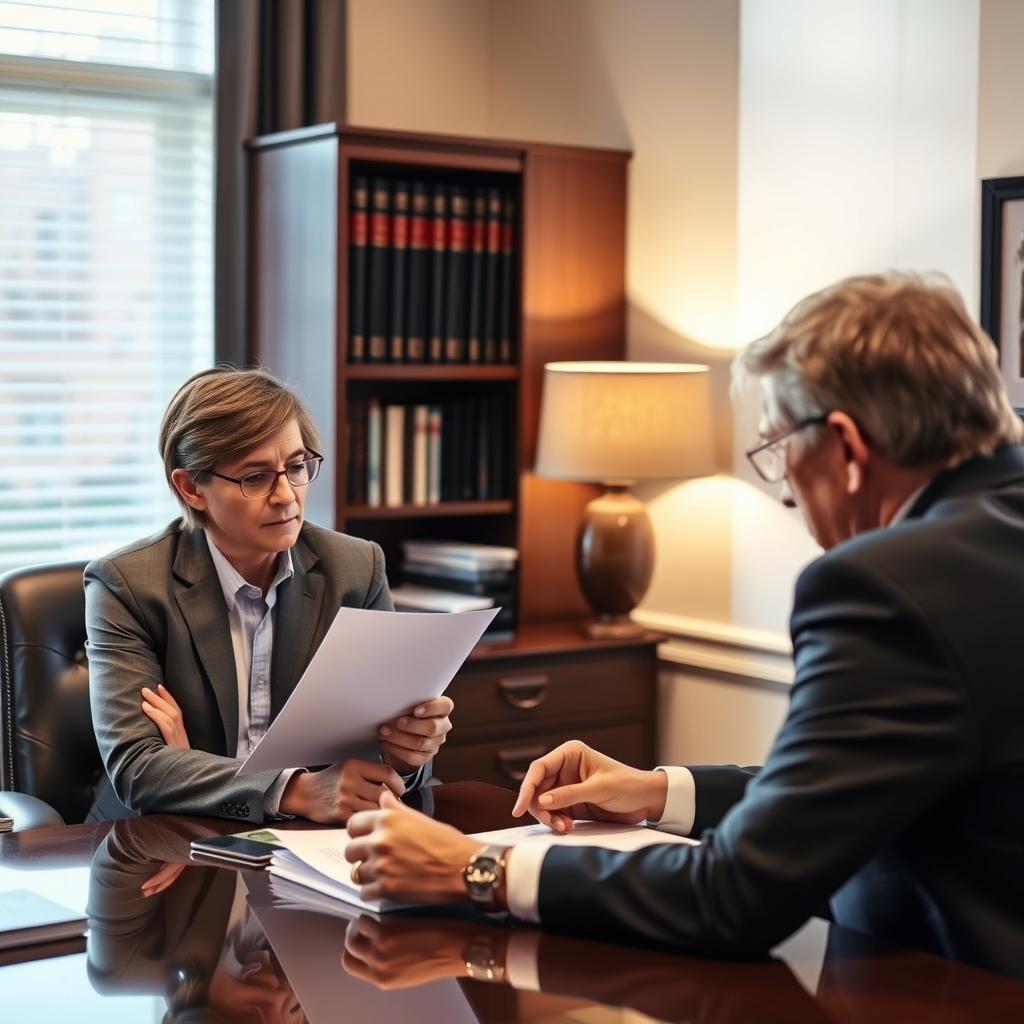
Separation Agreement Lawyer Lexington, VA
When a marriage reaches a point where the parties decide to live apart, a well-drafted separation agreement provides a clear path forward—defining property division, spousal support, and, if children are involved, custody and support arrangements. For residents of Lexington and the surrounding Rockbridge County area, having an experienced legal advocate who understands the local courts and Virginia’s equitable distribution framework can make the difference between a settlement that holds up over time and one that creates future conflict. Mr. Sris, Owner and Founder of Law Offices Of SRIS, P.C., and the firm’s Of Counsel attorneys serve clients in Lexington from the firm’s Shenandoah location, appearing in matters before the Lexington Circuit Court and the Lexington Juvenile and Domestic Relations District Court. To discuss drafting, negotiating, or enforcing a separation agreement, call (888) 437-7747 to request a consultation. Law Offices Of SRIS, P.C. – Advocacy Without Borders.
Understanding Separation Agreements in Lexington, Virginia
Virginia law treats a separation agreement—sometimes called a marital settlement agreement or property settlement agreement—as a binding contract between spouses. Under Va. Code § 20‑109, a court may incorporate the agreement into a final decree of divorce if it resolves all outstanding issues between the parties. In Lexington, the Circuit Court, located at 2 South Main Street, handles divorce and equitable distribution matters, while the Juvenile and Domestic Relations District Court addresses custody, visitation, and child support when they arise outside a divorce proceeding.
The legal framework that shapes every separation agreement in this part of Virginia is the equitable distribution statute, Va. Code § 20‑107.3. The court does not divide property equally by default; instead, it weighs eleven statutory factors—including the duration of the marriage, each spouse’s contributions, and the circumstances that led to the separation—to reach a fair division. Because the statute leaves substantial room for interpretation, a carefully negotiated agreement that addresses each factor can avoid the uncertainty of litigation. Mr. Sris and the firm’s Of Counsel attorneys draw on extensive combined legal experience to help clients in Lexington build agreements that anticipate the court’s likely analysis while meeting the family’s practical needs.
How Mr. Sris and the Firm’s Of Counsel Attorneys Handle Separation Agreement Cases
Every separation agreement case begins with a thorough inventory of the marital estate—real property, retirement accounts, business interests, debts, and other assets—and a realistic assessment of spousal support needs. Once the financial picture is clear, the attorneys work with clients to identify settlement terms that an experienced observer of the Twenty‑fifth Judicial District would recognize as consistent with how the Lexington courts apply the statutory factors. If the other side is represented, the process moves into structured negotiation; if the opposing party is unrepresented, the firm often helps the client craft a proposal that is both defensible and fair, reducing the likelihood of a later challenge.
When children are involved, the agreement must also address custody, visitation, and child support under Va. Code § 20‑124.3’s best‑interests factors. The Lexington Juvenile and Domestic Relations Court is familiar with agreements that incorporate parenting plans consistent with the ten statutory factors, and a well‑supported agreement can often be presented to the court without the need for a contested hearing. In cases where the parties cannot reach consensus, the firm represents clients in court proceedings while continuing to explore settlement opportunities as the case progresses.
About Mr. Sris and the Firm’s Of Counsel Attorneys
Mr. Sris founded Law Offices Of SRIS, P.C. in 1997. A former prosecutor, he now focuses his multi‑state practice on family law, criminal defense, and immigration matters, and he is admitted to practice in Virginia, Maryland, the District of Columbia, New Jersey, and New York. Mr. Sris testified before the Virginia House Courts of Justice Committee in support of 2019 HB 635 (chief patron Del. David Bulova).
The firm’s Of Counsel attorneys bring additional depth in family law, criminal defense, and litigation, and they work closely with Mr. Sris on cases throughout Virginia. This collective approach means that a client in Lexington benefits from broad legal experience while receiving focused attention on the specific facts of his or her separation agreement. The firm’s Shenandoah location at 505 N Main St, Suite 103, Woodstock, VA 22664, serves Lexington and the surrounding area; consultations are available by appointment at (888) 437‑7747.
Frequently Asked Questions
What is a separation agreement, and why do I need one in Virginia?
A separation agreement is a legally enforceable contract that resolves all issues arising from a marital separation—property division, spousal support, and, when applicable, child custody and support—and may later be incorporated into a divorce decree under Va. Code § 20‑109. In Virginia, having a signed separation agreement can also satisfy the six‑month separation ground for a no‑fault divorce when there are no minor children, or the one‑year separation ground otherwise. For couples who intend to divorce on no‑fault grounds, the agreement serves as both a roadmap for the separation period and the foundation for the final decree.
How are separation agreements enforced in Lexington, Virginia?
If one party fails to comply with a separation agreement, the other may file a motion with the Lexington Circuit Court to enforce the agreement under Virginia contract law, potentially obtaining a judgment for arrears or an order compelling compliance. Because the court treats the agreement as a contract, the same remedies—including damages, specific performance, and contempt—are available. A well‑drafted agreement anticipates enforcement issues by including clear dispute‑resolution provisions and specifying the consequences of default.
Can a separation agreement be modified after it is signed?
Yes, spouses may mutually agree to modify a separation agreement in writing, and the court may later modify provisions concerning child custody, visitation, or support based on a material change in circumstances, but spousal‑support terms may be modifiable only if the agreement expressly provides for modification. Virginia Code § 20‑109(C) controls the modifiability of spousal support, and the agreement should state whether the support terms are modifiable or non‑modifiable. For child‑related provisions, the Lexington Juvenile and Domestic Relations District Court retains jurisdiction to modify orders based on the best interests of the child.
Do I need a lawyer to draft a separation agreement in Lexington?
While no law requires a lawyer to prepare a separation agreement, having an attorney who understands Virginia’s equitable distribution factors and the practices of the Lexington courts helps ensure the agreement will be enforceable and that it does not unknowingly waive important rights. An attorney can also identify tax consequences, retirement‑plan division requirements, and other technical issues that a self‑prepared agreement may overlook. For many people, the cost of attorney review is far less than the expense of later litigation over a deficient agreement.
How long does the separation‑agreement process take in Lexington?
The timeline depends on the complexity of the marital estate, the level of cooperation between the spouses, and the court’s calendar, but many agreements can be negotiated and finalized within a matter of weeks when both parties are motivated to settle. When the negotiation involves complex assets—business valuations, multiple retirement accounts, or real property—the process may take longer because the parties need time to gather and exchange financial information. Once signed, the agreement can often be presented to the court promptly as part of an uncontested divorce.
What happens if we cannot agree on a separation agreement?
If the spouses are unable to reach agreement through negotiation, they may proceed to a contested divorce in the Lexington Circuit Court, where a judge will determine property division, spousal support, and custody based on the evidence presented. Mediation is also available as an alternative dispute‑resolution method and can be a more cost‑effective way to resolve disagreements before going to trial. In a contested proceeding, having an attorney who is familiar with the Twenty‑fifth Judicial District’s bench is a significant advantage.
For additional information about family law representation in other Virginia localities, see our pages on Family Law in Fairfax County, Family Law in Fairfax City, Family Law in Falls Church, Family Law in Prince William County, and Family Law in Manassas.
Primary legal authorities referenced on this page: Virginia Code Title 20 (Domestic Relations) and the Virginia Judicial System — Circuit Courts.
Attorney advertising. Prior results do not guarantee a similar outcome. Results may vary.
Case results depend on a variety of factors unique to each case.