
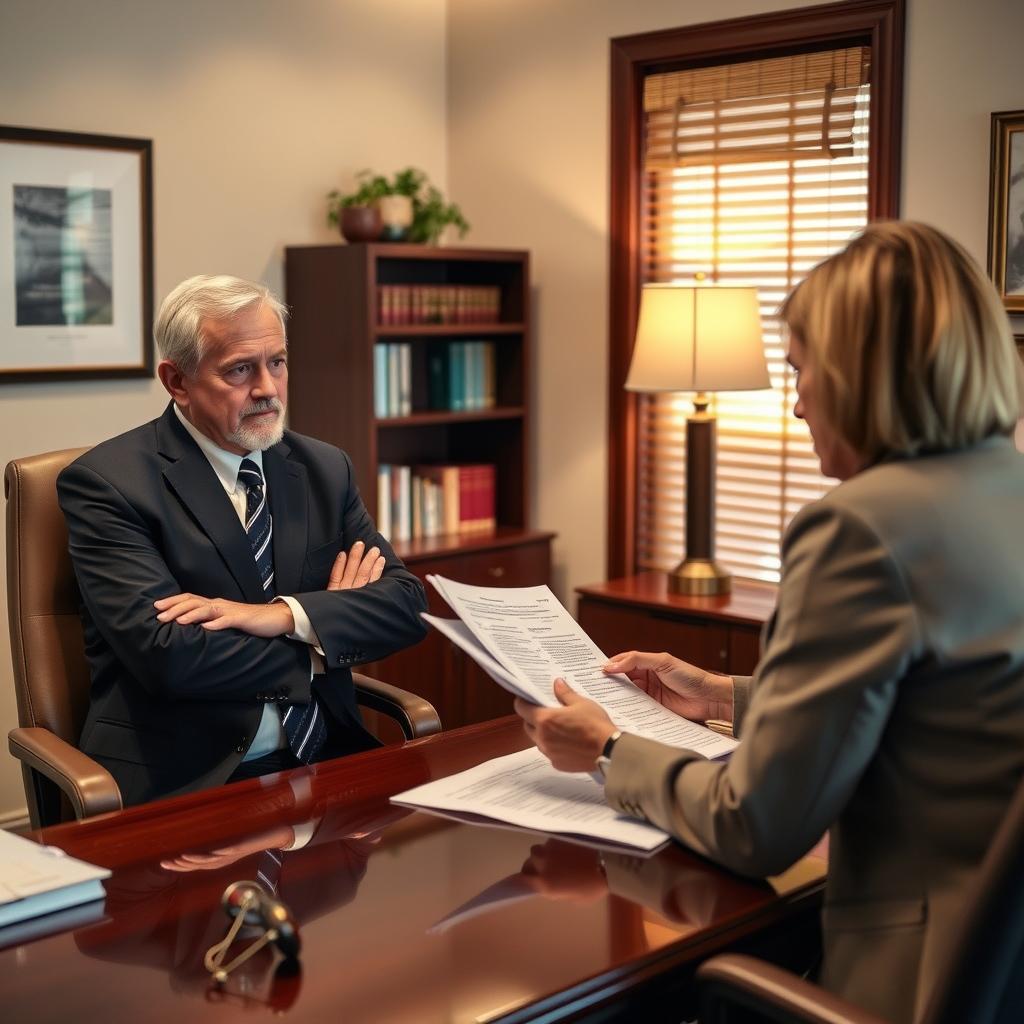
Separation Agreement Lawyer Orange County, VA
When spouses in Orange County decide to live apart, a separation agreement can lay the groundwork for resolving property division, support, and custody outside of court. A separation agreement—also called a property settlement agreement—is a written contract that addresses the rights and obligations of each spouse during separation and after divorce. In Virginia, a valid separation agreement not only brings clarity to an uncertain time but also satisfies the statutory requirement for a no‑fault divorce based on a six‑month separation when no minor children are involved. At Law Offices Of SRIS, P.C., our family law practice assists clients in Orange County with drafting, negotiating, and enforcing separation agreements that align with Virginia law. Reach our Fairfax Location at (888) 437‑7747 to discuss your situation. Law Offices Of SRIS, P.C. – Advocacy Without Borders.
What a Separation Agreement Means in Orange County, Virginia
A separation agreement is a legally binding contract between spouses who have separated or plan to separate. It typically resolves all issues arising from the marital relationship, including division of assets and debts, spousal support, child custody, visitation, and child support. In Orange County, these agreements are governed by Va. Code § 20‑109 and the equitable distribution framework of Va. Code § 20‑107.3. Because Virginia is an equitable distribution state—not a community property state—the agreement must reflect a fair, though not necessarily equal, division of marital property. A properly drafted separation agreement allows spouses to avoid contested litigation and can serve as the basis for an uncontested divorce, provided the agreement is in writing, signed by both parties, and not unconscionable.
Orange County Circuit Court, located at 110 N. Madison Road, Suite 300, Orange, VA 22960, exercises exclusive original jurisdiction over divorce actions, including those where a separation agreement is incorporated into the final decree. The Orange County Juvenile and Domestic Relations District Court handles standalone custody and support matters when they are not filed as part of a divorce. Having counsel familiar with both courts helps ensure that your separation agreement addresses all necessary legal requirements and protects your interests whether you file in the Circuit Court or first need to resolve support issues in the J&DR Court.
Residents of Orange, Gordonsville, and surrounding communities can benefit from a separation agreement that clearly defines each spouse’s post‑separation rights. Because Virginia requires at least a six‑month separation (without minor children and with a signed agreement) or a one‑year separation (in other cases) before a no‑fault divorce may be granted, the separation agreement often becomes the roadmap for the entire divorce process. Without an agreement, issues of property division, support, and custody would have to be litigated, adding uncertainty and cost.
How Mr. Sris and the Firm’s Of Counsel Attorneys Handle Separation Agreement Cases
Every separation agreement begins with a thorough consultation. We review the parties’ assets, debts, income, and any existing custody or support arrangements. In Orange County cases, our attorneys identify the specific issues that must be resolved under Virginia law, including classification of marital versus separate property, spousal support factors under Va. Code § 20‑107.1, and the trusted‑interests factors for child custody under Va. Code § 20‑124.3. We then draft an agreement that reflects the parties’ intentions in plain language while meeting all statutory requirements for enforceability.
Negotiation is often the most critical phase. We work to reach a mutually acceptable resolution through direct negotiation between counsel or, if helpful, mediation. When complex assets are involved—such as business interests, retirement accounts, or real property—we consult with financial professionals as needed to ensure accurate valuation. Once the agreement is signed, we prepare the necessary pleadings for the Orange County Circuit Court. If a spouse later breaches the agreement, we pursue enforcement through the court, whether by a subsequent order or by a separate breach‑of‑contract action. Throughout the process, our goal is to produce an agreement that is durable and tailored to the family’s circumstances.
Because the firm’s Of Counsel attorneys bring diverse litigation and negotiation experience, clients benefit from a collaborative approach that blends an understanding of Virginia family law statutes with practical courtroom knowledge. Whether the matter is amicable or contentious, we tailor our strategy to the individual case.
About Mr. Sris and the Firm’s Of Counsel Attorneys
Law Offices Of SRIS, P.C. was founded in 1997 by Mr. Sris, a former prosecutor who now focuses his practice on family law and civil litigation. As Owner and Founder, Mr. Sris has represented clients across Virginia, Maryland, the District of Columbia, New Jersey, and New York. He testified before the Virginia House Courts of Justice Committee in support of 2019 HB 635 (chief patron Del. David Bulova), a measure that revised the equitable distribution statute. The firm’s Of Counsel attorneys contribute extensive combined legal experience in family law, criminal defense, and civil litigation. Together, Mr. Sris and the firm’s Of Counsel attorneys appear in Orange County courts on separation agreement and divorce matters.
The firm has 35 documented case results in Orange County across all practice areas, with a 91% favorable outcome rate. Results may vary. For a consultation about a separation agreement in Orange County, reach our Fairfax Location at (888) 437‑7747.
Frequently Asked Questions
What is a separation agreement in Virginia?
A separation agreement is a written contract between spouses that resolves property division, support, and custody issues after separation. In Virginia, it is also known as a property settlement agreement or marital settlement agreement. It must be in writing and signed by both parties to be enforceable. Once executed, the agreement can be incorporated into a final divorce decree, making its terms enforceable as a court order. Courts generally uphold separation agreements unless they are found to be unconscionable or procured through fraud. For the agreement to serve as the basis for a six‑month no‑fault divorce, it must address all marital issues and be signed before the separation period begins.
Do I need a lawyer for a separation agreement in Orange County?
Virginia law does not require you to hire a lawyer, but having an attorney helps ensure the agreement is legally sound and protects your interests. A separation agreement involves important rights: division of assets, spousal support, custody, and child support. An experienced family law attorney can identify issues you might overlook, such as the tax treatment of certain assets or the proper valuation of retirement accounts. The firm’s attorneys also understand the local practice in Orange County Circuit Court and can draft language that will withstand later challenge. If the agreement is later incorporated into a divorce decree, legal guidance reduces the risk that a court will set it aside.
What does a separation agreement typically cover?
A separation agreement usually covers property division, spousal support, child custody, visitation, and child support. It can also address payment of debts, tax‑filing status, health insurance, and the disposition of the marital home. In Virginia, the agreement must classify property as marital or separate and state how each asset will be distributed. The parties may agree on support amounts that differ from statutory guidelines, but the agreement must be fair. The agreement can also include provisions for future events, such as the sale of a business. Because the agreement becomes a binding contract, every relevant aspect of the spouses’ financial and parental relationship should be considered.
How does a separation agreement affect divorce in Virginia?
A signed separation agreement is often used to satisfy the grounds for a no‑fault divorce based on a six‑month separation when there are no minor children. Under Va. Code § 20‑91(9)(b), if the parties have lived separate and apart for at least six months, have no minor children, and have entered into a written separation agreement, the court may grant a divorce without requiring a full year of separation. Even in divorces with minor children or a one‑year separation, the agreement’s terms on property and support can be incorporated into the final decree, streamlining the process. The agreement itself does not end the marriage; only a court order of divorce does. However, a well‑drafted agreement makes the divorce proceeding more predictable and less adversarial.
Can a separation agreement be modified?
Yes, a separation agreement can be modified if both parties agree, or a court may modify certain provisions such as child support or custody if circumstances change. Like any contract, the parties can voluntarily amend the agreement in writing. For child‑related provisions (custody, visitation, and support), a court may modify the agreement if the party seeking modification shows a material change in circumstances. Spousal support provisions may be modifiable if the agreement expressly allows for modification; otherwise, the original support term is typically binding. It is important to draft the agreement with clear language about whether support is modifiable or non‑modifiable.
How long does it take to finalize a separation agreement?
The timeline for finalizing a separation agreement depends on the complexity of the issues and the level of cooperation between the parties. When both spouses are willing to negotiate and provide financial disclosures promptly, an agreement can sometimes be drafted and signed within a few weeks. If disagreements arise over property valuation, support amounts, or custody, additional negotiations or mediation may extend the timeline. The court’s schedule also affects how quickly the agreement can be presented in a divorce hearing. Working with an attorney who understands Orange County court procedures helps keep the process moving efficiently.
Attorney advertising. Prior results do not guarantee a similar outcome. Results may vary.
Case results depend on a variety of factors unique to each case.