
Separation Agreement Lawyer Prince William County, VA
You and your spouse have been talking about separating for months. The tension in your Woodbridge home is unavoidable, and you need a practical way to set the terms of your separation—who stays in the house, how the children’s time will be divided, what financial support looks like—while you work toward a final resolution. You want a written agreement that both of you can live with, one that holds up if the separation eventually leads to divorce. That document is a separation agreement, and getting it right from the start can prevent thousands of dollars in later litigation. At Law Offices Of SRIS, P.C., Mr. Sris and his Of Counsel team work with clients throughout Prince William County, including Manassas, Dale City, Gainesville, and Haymarket, to draft, negotiate, and finalize clear separation agreements that protect their interests. Reach our location at (888) 437-7747 to discuss your situation. Law Offices Of SRIS, P.C. – Advocacy Without Borders.
What a Separation Agreement Means in Prince William County
A separation agreement—often called a property settlement agreement or marital settlement agreement—is a written contract between spouses that resolves the issues arising from their separation. Under Virginia law, a valid separation agreement can address property division, spousal support, child custody, child support, and the use of the family residence. When signed by both parties, the agreement creates enforceable rights and obligations that a court can later enforce or, in a divorce proceeding, incorporate into the final decree.
In Prince William County, separation agreements frequently serve as the foundation for a no-fault divorce. Virginia Code § 20-91(9)(b) permits a divorce after six months of separation if the spouses have no minor children and have signed a separation agreement, or after one year of separation if there are minor children. When the agreement resolves all outstanding issues, the divorce can proceed as an uncontested matter, significantly reducing the time, expense, and emotional strain on the family. Mr. Sris and his Of Counsel work to craft agreements that anticipate both the immediate separation period and the transition into a final divorce, so nothing is left unresolved when it is time to file the complaint.
Because the Prince William County Circuit Court—located at 9311 Lee Avenue, Suite 230, in Manassas—has exclusive jurisdiction over divorce and equitable distribution, the separation agreement becomes a key document in any divorce case filed there. The Juvenile and Domestic Relations District Court, which handles standalone custody, support, and protective-order matters, also gives weight to the parties’ own agreement when it is fair and reasonable. Knowing how each court reviews separation agreements in Prince William County helps counsel structure terms that are likely to be accepted without a costly evidentiary fight.
How Mr. Sris and His Of Counsel Handle Separation Agreements
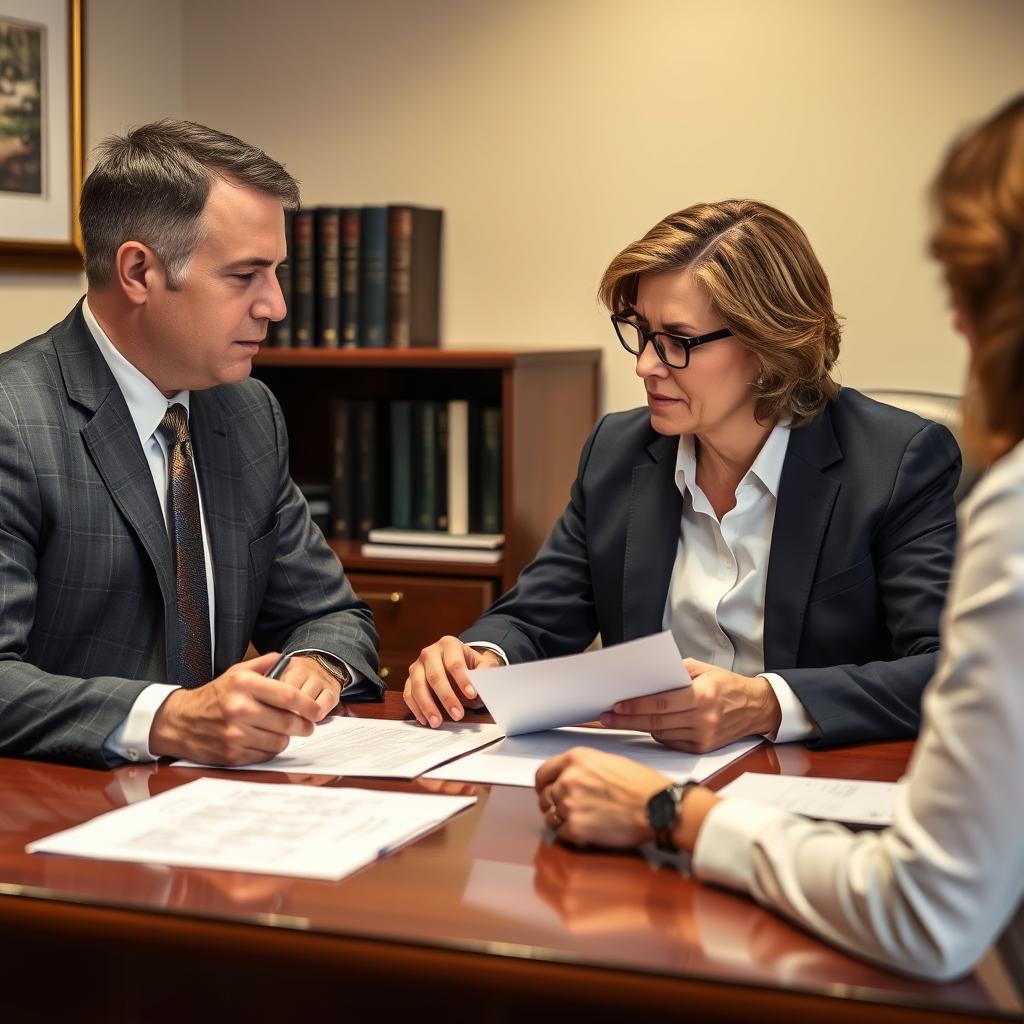
Every separation agreement begins with a detailed discussion of the couple’s circumstances. Mr. Sris and the firm’s Of Counsel attorneys will review what you and your spouse own, what you owe, what your income looks like, and what arrangement makes sense for your children. That information shapes the negotiation strategy. In some cases, both spouses are ready to cooperate and need a lawyer to put their understanding into a legally sound document. In others, one spouse is reluctant or there is a significant imbalance in information or bargaining power, and Mr. Sris and his Of Counsel step in to advocate for a fair result.
After gathering the facts, the team at Law Offices Of SRIS, P.C., drafts the agreement. Virginia law requires that separation agreements be in writing and signed by both parties, but nothing else—no witness, no notary, no filing—is required for the contract itself to be binding. However, prudent practice includes notarization, and when the agreement is later filed in court as part of a divorce, it becomes part of the public record. Mr. Sris and his Of Counsel take care to draft every provision with an eye toward a future divorce setting, so the agreement will withstand judicial scrutiny under Va. Code § 20-109. Whether the agreement is presented to the Prince William County Circuit Court or the Juvenile and Domestic Relations District Court, the goal is a document that is fair, enforceable, and specific enough to avoid later disputes.
About Mr. Sris and the Firm’s Of Counsel Attorneys
Mr. Sris, Owner and Founder of Law Offices Of SRIS, P.C., has practiced family law since the firm opened in 1997. A former prosecutor, he brings a trial-tested perspective to negotiation and litigation. Mr. Sris is admitted in Virginia, Maryland, the District of Columbia, New Jersey, and New York, and he works alongside the firm’s Of Counsel attorneys—all independent practitioners with substantial family law experience—to address the full range of issues that arise in separation agreements, from complex property division to parenting plans. Together, Mr. Sris and his Of Counsel bring extensive combined legal experience to each matter. Results may vary. in your case.
Mr. Sris testified before the Virginia House Courts of Justice Committee in support of 2019 HB 635 (chief patron Del. David Bulova), a measure that revised certain equitable-distribution provisions in Virginia. His familiarity with the legislative process and the statutes that govern separation and divorce in the Commonwealth allows him to approach separation agreements not just as a contract drafter, but as an attorney who understands how the statutory framework affects real families. The firm’s Fairfax Location serves clients throughout Prince William County, and consultations can be scheduled at (888) 437-7747.
Frequently Asked Questions
What is a separation agreement in Virginia?
A separation agreement is a written contract between spouses that settles their rights and obligations during separation and, often, after a divorce. In Virginia, it can cover property division, spousal support, health insurance, use of the marital home, debt allocation, child custody, and child support. It is governed by Va. Code § 20-109, and once signed by both spouses, it is binding. The agreement may be enforced by a court or, in a later divorce, incorporated into the final decree. Unlike some states, Virginia does not require that the agreement be filed with a court to be effective, though filing becomes necessary when a divorce complaint is initiated.
Do I need a lawyer for a separation agreement?
You are not legally required to hire a lawyer, but an attorney can help you avoid terms that may later prove unfair or unenforceable. A separation agreement determines rights that will affect your finances and your relationship with your children for years. Mr. Sris and his Of Counsel can identify issues you may not have considered—such as tax consequences of property transfers, retirement account division, and future modification of support—and draft language that reflects your intentions clearly. Having an experienced family law attorney review or negotiate the agreement reduces the chance that a court will find it invalid or that one party will later claim they did not understand the terms.
How does a separation agreement affect divorce in Prince William County?
A signed separation agreement can form the basis for an uncontested no-fault divorce in Prince William County, often speeding up the process considerably. Once the required separation period has passed (six months without minor children and with the agreement, or one year otherwise), the agreement can be submitted to the Prince William County Circuit Court along with the divorce complaint. If the court finds the agreement fair, it will be incorporated into the final divorce decree, making its terms part of a court order. This avoids the need for a trial on property, support, and custody issues, saving both time and expense.
What should a separation agreement include?
A thorough separation agreement should resolve all current and foreseeable disputes between the spouses. Key provisions typically include: classification and division of marital and separate property; allocation of debts; spousal support, including amount, duration, and modification or termination conditions; child custody and visitation schedules; child support calculated in accordance with Virginia guidelines; health insurance and medical expense responsibility; tax-filing status and dependency exemptions; and what happens in the event of a reconciliation or death of one party. The agreement can also address use of the family home and vehicles during the separation period.
Can a separation agreement be modified?
A separation agreement can be modified if both spouses consent in writing, just like any contract. However, once a separation agreement is incorporated into a final divorce decree, the court may modify child-custody and child-support provisions based on changed circumstances, but property-settlement and spousal-support provisions (unless the agreement itself allows for modification) are generally not modifiable after incorporation in a Virginia divorce. For this reason, Mr. Sris and his Of Counsel work to include clear modification procedures in the original agreement when the parties anticipate possible future changes.
How do I start the separation agreement process?
Beginning a separation agreement starts with a consultation to discuss your specific circumstances, goals, and concerns. Mr. Sris and his Of Counsel will explain the legal framework in Virginia, review the issues that need to be addressed, and outline a strategy. You can then decide whether to proceed with drafting and negotiation. To schedule a consultation, reach Law Offices Of SRIS, P.C. at (888) 437-7747. The firm serves Prince William County from its Fairfax Location, and meetings are available by appointment.
Also serving clients in nearby jurisdictions: Fairfax County family law attorney, Stafford County family law representation, Loudoun County family law counsel, and Arlington County family law attorney.
For official statutory language and court resources, see Virginia Code Title 20, Family Law and the Virginia Court System.
Attorney advertising. Prior results do not guarantee a similar outcome. Results may vary.
Case results depend on a variety of factors unique to each case.