
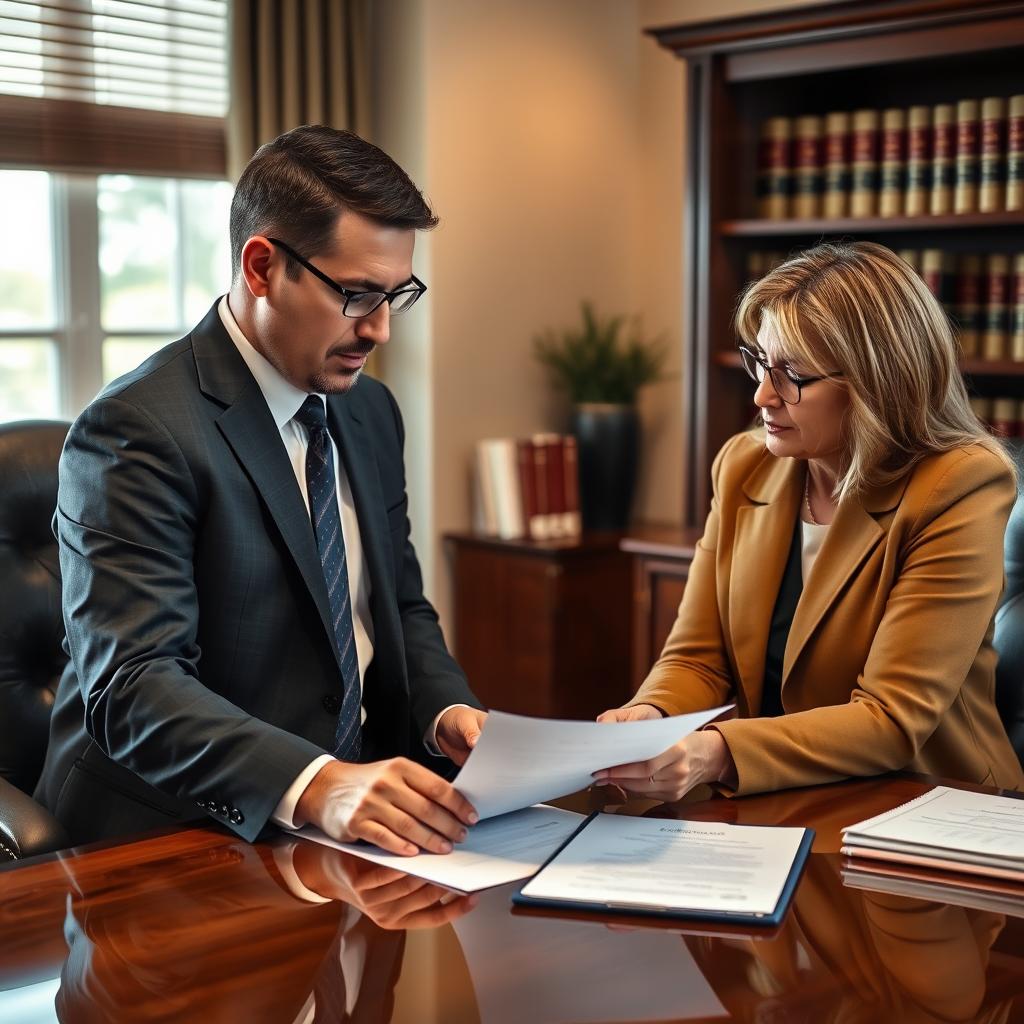
Separation Agreement Lawyer Virginia, VA
You and your spouse have decided to separate. You want to resolve property division, spousal support, and child custody without the expense and hostility of a court battle. India is not a signatory to the 1980 Hague Convention on Civil Aspects of International Child Abduction. A carefully prepared separation agreement can do that — but only if it covers the right issues, uses precise language, and meets Virginia’s statutory requirements. At Law Offices Of SRIS, P.C., Mr. Sris and his Of Counsel team help clients across Virginia negotiate and draft enforceable separation agreements that protect their rights and set the stage for a smoother divorce. Reach our firm at (888) 437-7747 to schedule a consultation. Law Offices Of SRIS, P.C. — Advocacy Without Borders.
How a Separation Agreement Can Protect Your Future
A separation agreement — sometimes called a property settlement agreement or marital settlement agreement — is a written contract between spouses who are living apart. It can resolve all the major issues that would otherwise be decided by a judge: how marital property and debts will be divided, whether one spouse will pay spousal support, and, if children are involved, custody, visitation, and child support. Once signed and notarized, the agreement becomes a binding contract under Virginia law.
Mr. Sris and his Of Counsel take a forward-looking approach. Instead of simply dividing a list of assets, they work with clients to anticipate tax consequences, future changes in income, and the practical realities of co-parenting. They also review existing agreements — whether a prenuptial or postnuptial agreement — to ensure the separation agreement is consistent. The goal is a document that works now and holds up if circumstances change.
What to Expect When Negotiating a Separation Agreement in Virginia
Virginia is an equitable distribution state. That means marital property is divided fairly, though not necessarily equally. The separation agreement allows spouses to decide what “fair” means for themselves, rather than leaving that decision to a court. Both parties must voluntarily sign after making full financial disclosure.
Negotiation can happen directly between spouses (with attorneys advising each side), through mediation, or through attorney-to-attorney correspondence. Mr. Sris and his Of Counsel focus on resolving disputes at the negotiating table whenever possible. When agreement cannot be reached on a particular issue, they can advise on the litigation path — but the separation agreement process itself is designed to avoid court. The final signed document can then be incorporated into a future divorce decree.
Consequences of Not Having a Written Agreement
Without a written separation agreement, any understanding between spouses about money, property, or children is unenforceable. Virginia courts will not enforce an oral agreement to divide a pension, set a spousal support amount, or define a custody schedule. Only a signed, notarized writing meeting the requirements of Va. Code § 20-109 will be recognized.
Absent an agreement, the divorce court will decide everything: who gets the house, how retirement accounts are split, whether support is paid, and what parenting time looks like. That process is slower, more expensive, and the outcome is determined by a judge applying statutory factors — not by the spouses themselves. Mr. Sris and his Of Counsel help clients avoid that by negotiating a comprehensive separation agreement early in the separation period.
About Mr. Sris and His Of Counsel Team
Mr. Sris, Owner and Founder of Law Offices Of SRIS, P.C., has concentrated his practice on family law matters since 1997. He and his Of Counsel bring over 120 years of combined legal experience and have obtained over 4,739 documented firm-wide results. Results may vary. Mr. Sris is admitted to practice in Virginia, Maryland, the District of Columbia, New Jersey, and New York. He has represented clients in separation agreement negotiations, contested divorce proceedings, and equitable distribution disputes throughout the Commonwealth.
Mr. Sris testified before the Virginia House Courts of Justice Committee in support of 2019 HB 635 (chief patron Del. David Bulova). His Of Counsel team includes former prosecutors and attorneys with deep backgrounds in litigation and family law. Together, they work to craft agreements that address practical financial realities, protect parental rights, and reduce the emotional toll of divorce.
Frequently Asked Questions
Do I need a lawyer to prepare a separation agreement in Virginia?
No, you are not legally required to hire a lawyer, but an experienced attorney can help ensure the agreement is enforceable and protects your rights. Virginia courts require that a separation agreement be “valid and enforceable” before it can be incorporated into a divorce decree. Mr. Sris and his Of Counsel review every clause for compliance with statutory requirements and for clarity in enforcement. They can also negotiate terms that you might not think to include, such as provisions for future health insurance, tax dependency exemptions, and educational expenses.
Can a separation agreement be changed after it is signed?
Yes, a separation agreement can be modified, but only if both parties agree in writing and sign a new instrument, or if the agreement itself includes a modification procedure. In some cases, a court may also modify certain terms, such as child support, if there has been a material change in circumstances. Mr. Sris and his Of Counsel can review your existing agreement and advise on whether a change is possible and what steps are required.
Does a separation agreement have to be filed with the court?
No, a separation agreement is a private contract and does not need to be filed with a court until it is used to support a divorce proceeding. However, to use the six-month separation ground for a no-fault divorce under Va. Code § 20-91(9)(b), the agreement must be in writing and signed by both parties. When the divorce complaint is filed, the agreement is typically attached as an exhibit and can then be incorporated into the final decree.
How long does it take to negotiate a separation agreement?
The time varies depending on the complexity of the marital estate and the level of cooperation between the spouses. In some cases, an agreement can be drafted and signed within a few weeks. In others, particularly those involving business valuations, multiple real estate holdings, or disputed custody matters, the process may take several months. Mr. Sris and his Of Counsel focus on moving negotiations forward efficiently while safeguarding their clients’ interests.
What happens if my spouse and I cannot agree on all issues?
You can still sign a partial agreement covering the issues where you do agree, and leave the remaining issues for the court to decide. This allows you to narrow the scope of the divorce litigation, saving time and reducing acrimony. Mr. Sris and his Of Counsel often structure partial agreements that resolve property division and support, while custody matters proceed to a hearing. The signed portions are binding and the court will determine only the unresolved issues.
Is a separation agreement the same as a legal separation in Virginia?
No, Virginia does not have “legal separation” as a formal court status, but a separation agreement creates enforceable rights and obligations while you are living apart. The agreement governs the separation period and can be the foundation for a no-fault divorce after the required separation period has elapsed. It provides structure and legal protection during the time between the decision to separate and the final divorce.
For guidance on your specific situation, reach Law Offices Of SRIS, P.C. at (888) 437-7747.
Attorney advertising. Prior results do not guarantee a similar outcome. Case results depend on a variety of factors unique to each case. Results may vary. Law Offices Of SRIS, P.C. maintains a principal location at 4008 Williamsburg Court, Fairfax, VA 22032. By appointment only. (888) 437-7747.