
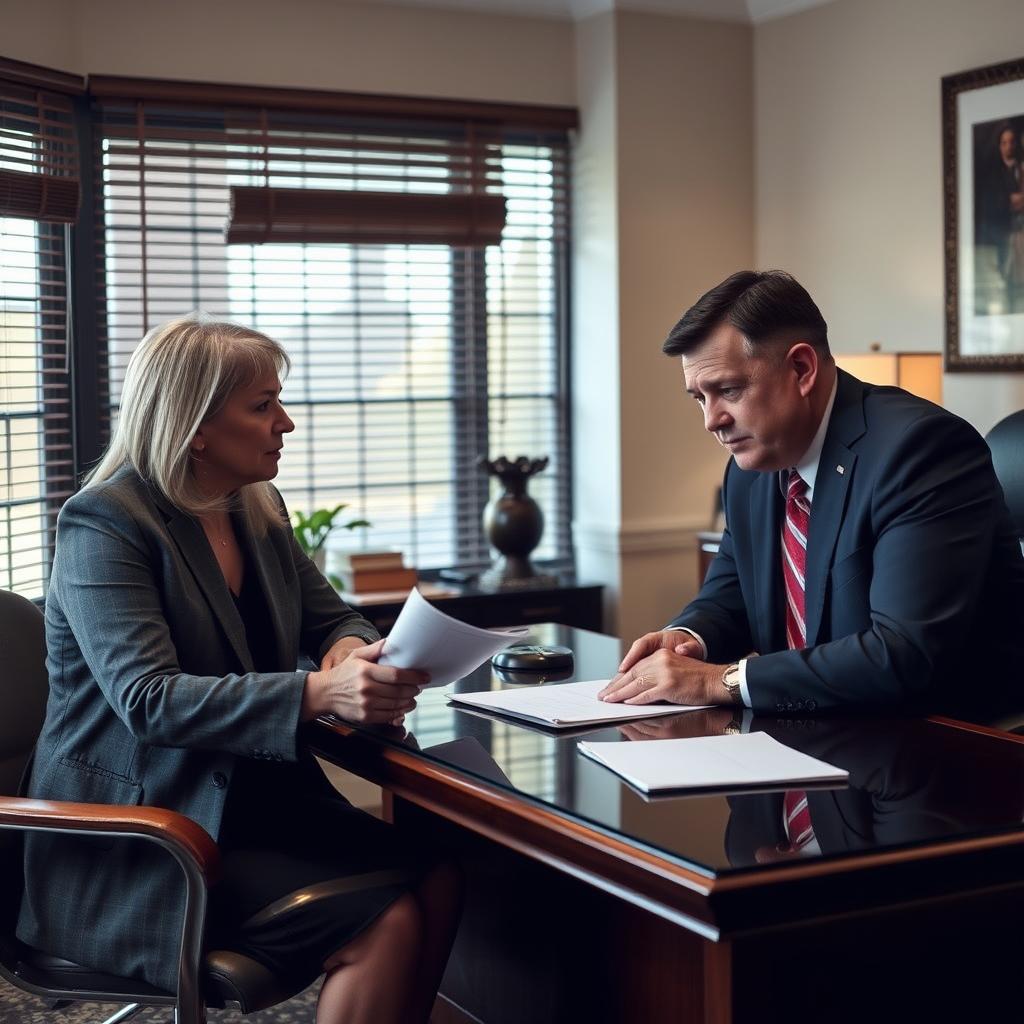
Spousal Support Lawyer Louisa County, VA
Spousal support, often referred to as alimony, is a key financial issue in many Virginia divorces. In Louisa County, these matters are heard before the Louisa County Circuit Court, which has exclusive jurisdiction over divorce and related financial claims, including spousal support. Virginia law, under Va. Code § 20-107.1, directs the court to consider a range of statutory factors when determining whether to award support, how much, and for how long. A one-size-fits-all formula does not apply; each case is decided on its own facts. For individuals navigating the end of a marriage in Mineral, Zion Crossroads, or elsewhere in Louisa County, understanding the court’s broad discretion and the strategic importance of presenting a complete financial picture is essential. Mr. Sris, Owner and Founder of Law Offices Of SRIS, P.C., and his Of Counsel team represent clients in spousal support proceedings throughout the 16th Judicial District. To discuss your situation, reach the firm at (888) 437-7747. Law Offices Of SRIS, P.C. – Advocacy Without Borders.
What Spousal Support Means in Louisa County, Virginia
Spousal support in Virginia is a court-ordered payment from one spouse to the other after separation or divorce. It is distinct from the division of marital property under equitable distribution, though the two are often interrelated. The Louisa County Circuit Court, located at 100 West Main Street, Louisa, VA 23093, handles all spousal support determinations within the county. Because the Circuit Court also resolves the divorce itself and any equitable distribution claims, the judge considers the full scope of the marital estate. Virginia is an equitable distribution state, meaning marital property is divided fairly—but not necessarily equally—and a spousal support award can be crafted as part of the overall financial settlement.
The court’s authority to award spousal support is rooted in Va. Code § 20-107.1, which sets out 13 statutory factors the judge must weigh. These factors include the earning capacity and financial needs of each party, the standard of living established during the marriage, the duration of the marriage, and the contributions of each spouse to the family’s well-being. Fault is not a primary consideration for support purposes, but the statute allows the court to consider the circumstances that contributed to the dissolution of the marriage. In Louisa County, where many families have deep agricultural or rural roots, property interests such as family farms or small businesses can add complexity to the support analysis. Our Richmond Location serves clients throughout Louisa County, including the communities of Louisa, Mineral, and Zion Crossroads. Mr. Sris and his Of Counsel are familiar with the local court and the economic realities of the region.
How Mr. Sris and His Of Counsel Handle Spousal Support Cases
When a client seeks spousal support—whether as the spouse requesting it or the spouse who may be obligated to pay—the team at Law Offices Of SRIS, P.C. begins by gathering a comprehensive financial record. This includes tax returns, pay stubs, business valuations, and documentation of the marital lifestyle. In many cases, a request for temporary support, known as pendente lite relief, may be appropriate to maintain the status quo while the divorce is pending. The firm works to present a clear, well-supported financial narrative to the court, emphasizing the factors most favorable to the client’s position.
Disputes over spousal support often turn on imputed income, vocational assessments, or the valuation of non-traditional assets. Mr. Sris and his Of Counsel coordinate with forensic accountants, business valuators, and other professionals when the case requires it. The goal is always to reach a fair resolution—whether through negotiation, mediation, or litigation at the Louisa County Circuit Court. Because support orders can have long-term consequences, attention to detail is critical. The team’s approach is to position each client for favorable outcomes under Virginia law, while remaining mindful that every case is unique and outcomes depend on the specific facts. Results may vary.
About Mr. Sris and His Of Counsel Team
Mr. Sris founded Law Offices Of SRIS, P.C. in 1997 after serving as a former prosecutor. That background gives him insight into the litigation process and the presentation of evidence—skills directly applicable to contested spousal support hearings. Mr. Sris testified before the Virginia House Courts of Justice Committee in support of 2019 HB 635 (chief patron Del. David Bulova), a bill that revised certain provisions of Virginia’s equitable distribution statute. His involvement in the legislative process reflects a thorough understanding of Virginia family law. He is admitted to practice in Virginia, Maryland, the District of Columbia, New Jersey, and New York.
Mr. Sris and his Of Counsel bring extensive combined legal experience to family law matters. The firm’s Of Counsel attorneys—each engaged through Excella—contribute additional depth in litigation, financial analysis, and courtroom advocacy. This collaborative model allows the firm to handle complex spousal support disputes, including those involving high-net-worth estates, self-employment income, and cross-jurisdictional issues. All attorneys work together to serve clients in Louisa County and across Virginia. Prior outcomes do not guarantee a similar result
Frequently Asked Questions
What factors does the court consider for spousal support in Virginia?
The court evaluates 13 statutory factors under Va. Code § 20-107.1, including the earning capacity, financial needs, and obligations of each spouse, the duration of the marriage, and the standard of living during the marriage. Other factors include the age and physical condition of the parties, the contributions of each spouse to the family, the property interests of each, and the grounds for divorce. The judge has wide discretion and may weigh each factor differently. No formula dictates the result; the court’s task is to fashion a support order that is fair under all the circumstances. For guidance on your specific situation, reach Law Offices Of SRIS, P.C. at (888) 437-7747.
How is spousal support different from child support in Louisa County?
Spousal support is financial assistance paid to a former spouse, while child support is paid for the care of a minor child; they are separate legal obligations governed by different statutes and guidelines. Child support in Virginia is calculated using a statutory guidelines formula based on the combined gross income of both parents, whereas spousal support has no fixed formula and is determined by the court after analyzing the 13 factors under Va. Code § 20-107.1. The Louisa County Juvenile and Domestic Relations District Court handles standalone child support matters, while spousal support claims are resolved in the Louisa County Circuit Court. A single divorce case may involve both types of support. To discuss the details of your matter, contact Law Offices Of SRIS, P.C. at (888) 437-7747.
Can spousal support be modified in Virginia?
Yes, a spousal support order may be modified if there has been a material change in circumstances since the last order, unless the order or a written agreement expressly states that support is non-modifiable. The party seeking modification must demonstrate the change—such as a significant increase or decrease in income, involuntary job loss, or a change in health—warrants a revision. The Louisa County Circuit Court retains jurisdiction to hear modification petitions. Even if the original support order was entered by agreement, the language of the agreement controls whether modification is permitted. Because modification disputes can be complex, legal representation is advisable to ensure the court has a complete record of the changed circumstances. For a consultation, reach Mr. Sris and his Of Counsel at (888) 437-7747.
Do I need a lawyer for spousal support in Louisa County?
Virginia law does not require you to have an attorney, but spousal support cases involve complex financial analysis and statutory factors that make legal representation highly advisable. Presenting a persuasive case requires detailed financial documentation, an understanding of the 13 factors under Va. Code § 20-107.1, and the ability to challenge or defend against claims of imputed income or hidden assets. The judge has broad discretion, and an unrepresented spouse may inadvertently waive important arguments. Mr. Sris and his Of Counsel routinely handle spousal support matters in the Louisa County Circuit Court and can help you navigate the process. For guidance on your specific situation, reach Law Offices Of SRIS, P.C. at (888) 437-7747.
How does the court determine the amount of spousal support?
The court determines the amount by weighing the 13 statutory factors focused on the financial circumstances of both parties, not by applying a mathematical formula. Key considerations include the demonstrated need of the requesting spouse and the ability to pay of the other spouse. The judge will look at income, reasonable monthly expenses, the marital standard of living, and the likely earning capacity of each party. In Louisa County, local economic conditions—such as employment opportunities in agriculture, services, or commuting to Richmond—can influence the court’s view of earning capacity. The amount and duration of support are always fact-specific. To discuss your situation, contact Law Offices Of SRIS, P.C. at (888) 437-7747.
What if my spouse refuses to pay spousal support?
If a spouse fails to pay court-ordered spousal support, you may seek enforcement through the Louisa County Circuit Court, which can use its contempt powers, wage garnishment, or other remedies to compel payment. A show cause summons may be issued, requiring the non-paying spouse to appear and explain the non-compliance. The court can impose sanctions, including monetary fines or, in extreme cases, incarceration. It is also possible to seek a judgment for the arrears. Because enforcement proceedings present their own procedural hurdles, working with an experienced attorney helps ensure you take the correct steps. For a consultation, reach Mr. Sris and his Of Counsel at (888) 437-7747.
For further reading on related family law topics in Virginia, see our pages on Family law matters in Fairfax County, Fairfax City family law, Family law in Falls Church, Prince William County family law, and Manassas family law.
Additional resources: Virginia Code Title 20 (domestic relations), Virginia Courts.
Attorney advertising. Prior results do not guarantee a similar outcome.
Case results depend on a variety of factors unique to each case.